Best Luxury Hotels in Tokyo: Honest Reviews and Where to Stay
An honest guide to Tokyo’s best luxury hotels, including where to stay, what each neighborhood feels like, and which hotels justify the price.

Who this is for
This guide is for travelers deciding where to stay in Tokyo and which luxury hotels are actually worth the rate. If you are building the full trip, start with my 3-day Tokyo itinerary, keep these Tokyo hidden gems open for the quieter hours, and compare this list with my Aman Tokyo review.
The Art of Stillness in a City That Never Sleeps
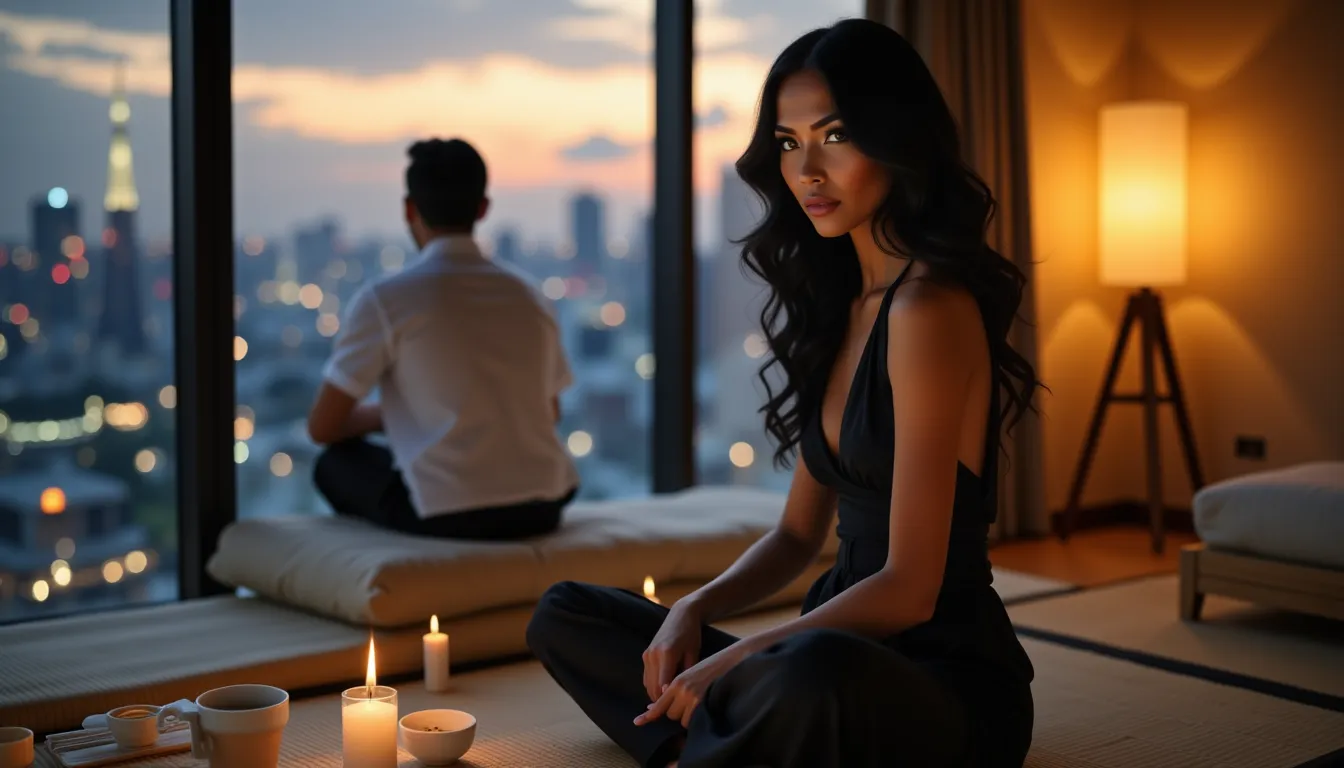
I’m sitting cross-legged on tatami mats, watching steam curl from a ceramic tea cup while neon lights blur past the rain-streaked window forty floors below. Tokyo pulses beneath me — a symphony of trains, half-whispered conversations, and the distant chime of a convenience store door — yet here, in this suspended moment, I’ve stumbled onto something most travelers never find: perfect silence in the world’s loudest city.
This is what luxury means in Tokyo. Not marble lobbies or crystal chandeliers, but the profound, almost spiritual art of creating sanctuary amidst chaos. The Japanese have a word for it — ma, the beauty of negative space — and the city’s finest hotels have turned it into an architecture of feeling. I’ve spent the better part of three weeks sleeping my way through Tokyo’s most extraordinary rooms, and what I’ve found isn’t a ranking. It’s a map of different kinds of stillness, each one teaching me something new about what it means to truly arrive somewhere.
A practical note before we begin: Tokyo's luxury hotels offer their most gracious rates in January and February, when the city belongs to its residents again, and during the moody rains of June. If cherry blossoms are your reason, book three to six months ahead. Getting from Haneda to most of these addresses costs around six to eight thousand yen by taxi, though several properties send sleek limousine buses that cost a fraction of that and feel like the journey has already begun. If you are still shaping the trip around the stay, pair this list with my 3-day Tokyo itinerary and save these Tokyo hidden gems for the slower pockets between hotel check-ins.
Where Silence Has Weight
The Aman and the Philosophy of Disappearing
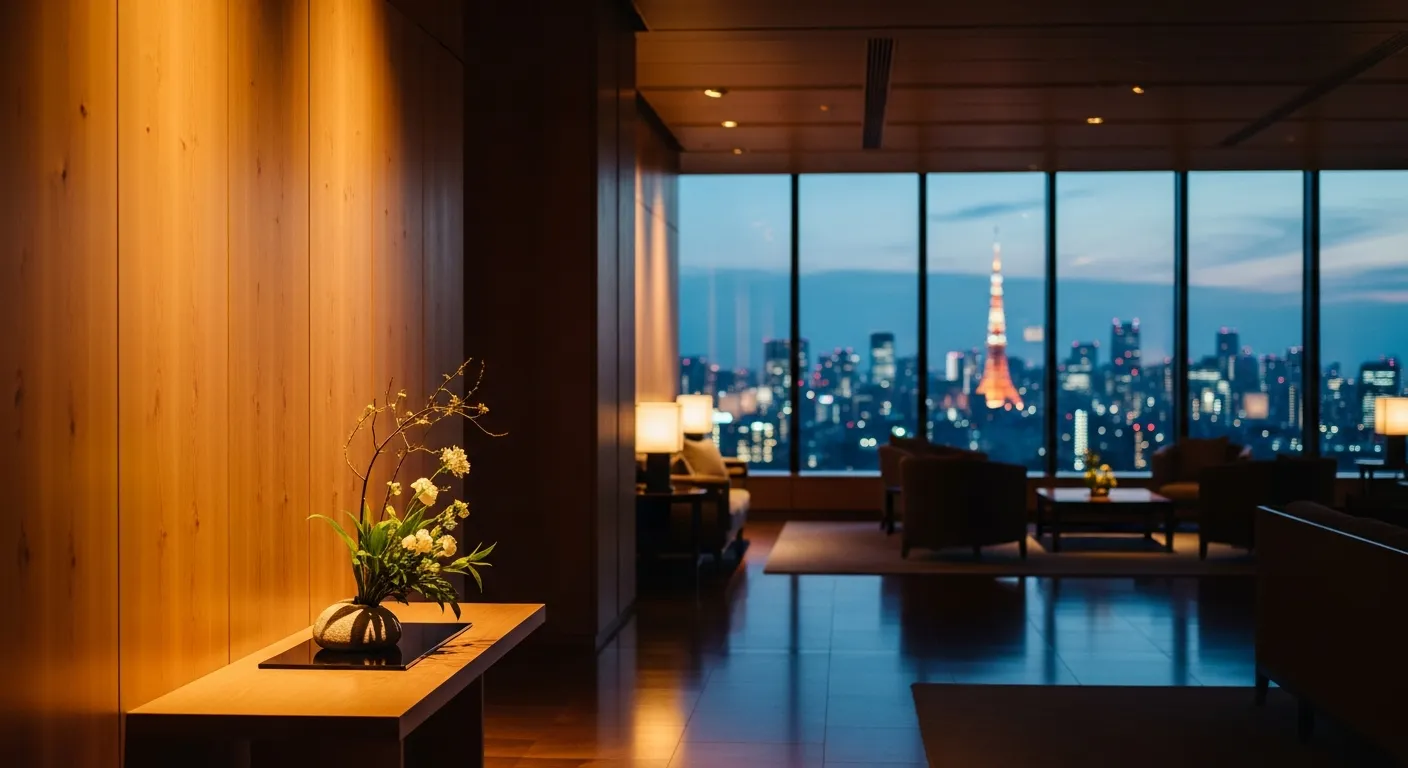
The Aman Tokyo doesn’t announce itself. There’s no gilded awning, no doorman in a top hat. You ascend to the top six floors of the Otemachi Tower in an elevator so quiet you forget you’re moving, and then the doors open onto a lobby that stretches impossibly wide — punctuated only by a single ikebana arrangement that changes with the season and a quality of light that feels curated by someone who understands loneliness as an aesthetic.
The Aman doesn’t advertise its rates — you inquire, which already tells you something. Rooms start around $1,750, but what you’re buying isn’t square footage, though there are eighty-four suites and each one is generous. It’s the particular silence that descends when those camphor wood doors close behind you. My suite faced the Imperial Palace gardens, and mornings began with the private ritual of sliding open washi paper screens to reveal Tokyo’s green, ancient heart. On clear days, Mount Fuji materializes in the distance like a rumor that turned out to be true.
The interiors are a meditation on restraint — camphor wood catching the morning light, basalt stone cool beneath bare feet, and that deep ofuro bath where I lost entire evenings to the simple act of being warm and quiet. The 2,500-square-meter spa feels less like a wellness center and more like a temple that happens to offer traditional Japanese treatments. I booked a shiatsu session that lasted ninety minutes and left me so disassembled I had to sit in the relaxation lounge for another hour, drinking hojicha and staring at nothing.
Dinner at Musashi, their omakase counter, is where the Aman reveals its hidden extravagance. The chef works in near-silence, placing each piece before you with the precision of a calligrapher. The omakase runs from around forty-four thousand yen — roughly two hundred and eighty-five dollars — and you’ll leave understanding that this is what happens when restraint meets obsession. For quieter afternoons, The Cafe serves an afternoon tea that transforms the ritual into something contemplative rather than performative.
The Return of a Legend
When the Park Hyatt Tokyo closed for renovations, a small part of me mourned. This was the hotel that taught a generation of travelers — through Sofia Coppola’s lens — that dislocation could be its own form of intimacy. When it reopened in December 2025, I flew to Tokyo within the month, half-terrified they’d ruined it.
They hadn’t. They’d done something harder: they’d preserved the soul while stripping away everything that had aged. The 177 rooms still occupy floors thirty-nine through fifty-two of the Shinjuku Park Tower, and every single one still comes with those deep soaking tubs and views that make you feel suspended between earth and sky. But the materials are richer now, the technology invisible, the light more carefully considered. Starting around eight hundred dollars a night, it remains a place for people who understand that a hotel can hold meaning.
The New York Bar is still the New York Bar — the thirty-three-hundred-yen cover charge is the price of admission to what might be Tokyo’s most atmospheric room, where live jazz unfurls nightly against floor-to-ceiling windows and the city becomes a backdrop for your own private film. I sat there on a Tuesday night, nursing something smoky the bartender had improvised, watching a saxophonist play to a half-empty room with the focus of someone performing at Carnegie Hall. That’s Park Hyatt energy — everything at full intensity, regardless of audience.
Upstairs, the New York Grill on the fifty-second floor still serves the best view in Shinjuku alongside teppanyaki and grill dishes that justify the altitude. The renovation added Girandole, a French restaurant that I initially dismissed as unnecessary until a friend dragged me there and I spent three hours eating duck confit that changed my understanding of what French cooking becomes when filtered through Japanese precision. Club on the Park, the forty-seventh-floor pool and gym, is where mornings begin — swimming laps while the city sprawls beneath you like an endless circuit board coming to life.
A Different Grammar of Luxury
The Ryokan That Rose Vertically
Hoshinoya Tokyo is the answer to a question I didn’t know I was asking: what happens when you build a traditional ryokan upward instead of outward, in the middle of the financial district?
What happens is this: you step through the entrance — not a lobby but a genkan, the traditional Japanese entryway — and you remove your shoes. You will not put them on again until you leave. For the duration of your stay, you walk barefoot on tatami throughout the entire building, and this single act rewires something in your nervous system. By the second day, the outside world feels like a rumor. Rooms run four to five hundred dollars a night for eighty-four rooms that feel less like hotel accommodations and more like a vertical village.
Each floor has an ochanoma lounge — a communal living room stocked with snacks and tea where you sit with other guests in the unspoken intimacy of people who have all agreed to slow down. I spent one evening there with a couple from Osaka and a solo traveler from São Paulo, none of us sharing a language, all of us sharing the particular peace of green tea and rice crackers at nine p.m. while rain drummed against the windows.
The rooftop onsen — a natural hot spring bath open twenty-four hours, open to the sky — is where Hoshinoya delivers its masterpiece. I went at two in the morning, when the city had finally quieted, and soaked in mineral-rich water while stars competed with skyscrapers above me. It was the only time in Tokyo I felt genuinely outside time. Dinner is traditional kaiseki, served in your room by staff who move with the choreographed grace of people performing a ceremony, because they are. This is the only luxury ryokan experience inside central Tokyo, and once you’ve had it, Western-style hotels feel slightly beside the point.
Where the Sky Opens
The Ritz-Carlton and the Comfort of Altitude
If the Aman is a monastery and Hoshinoya is a poem, the Ritz-Carlton Tokyo is a warm handshake from someone who genuinely wants you to be comfortable. Occupying floors forty-five through fifty-three of the Tokyo Midtown Tower, it offers the most Western-fluent luxury experience in the city, with just enough Japanese sensibility woven in to remind you where you are. Rooms start around five to six hundred dollars, and what you get for that — beyond views that make your phone camera feel inadequate — is the particular ease of a hotel that has thought through every friction point.
The fifty-third-floor club lounge is where I did my best thinking, stationed at a window table with panoramic views and an endless procession of small, perfect snacks. But the Ritz-Carlton’s secret weapon is Hinokizaka, which houses four distinct Japanese dining experiences under one roof — sushi, tempura, teppanyaki, and kaiseki — each one run by chefs who would be headlining their own restaurants in any other city. The Tokyo Midtown complex around the hotel contains three Michelin-starred restaurants, which means you can eat brilliantly for a week without ever repeating yourself or stepping outside.
The spa sits high enough that the heated indoor pool catches afternoon light that makes you feel like you’re swimming inside a cloud. I’m not someone who usually lingers in hotel spas — I’m too restless, too aware of everything I’m not seeing outside — but the Ritz-Carlton’s managed to create a space where lingering feels like the point.
The New Soul in Town
Janu Tokyo arrived in early 2025 and promptly collected every “best new hotel” award the industry hands out, and having spent four nights there, I understand why. It’s Aman’s sister brand — Janu means “soul” in Sanskrit — but where Aman whispers, Janu speaks in a warm, confident voice. This is luxury designed for people who want to be present in the world, not retreat from it.
The 122 rooms sit inside Azabudai Hills, Tokyo’s newest and most ambitious luxury development, and starting around six hundred and eighty dollars a night, they deliver a contemporary warmth that feels like staying in the home of someone with impeccable taste and no interest in showing off. But the real story is the wellness center — four thousand square meters of it, the largest urban spa in Asia. I spent an entire afternoon moving between thermal pools, treatment rooms, and a fitness space so beautifully designed I actually wanted to exercise, which is a sentence I never thought I’d write.
Six restaurants span Japanese, Italian, and fusion cuisines, and on my last night I sat at a counter watching a chef compose plates with the focus of a painter while the dining room hummed with the particular energy of people enjoying themselves without performing enjoyment. That’s Janu’s frequency — social without being scene-y, vibrant without being loud. If the Aman is for the traveler who wants to disappear, Janu is for the one who wants to arrive.
The Beautiful Outlier
Fifteen Rooms on Cat Street
I almost didn’t include Trunk Hotel because it breaks every pattern I’ve described. It has fifteen rooms. It sits on Cat Street in Shibuya — a narrow, tree-lined corridor where Tokyo’s fashion and art worlds collide — and its philosophy isn’t silence or restraint but what the founders call “socializing.” The design is raw concrete and local art and furniture that looks like someone raided the best vintage shops in the city, which they probably did. Rooms start around three hundred and fifty dollars, and each one is different, as if the hotel couldn’t be bothered to replicate itself.
Trunk(Kitchen), the ground-floor restaurant, practices a farm-to-table approach that feels genuinely connected to the land rather than performed for Instagram. The rooftop terrace overlooks the Shibuya neighborhood in a way that makes you feel embedded in the city rather than floating above it. After nights spent in sky-high suites watching Tokyo from a distance, there was something thrilling about being down in the pulse of it — hearing conversations drift up from the street, smelling yakitori smoke from a nearby stall, feeling the neighborhood breathe around me.
It’s not for everyone. If you want robes and room service at three a.m., look elsewhere. But if you want to understand what Tokyo’s creative class values — craft, community, the refusal to be predictable — Trunk is where that conversation is happening, one beautifully imperfect room at a time.
What the Mornings Taught Me
Here’s the secret no one tells you about Tokyo’s luxury hotels, and it has nothing to do with thread counts or lobby flowers: the Japanese breakfast. At every property I visited — from the Aman’s lacquered trays to Hoshinoya’s kaiseki-inspired morning meal — requesting the traditional Japanese breakfast unlocked something the Western option never could. Grilled fish with the skin still crackling. Miso soup made from dashi that someone started building the night before. Rice so perfect it doesn’t need anything but the silence in which you eat it. Small pickled vegetables that taste like the specific hillside where they grew.
I’d sit alone with these meals as Tokyo woke up outside the window — salarymen crossing intersections with choreographed urgency, delivery trucks backing into narrow alleys, the first cherry blossoms catching light they seemed to have been waiting for all winter — and I’d think: this is the real luxury. Not the room. Not the view. The permission to be still while the world begins again.
Tokyo doesn’t redefine luxury the way a manifesto does — loudly, with bullet points and a thesis statement. It redefines luxury the way dawn redefines a room: gradually, silently, until you look up and realize everything has changed. These hotels are the rooms in which that change happens. All you have to do is check in, take off your shoes, and pay attention.
Worth reading next
More stories worth your time.

The Maldives Question: Is $2,000 a Night Worth It? (An Honest Answer)
I've stayed at four Maldivian resorts across three trips and two budgets. Here's the honest answer to whether those overwater villas are worth what they charge — and what nobody tells you about paradise before you book.

The White Lotus Hotels Are Real. The Experience Isn’t What You Think.
The White Lotus hotels are real, but staying at them now is a different experience than the fantasy the show sells.

St. Regis Bora Bora: Waking Up Above Water Is Not a Spiritual Experience
The brochure for the St. Regis Bora Bora promises a “transformative overwater experience.” The website uses words like “transcendent” and “soul-stirring.” Three different people told me, before I went, that waking up in an overwater villa would “change the way I see the world.” It didn’t change the way I see the world. It changed […]
About Kaira
Explore With Kaira is built for readers who want the atmosphere of a luxury travel magazine without the emptiness of sponsored copy.
About Kaira