Tokyo Hidden Gems: Quiet Corners Worth Finding
A guide to Tokyo hidden gems with quieter streets, tucked-away bars, thoughtful shops, and the corners of the city that still feel discovered.
The City Behind the City
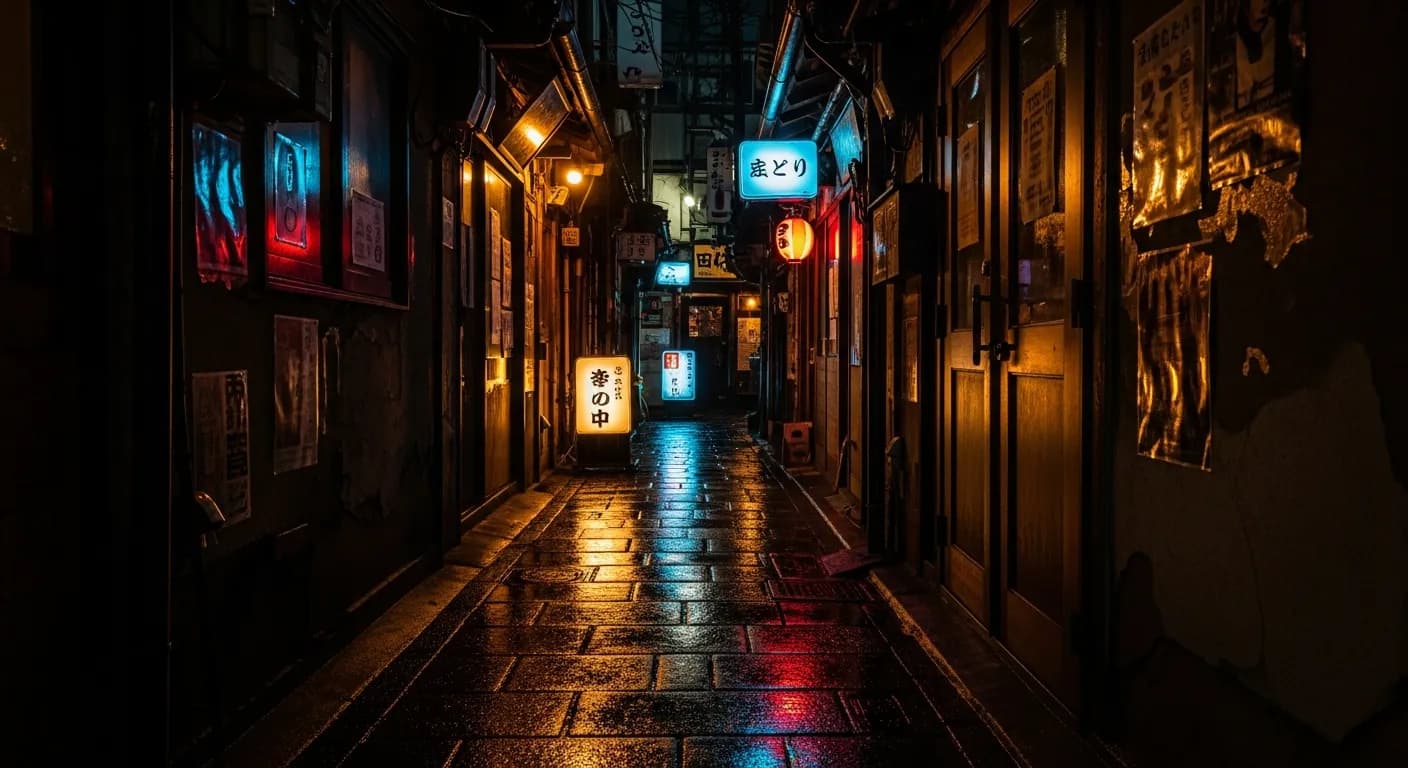
Tokyo gives you exactly what you expect, and then — if you stay long enough, wander far enough, say sumimasen to the right stranger at the right hour — it gives you everything else. The organized chaos of Shibuya crossing, the pristine temples, the conveyor-belt sushi that moves with Swiss precision: that’s the postcard. I’m not interested in the postcard. I’m interested in the city that breathes behind unmarked doors, down alleys so narrow your shoulders brush both walls, in neighborhoods where the wooden houses predate the war and the coffee has been aging longer than I’ve been alive.
I’ve spent years peeling back Tokyo’s layers, and what I keep finding is this: the city doesn’t hide things from you. It simply doesn’t advertise them. The secrets are there for anyone willing to get lost on purpose — to step off the Yamanote Line one stop too early, to follow the sound of jazz through a doorway that looks like it leads nowhere. You just have to show up with cash in your pocket (keep at least ¥10,000 to ¥20,000 on you — half the places I love most have never heard of Visa), your Suica card loaded on Apple Wallet, and absolutely no itinerary.
What I mean by Tokyo hidden gems
This is not a list of gimmicks or places that only sound secret on social media. It is for readers who want the quieter Tokyo that reveals itself slowly. Use it alongside my 3-day Tokyo itinerary, my guide to the best luxury hotels in Tokyo, and my Aman Tokyo review if you are building the whole trip at once.
The Quarter That Time Folded
Yanaka survived the firebombing that flattened most of Tokyo during the war, and you can feel it the moment you step off the train. Where the rest of the city rebuilt in concrete and glass, Yanaka kept its pre-war wooden houses, its tilting rooflines, its stubborn insistence on existing at a different speed. The air changes here. It smells like incense and grilled rice crackers and old wood that’s been absorbing sunlight for a century.
I found Yanaka Ginza — the neighborhood’s sloping shopping street — on a Tuesday morning when most of the city was still commuting. Vendors were setting out trays of senbei and handmade menchi katsu, and ceramic cat sculptures watched from every ledge and windowsill, a nod to the neighborhood’s famous stray population. There’s a sweetness to this street that resists irony. An old man was selling hand-carved wooden combs from a cart, the same kind his grandfather sold from the same spot. I bought one for ¥800 and he wrapped it like it was porcelain.
What caught me off guard was the cemetery. Yanaka Cemetery sounds like a strange recommendation, but in spring the cherry blossoms form a canopy over the walking paths so dense it feels architectural — pink light filtering through petals onto stone. The grave of Tokugawa Yoshinobu, the last shogun, sits here among ordinary headstones, which feels right somehow. Power returned to the earth. I walked the Yanaka Seven Lucky Gods pilgrimage route between seven temples on a whim, following hand-drawn maps posted at each stop, and finished three hours later with sore feet and the peculiar calm that comes from walking with purpose through a place that asks nothing of you.
Where the Creatives Went Underground
Shimokitazawa doesn’t try. That’s the whole point. While Harajuku performs rebellion for ring lights and content calendars, Shimokita — as locals call it — just is what it is: a tangle of narrow streets where young musicians, designers, and misfits have been building a culture that answers to no one. The vintage shops here aren’t curated for aesthetics; they’re curated by people who genuinely love clothes. Flamingo, my favorite, stocks racks of American and European vintage that someone has clearly obsessed over — leather jackets from the ’70s, perfectly broken-in Levi’s, silk blouses that would cost ten times as much in Daikanyama. Expect to spend ¥3,000 to ¥8,000 for pieces that feel like they chose you. Big Time and CIRCULABLE SUPPLY are worth the hunt too, though you’ll need to wander to find them.
The cafe culture here is its own religion. Bear Pond Espresso has a reputation that precedes it — the owner is famously particular, possibly grumpy depending on your tolerance for artistic temperament, and he does not allow photography inside. His espresso, available only on weekends, is pulled with a concentration that borders on ceremony. During the week, the drip coffee is still extraordinary, and the silence he enforces creates an atmosphere most cafes spend thousands trying to manufacture. I sat for an hour, watching light move across the counter, and didn’t touch my phone once.
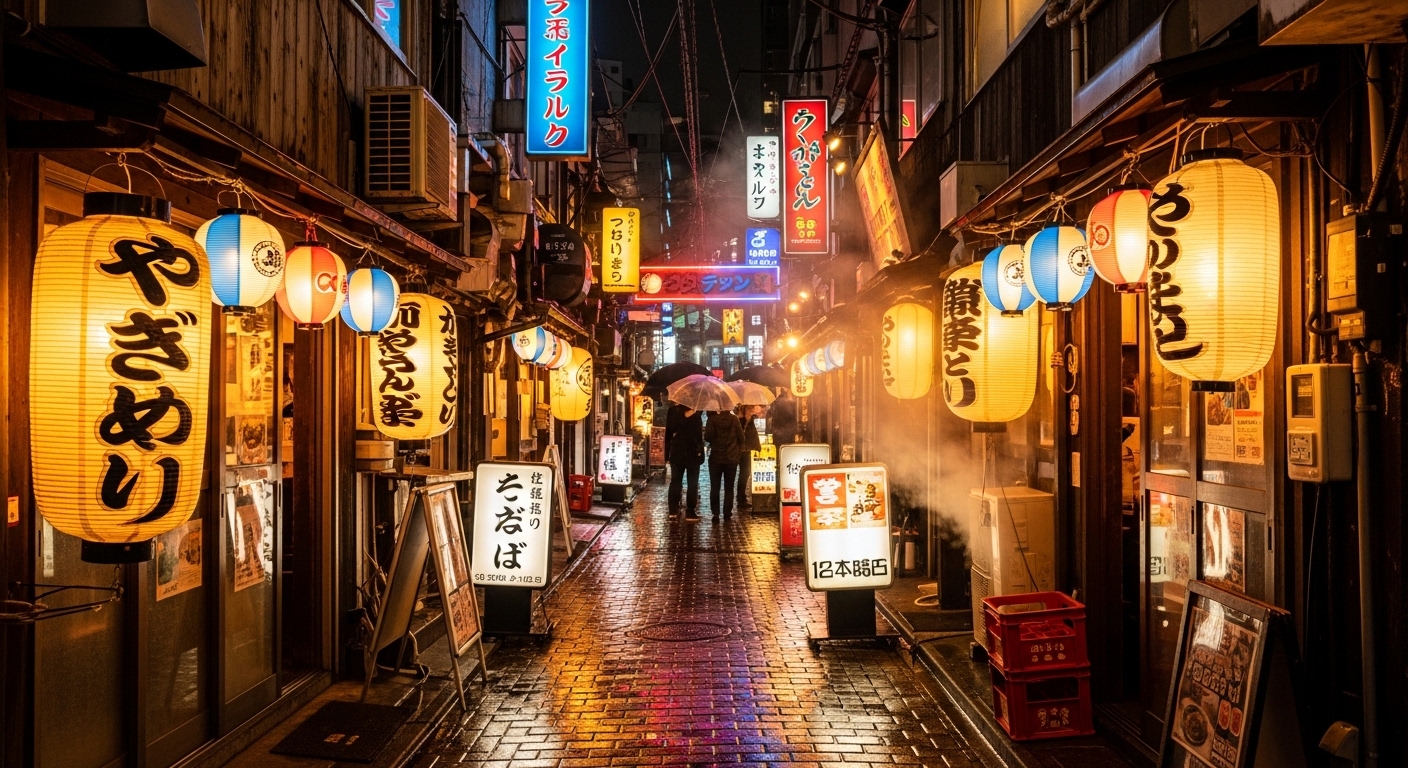
If you’re in Shimokita on a weeknight, check what’s playing at Honda Theater — a legendary small venue for experimental performance. I stumbled into a physical theater piece performed entirely in the dark, with the audience seated on the stage. I understood maybe a third of the Japanese, but the experience bypassed language entirely.
Six Alleys, Two Hundred Doors
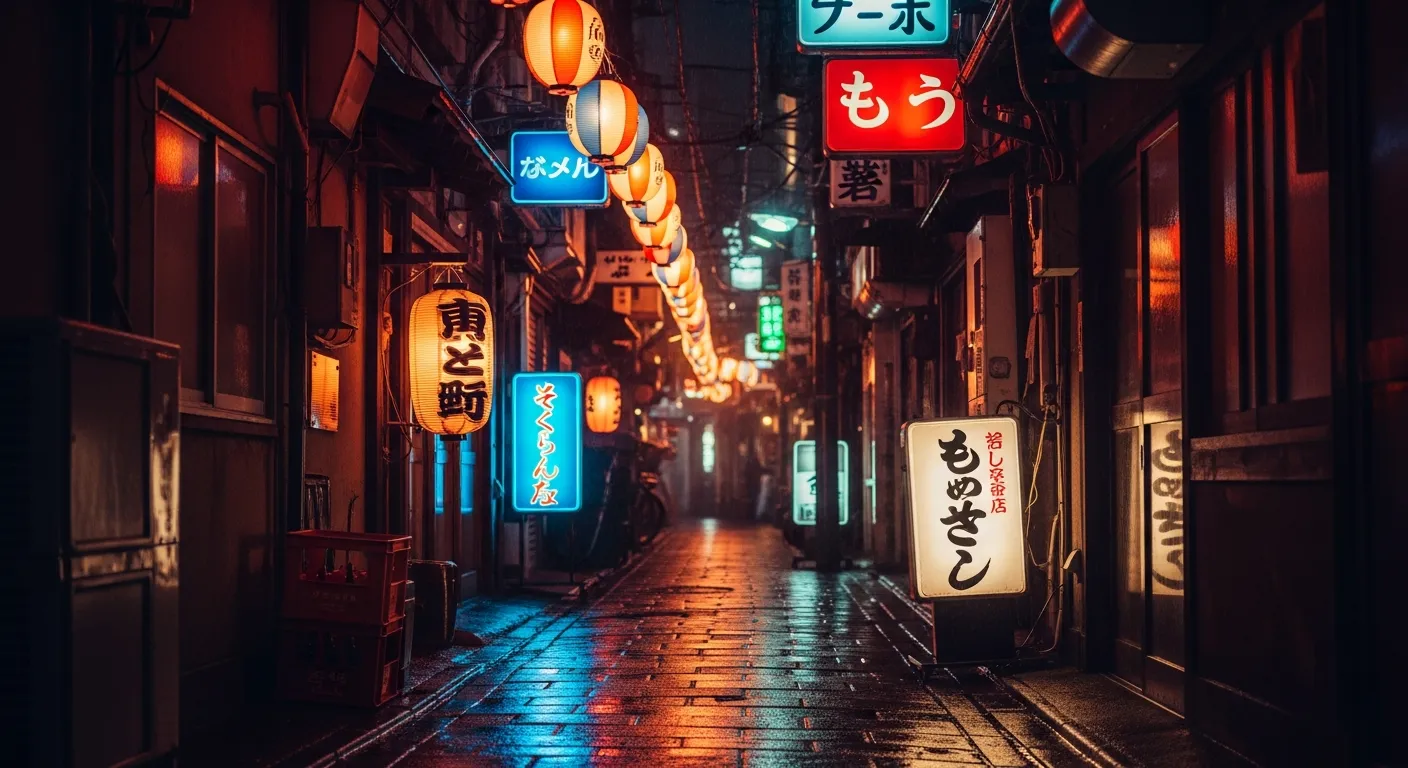
Golden Gai is six narrow alleys packed with over 200 bars, most fitting between six and ten people, crammed into a grid so tight it feels like a diorama of nightlife built at three-quarter scale. During early evening, it’s charming but cautious — tourists peering through doorways, trying to decode which places welcome them. Here’s what I’ve learned: about half the bars are open to newcomers, and you can tell by the English signs or menus propped outside. The ones without? Regulars only, and pushing the point will get you a polite but immovable refusal. Respect it. The bars that want you will make it known.
Cover charges run ¥500 to ¥2,000 depending on the bar, and they’re non-negotiable — think of it as rent for your six inches of counter space. Each place has a personality as specific as a fingerprint. One night I sat in a jazz bar where the mama-san played vinyl on a turntable older than the building, choosing records based on her mood and the weather. Another night, a punk bar with band stickers wallpapering every surface, where the bartender poured whiskey with a severity that suggested he took the spirit personally. I found a film noir-themed bar where the only light came from a projector silently screening Kurosawa, and a literature bar where the shelves held first editions and the conversation turned to Murakami before I’d finished my first drink.
The real Golden Gai doesn’t start until after midnight. The bars open around 8 PM, but the facades don’t drop until the last trains leave and the people who remain have committed to the night. That’s when the conversations get honest, when the mama-san pours you something that isn’t on the menu, when you realize you’ve been sitting in a stranger’s living room and they’ve been glad to have you.

Punk Rock and Silk Kimonos
Koenji is Shimokitazawa’s rougher, louder, cheaper older sibling, and I mean that as the highest compliment. The live music scene here runs on punk, noise, and whatever genre hasn’t been named yet — basement venues with hand-stapled flyers and ¥1,500 cover charges that include a drink and the possibility of temporary hearing loss. The energy is unpolished and completely alive.
But here’s the thing about Koenji that nobody tells you: it has the best secondhand kimono shopping in Tokyo. Full stop. I found a silk houmongi — a formal visiting kimono with hand-painted wisteria — for ¥4,000. In Asakusa, the tourist-facing shops would price the same piece at five or six times that. The vintage clothing in general runs cheaper than Shimokitazawa, which the locals guard as a quiet advantage. If you happen to be here in August, the Koenji Awa Odori festival floods the streets with 12,000 dancers in one of Tokyo’s most electrifying spectacles — but even on an ordinary Wednesday, the neighborhood hums with a frequency you can feel in your chest.
Cobblestones and Geisha Alleys
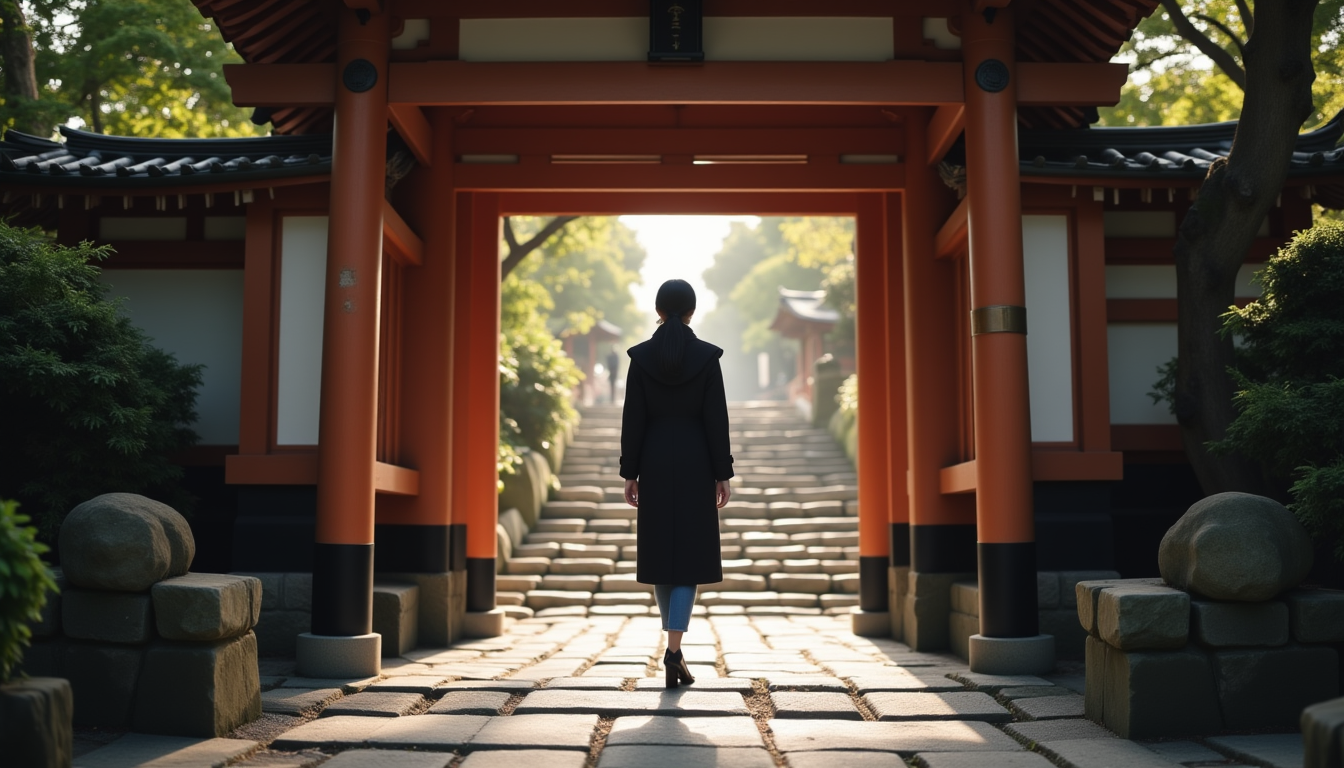
Kagurazaka was once a geisha district, and in a sense, it still is. The kagai — the narrow geisha alleys — still thread between buildings, and if you walk them at dusk, you might hear the click of geta sandals on cobblestone ahead of you, or catch a flash of embroidered silk disappearing around a corner. The ishidatami — the stone-paved lanes — are some of the last cobblestone alleys remaining in Tokyo, and they lead to places that feel centuries removed from the Shinjuku skyline visible just across the river.
What makes Kagurazaka genuinely strange and wonderful is the French connection. A sizable French expat community settled here decades ago, and the result is a neighborhood where French-Japanese fusion isn’t a gimmick but a lived reality. Bistros serve bouillabaisse with dashi undertones. Patisseries fill mille-feuille with matcha cream. It shouldn’t work, but it works extraordinarily well.
The hidden ryotei — traditional fine dining establishments tucked behind wooden gates with no signage — are Kagurazaka’s most guarded treasures. Some require an introduction from an existing patron, a system that sounds exclusionary until you understand it as a form of trust. Meals run ¥15,000 to ¥30,000 or more, served in private tatami rooms where the kaiseki courses arrive with the precision of a theater production. I was brought to one by a friend of a friend, through a gate I’d walked past twice without noticing. The meal lasted three hours. I still think about the eighth course — a single persimmon, perfectly ripe, served on a ceramic plate that was older than the building.
Eating Where the City Eats
Forget the Michelin-starred temples of gastronomy for a moment. Tokyo’s most revelatory meals happen standing up, sitting on overturned crates, or crammed elbow-to-elbow at counters where the chef is close enough to hand you the plate directly.
Standing sushi — tachigui — is how Tokyo actually eats when Tokyo is in a hurry. Uogashi Nihon-Ichi, a small chain near major stations, serves individual pieces of nigiri for ¥150 to ¥400 each. No reservations, no ceremony, no seats. You stand at the counter, order piece by piece, and eat sushi that would cost three times as much if you were allowed to sit down. The tuna at 7 AM, when the morning’s Tsukiji delivery has barely had time to settle, is as clean and bright as anything I’ve tasted in the city.
Omoide Yokocho — Memory Lane, though locals still call it by its older, less polite nickname — is a corridor of over 60 stalls near Shinjuku Station’s west exit, serving yakitori that costs ¥100 to ¥200 per skewer. Beer starts at ¥400. The smoke from the grills hangs in the alley like weather, and the stalls are so narrow that strangers’ knees touch under the counter. I’ve eaten here a dozen times, and each time I end up in conversation with someone I’d never have met otherwise — salarymen loosening their ties, students celebrating nothing in particular, an elderly woman who told me she’d been coming here since 1971 and the yakitori hadn’t changed.
Coffee Aged Like Wine
Cafe de L’Ambre in Ginza has been open since 1948, and stepping inside feels like entering a photograph that someone forgot to tell it was over. The interior is dark wood and amber light, the kind of place where time slows to the speed of a pour-over. What makes L’Ambre extraordinary isn’t atmosphere alone — it’s that they age their coffee beans, some for over twenty years, treating coffee with the reverence most reserve for whiskey or wine. A cup runs ¥700 to ¥1,200 depending on the vintage, and yes, I just used the word vintage to describe coffee, and yes, it’s warranted.
L’Ambre is part of Tokyo’s kissaten culture — the old-school Japanese coffee houses that predate Starbucks by half a century. Many of them play jazz on vinyl, serve thick-cut toast with butter, and operate with a seriousness about coffee that makes third-wave baristas look casual. They’re disappearing, one lease renewal at a time, which makes every visit feel like an act of preservation. Find them in Jimbocho, Kanda, Shibuya’s back streets — anywhere the rent hasn’t yet priced out a seventy-year-old man and his pour-over kettle.
When the Art Becomes the Room
teamLab Borderless moved to Azabudai Hills in 2024, and the new space is larger, stranger, and more disorienting than the original. The installations aren’t hung on walls — they are the walls, the floors, the air between you and the person standing ten feet away who’s dissolving into projected flowers. Tickets run ¥3,800 to ¥4,800, and you’ll want to book at least two weeks ahead online — I watched the queue snake around the building on a Tuesday. Arrive right when the doors open on a weekday morning, before the light installations get crowded with phone screens and the spell fractures. Give yourself three hours. Let the rooms find you instead of hunting for them. There’s one installation — a dark room where points of light drift like luminous plankton — where I sat on the floor for twenty minutes and forgot I was in a building in Tokyo. That kind of forgetting is worth the price of admission.
The Unspoken Language
Tokyo runs on a social contract so precise it’s almost invisible until you break it. No phone calls on trains — the silence in a packed Yamanote Line car is eerie and beautiful, hundreds of people choosing collective quiet. No eating on local trains, though the Shinkansen is a different universe where elaborate bento boxes are practically required. Tipping doesn’t exist here, and attempting it creates a confusion so genuine it borders on distress — your server will chase you down the street to return the extra yen, convinced you’ve made a mistake.
The word you need is sumimasen. It means “excuse me” and “I’m sorry” and “thank you” and “I acknowledge your existence and I’m grateful for it,” all compressed into four syllables. Use it when you enter a shop, when you accidentally block someone’s path, when the bartender pours your drink. It’s the skeleton key to every interaction you’ll have.
Load your Suica card onto Apple Wallet before you land — it works on every train, every bus, most convenience stores, and the vending machines that appear on Tokyo’s streets with the frequency of trees. But keep cash for the places that matter most: the yakitori stalls, the vintage shops, the tiny bars where the register is a wooden box. These places don’t refuse cards out of stubbornness. They refuse them because the transaction is personal, and a card makes it feel like business.
What Stays With You
Every time I leave Tokyo, the things I carry aren’t souvenirs. They’re moments with weight. The sound of a jazz record in a Ginza basement, played on equipment older than my parents. The taste of twenty-year-old coffee, dark and strange and somehow sweet. A silk kimono pulled from a rack in Koenji, still holding the shape of whoever wore it last. The mama-san in Golden Gai who poured me whiskey from a bottle she said she’d been saving for someone who looked like they needed it.
Tokyo doesn’t reveal itself on a schedule. It reveals itself when you stop performing the role of tourist and start simply being present — in an alley, at a counter, on a cobblestone path that leads somewhere you didn’t plan to go. The city has been here for centuries, folding and unfolding, hiding and revealing. It has time. The only question is whether you do.
Worth reading next
More stories worth your time.

Where to Stay in Tokyo: A Luxury Neighborhood Guide
An honest guide to where to stay in Tokyo, with the neighborhoods, hotel styles, and tradeoffs that matter before you book.

The Winter Alps: Where Luxury Means Wood Fires, Not Gold Leaf
Four Alpine towns, four different ideas of what winter luxury means. From Zermatt's car-free quiet to Courchevel's fur-coat chaos, a guide to the Alps for people who care about the fire in the lobby.

Where to Eat in Tokyo: A Guide for People Who Take Food Personally
Two weeks in Tokyo, eating three meals a day plus snacks, convenience store runs at midnight, and one life-altering omakase. A neighborhood-by-neighborhood guide for people who consider food a personality trait.
About Kaira
Explore With Kaira is built for readers who want the atmosphere of a luxury travel magazine without the emptiness of sponsored copy.
About Kaira