Art on Unpaved Roads: José Ignacio’s Luxury Hotels, Honestly Reviewed
The titanium facade catches the afternoon light like a blade, and for a moment I forget I’m standing in a village where the streets are still made of sand. This is Playa Vik, José Ignacio’s most photographed hotel, rising from the dunes like something that fell from space. The bronze door — carved by Pablo […]

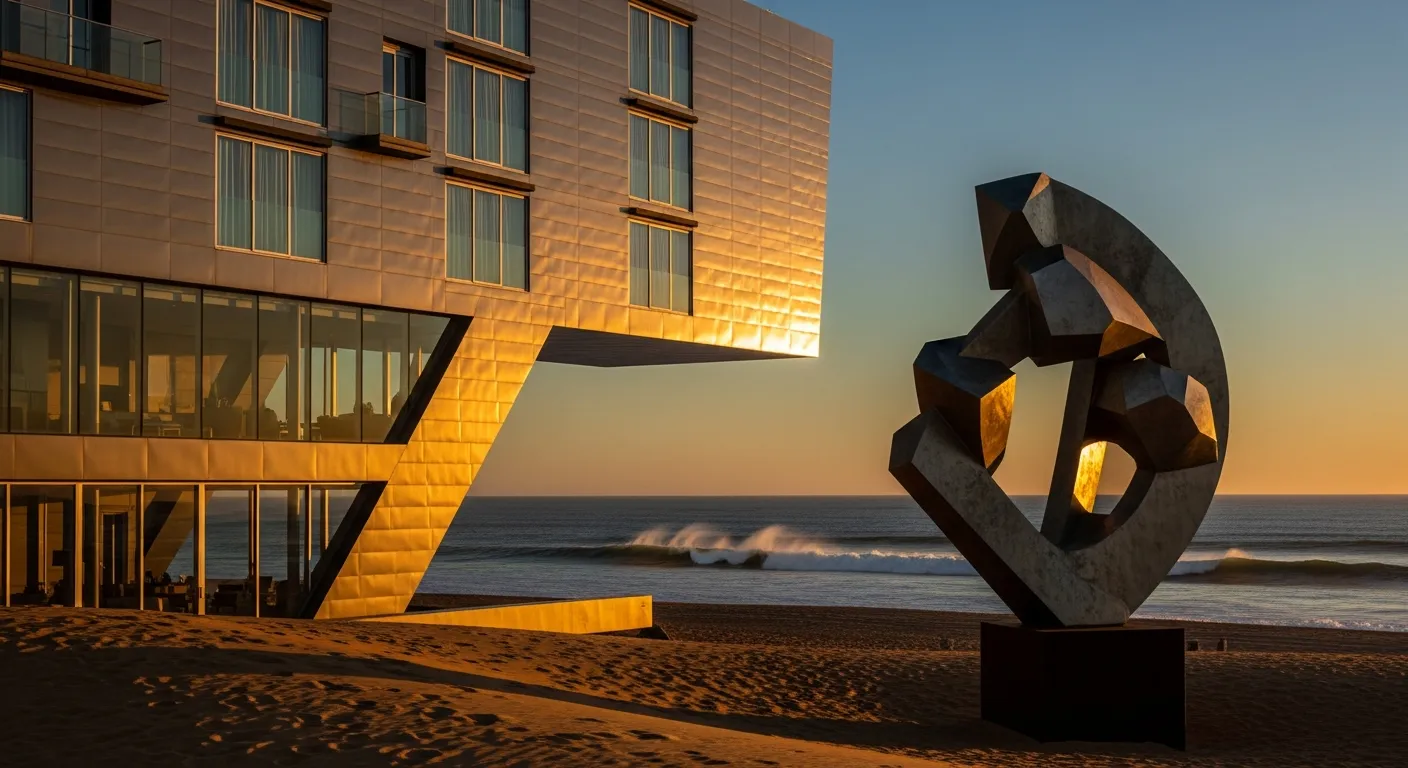
The titanium facade catches the afternoon light like a blade, and for a moment I forget I’m standing in a village where the streets are still made of sand. This is Playa Vik, José Ignacio’s most photographed hotel, rising from the dunes like something that fell from space. The bronze door — carved by Pablo Atchugarry and heavy as cathedral gates — opens onto Carlos Ott’s architectural fever dream, where 18 artist-designed suites orbit around a 55-foot cantilevered glass sculpture they call simply “The Sculpture.”
I’m holding the WhatsApp message that serves as my room key, because phones don’t exist here. It’s my third attempt to reach reception, and I’m beginning to understand why Playa Vik sits at number 6 of 12 on TripAdvisor despite rates that climb from $332 in low season to over $1,500 during peak summer weeks. The art is museum-quality — there’s an Anselm Kiefer that stops conversations mid-sentence — but hospitality isn’t hanging on these walls.
This is the paradox of José Ignacio luxury: properties that charge Manhattan prices in a village without ATMs, where unpaved streets flood with rain and umbrellas become essential for navigating between buildings. It’s luxury as statement rather than service, and whether that works for you depends entirely on what you came here seeking.
The Vik Universe: Art First, Everything Else Second
Alexander Vik’s fingerprints are all over this coastline, though the Swedish-born Norwegian billionaire rarely appears in person. Forbes called him “Most Interesting Man in the World” in 2014, and his mother’s Uruguayan roots explain why he chose this particular stretch of Atlantic coast to build his art-hotel empire. Married to Carrie since 1982, he’s patronized over 70 artists and built six properties globally, including Viña Vik, which just claimed the title of world’s best vineyard this past December.
But here in José Ignacio, his vision creates an interesting tension. Playa Vik trades entirely on its art collection — and it’s genuinely spectacular. Each suite feels like a private gallery where you happen to sleep, with pieces commissioned specifically for the spaces. The problem emerges when you need ice or towels or answers to simple questions. The restaurant consistently disappoints despite the setting, and that beautiful titanium-and-glass architecture becomes less romantic when you’re soaked trying to reach the spa.

Twenty minutes inland, Estancia Vik tells a different story entirely. This 4,000-acre working cattle ranch houses 12 suites, each designed by a different Uruguayan artist, scattered across grounds where actual gauchos still work the herds. Carlos and Bauti, the horseback guides, have been here since the beginning, and they know every hidden river bend and sunset viewpoint across the property. Rates run $237 to $583 per night — including breakfast and a fully stocked minibar — making it the consensus best value in the Vik portfolio.
The 20-meter pool carved from Absolute Nero granite reflects nothing but sky and grassland. Full moon experiences happen monthly during season, with rides timed to the lunar calendar and dinners served under stars so bright they shame city dwellers into silence. Booking.com gives it a 9.6 rating, and Robb Report called it an “under-the-radar gem.” Unlike its coastal sibling, Estancia Vik earns its reputation through experience rather than Instagram moments.
Beyond the Vik Umbrella
Bahia Vik occupies 10 acres of Atlantic beachfront with 49 rooms split between the main building and titanium-clad bungalows topped with thatch roofs. It’s more bohemian than Playa Vik, earthier in its luxury, with four pools and a Vidrio (Glass) Bungalow that houses the coveted Surf Suite. Rates run $550 to over $1,000 per night, and like all Vik properties, it closes for half the year — April through October.
Walking into Posada del Faro feels like entering a friend’s beach house rather than a hotel, which is precisely the point. This 15-room property represents old José Ignacio — before the art installations and architectural statements. Rates range from $290 to $550 per night, and unlike the Vik empire, it stays open year-round. Its 9.5 Booking.com rating reflects something the art hotels struggle with: genuine hospitality.
Breakfast happens anywhere you want it, anytime you request it. Bikes and golf carts come included, not as upcharges. The family owners know their guests by name, not room number. It’s luxury through attention rather than exhibition, and in a village increasingly dominated by statement properties, it feels almost radical.
Posada Ayana takes a different approach to intimacy — 17 rooms, adults only, with rates from $395 to $725 per night. The James Turrell Skyspace called “Ta Khut” sits free for guests, a meditation chamber where light becomes sculpture as day fades to night. Floor-to-ceiling windows frame private gardens, and every room feels like a sanctuary. Open November through March only, it attracts visitors seeking art without attitude.
The Restaurant That Built a Village
La Huella didn’t just put José Ignacio on the culinary map — it created the map entirely. Founded in 2001 as a casual beachside grill, it evolved into the restaurant that launched this entire luxury ecosystem. Tables sit directly in the sand of Playa Brava, and the grilled octopus with sea bass ceviche has achieved near-mythical status among South American food lovers.
Dinner runs $80 to $120 per person, and reservations require calling weeks ahead to +598 4486 2279. It earned a spot on Latin America’s 50 Best list, but more importantly, it proved that sophisticated travelers would venture to this remote Uruguayan coast for extraordinary experiences. Every hotel that followed owes something to La Huella’s original vision.
In the pine forest behind the village, Marismo creates dinner theater with torch-lit communal tables surrounding an open fire. Chef Federico Desseno’s braised lamb emerges from coals that have burned since afternoon, and the $100 to $110 per person experience operates only during summer months. It’s dinner as ritual, meal as memory, and impossible to imagine anywhere else.
What Most People Miss: The Villa Culture
The hotels tell only half of José Ignacio’s story. Regulars — the barefoot billionaires who return every season — don’t book suites. They rent the same private villa year after year, sometimes for decades. These houses, many unmarked and invisible from the sand streets, command up to $18,000 for 11 peak days in January and February.
This parallel luxury ecosystem explains why the village feels both exclusive and empty. The real money stays hidden behind garden walls, hosting private dinners and beach picnics that never appear on social media. Hotels serve first-time visitors and art collectors; villas shelter the families who’ve claimed this coast as their January refuge since before anyone heard of José Ignacio.
The Luxury of Absence
Here’s what $1,500 per night buys you in José Ignacio: no room service, no concierge, no paved roads to your titanium suite. The luxury isn’t in the amenities — it’s in their deliberate absence. No traffic lights because there are no intersections that need them. No high-rises because building codes prevent them. No chain stores because the community actively resists them.
The village maintains its essential character by making modern convenience inconvenient. You walk everywhere because cars sink in sand streets. You plan ahead because restaurants close without warning. You disconnect because WiFi works sporadically at best. It’s luxury as resistance to the very forces that usually create luxury destinations.
Standing on my balcony at Playa Vik as the summer storm passes, watching rain turn the sculpture garden into mirrors, I understand why people return here despite the service inconsistencies and infrastructure challenges. This isn’t luxury as comfort — it’s luxury as editing. Everything unnecessary has been removed, leaving only what matters: vast sky, endless ocean, and the rare pleasure of existing somewhere that refuses to be everywhere else.
The WhatsApp message finally comes through: dinner is served whenever you’re ready. No reservations required, no dress code enforced. Just walk across the wet grass in whatever you’re wearing and sit wherever the light looks best. Sometimes the slowest service delivers exactly what you didn’t know you needed.
Worth reading next
More stories worth your time.

The Maldives Question: Is $2,000 a Night Worth It? (An Honest Answer)
I've stayed at four Maldivian resorts across three trips and two budgets. Here's the honest answer to whether those overwater villas are worth what they charge — and what nobody tells you about paradise before you book.

The White Lotus Hotels Are Real. The Experience Isn’t What You Think.
The White Lotus hotels are real, but staying at them now is a different experience than the fantasy the show sells.

St. Regis Bora Bora: Waking Up Above Water Is Not a Spiritual Experience
The brochure for the St. Regis Bora Bora promises a “transformative overwater experience.” The website uses words like “transcendent” and “soul-stirring.” Three different people told me, before I went, that waking up in an overwater villa would “change the way I see the world.” It didn’t change the way I see the world. It changed […]
About Kaira
Explore With Kaira is built for readers who want the atmosphere of a luxury travel magazine without the emptiness of sponsored copy.
About Kaira