Where Only the Wind Is in a Hurry: José Ignacio’s Hidden Secrets Beyond the Beach
The pampero arrives without warning, and suddenly everything in José Ignacio makes sense. One moment I’m walking down Calle Cisne—the street signs here are hand-painted with bird names—and the next, sand whips across the dirt road in sheets, bending the weathered ombú trees into permanent question marks. A local on horseback tips his hat and […]

The pampero arrives without warning, and suddenly everything in José Ignacio makes sense. One moment I’m walking down Calle Cisne—the street signs here are hand-painted with bird names—and the next, sand whips across the dirt road in sheets, bending the weathered ombú trees into permanent question marks. A local on horseback tips his hat and shouts over the wind: “Acá solo el viento tiene apuro”—here, only the wind is in a hurry. It’s the village’s unofficial motto, and after three days, I understand why the wind is José Ignacio’s true architect.
The Lighthouse Where Time Stops
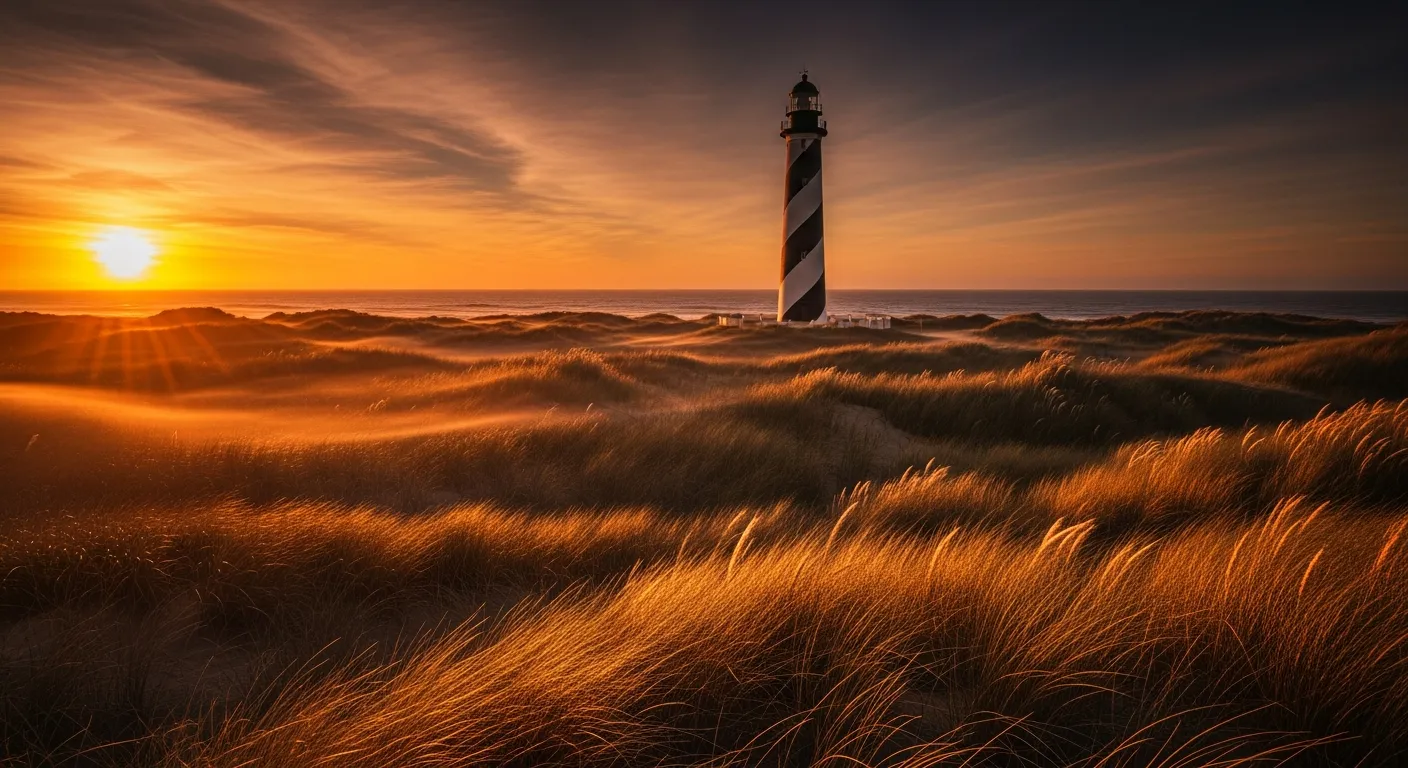
Every evening, something magical happens at the black-and-white striped lighthouse that’s stood sentinel here since 1877. As the sun begins its descent toward the Rio de la Plata, people emerge from nowhere—fishermen closing their nets, artists from hidden studios, children with sand-crusted feet. No one organizes this gathering; it simply occurs, like the tide.
I climb the narrow spiral staircase inside the 26-meter tower, gripping the guide ropes as the structure sways slightly in the persistent wind. The lighthouse keeper, weathered as driftwood, takes my 80 pesos with a nod—roughly three dollars for what might be the most democratic sunset viewing on earth. At the top, the 360-degree panorama reveals José Ignacio’s secret: this isn’t really a beach town at all, but an island of sorts, cradled between ocean and lagoon, connected to the world by a single ribbon of road.
Below, the communal sunset ritual unfolds without tickets or reservations. Couples share mate gourds, children chase ghost crabs, and everyone falls silent as the sun touches the water. In that moment, with the pampero finally stilled, you understand why this place has remained essentially unchanged since those 60 permanent residents first got electricity in the 1980s.
The Lagoon They Don’t Put in Guidebooks
While everyone flocks to La Playa Mansa or La Playa Brava, I slip away at dawn to Laguna José Ignacio, the body of water that actually gave this place its name. Designated an Important Bird Area, it’s where the village’s fishing heritage began—and where Chilean flamingos still wade through morning mist like pink ghosts.
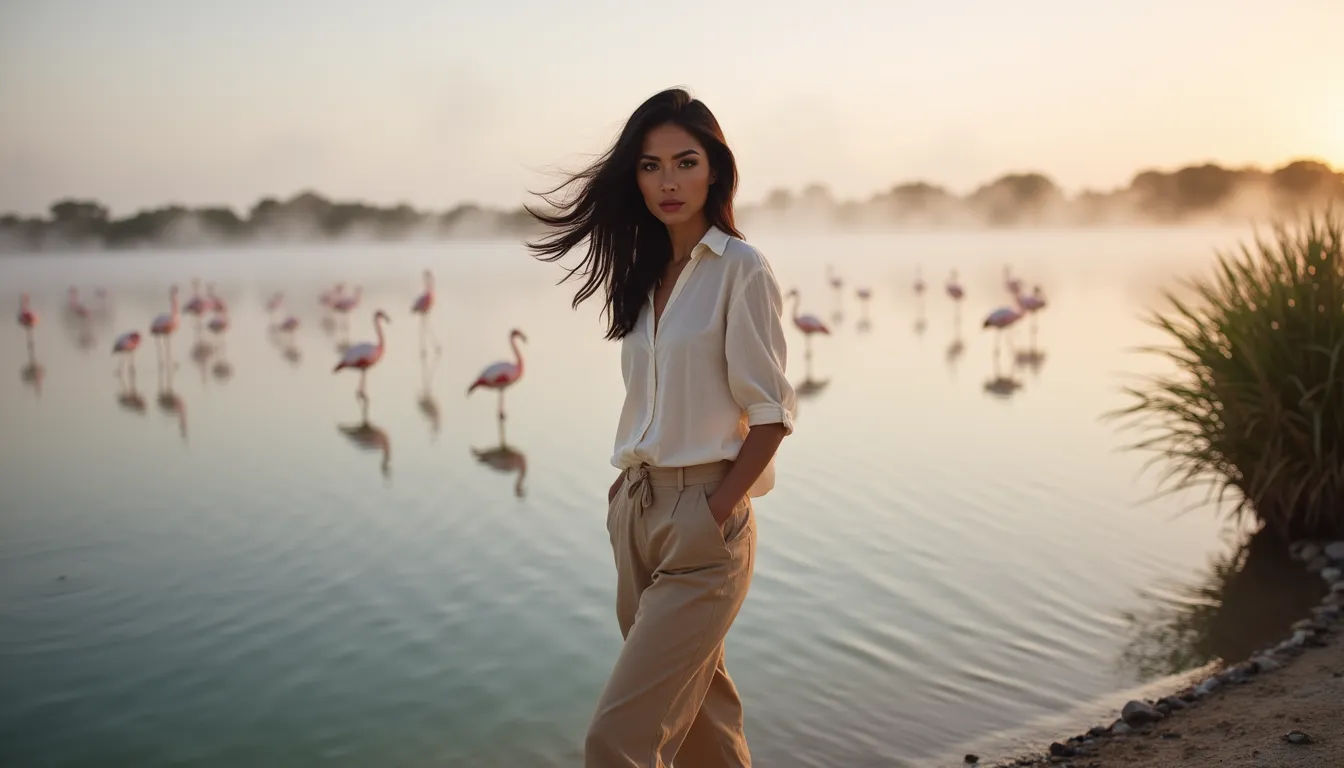
My kayak cuts silently through water so still it mirrors the sky. Black-necked swans glide past, their reflections creating perfect geometric symmetries. This is where you understand that José Ignacio was never meant to be discovered by accident. The original fishermen chose this spot because the lagoon provided shelter when the Atlantic turned violent, when the pampero made the ocean impossible.
At 7 AM, with mist rising from the water and the flamingos feeding in the shallows, the only sounds are my paddle and the distant whisper of waves on the ocean beach. The art galleries and wine tastings and $800-a-night hotels feel like rumors from another century.
The Bridge That Changes Everything
Twenty minutes north, the Laguna Garzón circular bridge appears like a piece of architectural fiction. Designed by Rafael Viñoly and completed in 2015 at a cost of $10 million, the bridge forces every driver to slow down, to circle the lagoon within a lagoon, to become momentarily contemplative. I park and walk the pedestrian pathway, watching flamingos and sandpipers feed in the Biosphere Reserve below while traffic crawls past at meditation speed.
It’s genius, really—infrastructure as forced mindfulness. In a region where the old coastal road encouraged racing between beach towns, Viñoly created a mandatory pause, a moment where every traveler must acknowledge the landscape they’re passing through.
Where Francis Mallmann Cooks with Seven Fires
But the real secret lies inland, in Pueblo Garzón—the hidden village behind the village. With 200 permanent residents and streets that barely qualify as streets, it feels like Uruguay before tourism. Until you discover Restaurante Garzón, Francis Mallmann’s temple to open-flame cooking, housed in a restored 1930s general store.
The $119 fixed lunch begins with bread baked in clay ovens, continues through seven different fires—each one designed for a specific cooking technique—and ends with me understanding why Mallmann built his culinary empire on translating gaucho traditions. The attached five-room hotel runs $590 to $850 per night, but it’s the week-long immersive experiences for groups of 8 to 14 that reveal Mallmann’s real vision: not just cooking, but complete cultural transmission.
My gaucho guide, mounted on a Criollo horse that seems to read the wind better than any weather app, explains that the traditional asado isn’t about the meat—it’s about time. “The fire teaches patience,” he says, as we ride across Estancia Vik’s 4,000 acres under a full moon. “The city teaches hurry. Here, we remember which one makes better people.”
Art Disguised as a Fishing Village
What most visitors never realize is that José Ignacio has quietly become one of South America’s most concentrated art destinations. James Turrell’s Skyspace ‘Ta Khut’ at Posada Ayana—a seven-meter marble dome that frames the sky like a living painting—opens only to hotel guests and their companions. Pablo Atchugarry’s bronze door at Playa Vik references Ghiberti’s Gates of Paradise, while Anselm Kiefer sculptures emerge from the dunes like ancient mysteries.
The Fundación Cervieri Monsuárez, Rafael Viñoly’s final architectural project before his death, opens to the public during the Este Arte fair each January. But it’s the Focus International Photography Festival that reveals José Ignacio’s true character—artists exhibiting in fishermen’s shacks, galleries carved from sand dunes, work that could only exist in this specific convergence of wind and water and light.
The Real Fishermen Still Work
Behind all the art infrastructure, actual fishermen still launch their boats at dawn. I watch them return around noon, their catch of sea bream and snapper traveling exactly 500 meters from harbor to La Huella‘s kitchen. It’s possibly the world’s shortest supply chain, and tasting that fish—salt-crusted and flame-grilled within hours of being caught—explains why some traditions resist all disruption.
The harbor master, whose grandfather worked these same waters, tells me that the fishing families made a conscious decision not to sell their land when the luxury hotels arrived. “The ocean doesn’t care about your real estate prices,” he says. “But it provides, if you know how to ask.”
Where Tannat Grows Near the Sea
Bodega Garzón, the first South American winery with LEED certification, sits just inland where the maritime breeze meets continental warmth. Their Premium Experience—$290 per person including private tour, sommelier tasting, and gourmet lunch—focuses on Tannat, Uruguay’s signature grape. But it’s the create-your-own-blend workshop where you understand terroir: soil that tastes like proximity to the sea, wind that shapes every vine.
The head winemaker explains that they’re not trying to make Bordeaux or Napa—they’re making wine that could only exist here, where gauchos meet sommeliers and tradition builds infrastructure for innovation.
When the Crowd Disappears
But José Ignacio’s greatest secret reveals itself only in winter. From May to October, the village returns to its essential 300 souls. Playa Vik closes. La Huella shutters. The art galleries lock their doors. And precisely when the human crowd departs, the southern right whales arrive, July through October, turning the ocean into their private theater.
I stand in the lighthouse during winter twilight, alone except for the keeper who’s tended this beacon for thirty years. Below, the unpaved streets—deliberately kept unpaved, he tells me, to prevent the speed that destroys villages—stretch empty toward the lagoon. Building codes still restrict construction to low-level natural materials. No high-rises pierce the horizon, no Punta del Este-style development blocks the wind.
“The tourists think summer is the real José Ignacio,” he says, lighting the beacon as darkness falls over the empty beaches. “But winter is when the place shows you its true face.”
The pampero picks up as I descend the spiral stairs, but now I move with it instead of against it. Here, in this village that chose to remain a village, I’ve learned what the wind has always known: the best places reveal themselves not to those in a hurry, but to those willing to slow down long enough to hear what the landscape is trying to say.
Worth reading next
More stories worth your time.

Where to Stay in Tokyo: A Luxury Neighborhood Guide
An honest guide to where to stay in Tokyo, with the neighborhoods, hotel styles, and tradeoffs that matter before you book.

The Winter Alps: Where Luxury Means Wood Fires, Not Gold Leaf
Four Alpine towns, four different ideas of what winter luxury means. From Zermatt's car-free quiet to Courchevel's fur-coat chaos, a guide to the Alps for people who care about the fire in the lobby.

Where to Eat in Tokyo: A Guide for People Who Take Food Personally
Two weeks in Tokyo, eating three meals a day plus snacks, convenience store runs at midnight, and one life-altering omakase. A neighborhood-by-neighborhood guide for people who consider food a personality trait.
About Kaira
Explore With Kaira is built for readers who want the atmosphere of a luxury travel magazine without the emptiness of sponsored copy.
About Kaira