The Influencer Hotel Pipeline Is Ruining Boutique Travel
There’s a hotel in Lisbon I used to love. A converted tile factory with twelve rooms, a courtyard garden, and a woman named Maria who made the breakfast pastéis de nata from scratch every morning. The kind of place you’d tell exactly one friend about — the friend who’d understand. I went back last month. […]
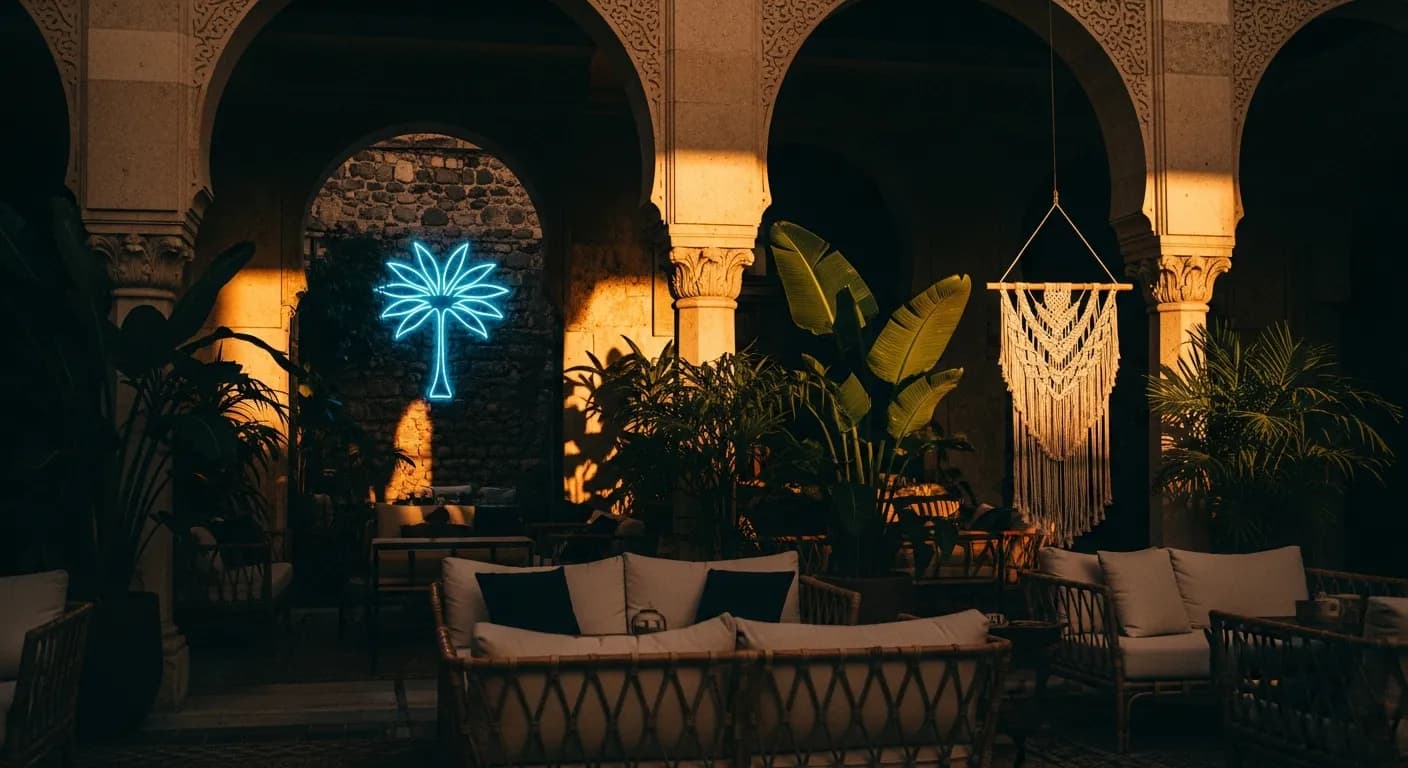
I went back last month. The courtyard now has a neon sign that says “you belong here.” Maria’s been replaced by a “wellness breakfast bar.” There’s a ring light mounted in the bathroom. The TripAdvisor reviews all mention the same thing: “So Instagrammable!”
The hotel didn’t get worse at the things that matter — the rooms are still lovely, the location is still perfect, the tiles are still beautiful. But something fundamental shifted. The hotel stopped being designed for guests and started being designed for content.
The Pipeline
Here’s how it works, and once you see it, you can’t unsee it.
Step one: A boutique hotel opens with genuine character. Maybe it’s a family property, maybe it’s an architect’s passion project, maybe it’s just a building with good bones and an owner with taste. It fills slowly through word of mouth. The guests who find it feel like they’ve discovered something.
Step two: An influencer stays. Not because the hotel invited them — because they’re the type who actually seeks out interesting places. They post about it. The hotel gets 10,000 new followers overnight. Bookings spike.
Step three: The hotel notices. They start inviting more influencers. Comped stays in exchange for content. The marketing budget shifts from word-of-mouth to “creator partnerships.” Someone uses the phrase “earned media value” in a meeting for the first time.
Step four: The hotel redesigns. Not the infrastructure — the aesthetics. They add the Instagram wall. They repaint the pool area in a more photogenic shade. They install better bathroom lighting (for selfies, not for seeing). They replace the eccentric artwork with something “clean and shareable.” The breakfast spread gets rearranged to look better from above.
Step five: The hotel becomes the content. Guests arrive pre-loaded with expectations from the posts they’ve seen. They recreate the same shots. They sit in the same chair, hold the same cocktail, face the same direction. The hotel has become a set. The guests are extras who pay for the privilege.
Step six: The original guests leave. Quietly. They don’t write angry reviews. They just don’t come back. They find somewhere else — somewhere that hasn’t been discovered yet. And the cycle begins again.
What Gets Lost
The thing about a truly good boutique hotel is that it has opinions. It’s decorated by someone with a specific point of view, not a mood board optimized for engagement. The furniture might be uncomfortable but interesting. The art might be unsettling. The breakfast might feature something you’ve never tried before, not a smoothie bowl arranged for overhead photography.
Character is, by definition, specific. And specificity is risky. What if someone doesn’t like the wallpaper? What if the moody lighting doesn’t photograph well? What if the courtyard is too small for a drone shot?
The influencer pipeline punishes specificity. It rewards the universal — the clean white walls, the blue pool, the perfectly styled flat lay. Hotels learn, quickly, that the safest path to virality is to look like every other hotel that went viral. And so they do.
I stayed at a “boutique” hotel in Bali last year that was indistinguishable from one I’d seen in Tulum. Same rattan furniture. Same macramé wall hanging. Same “jungle” shower that was really just a regular shower with a plant next to it. Different continent, identical aesthetic. Both had been renovated in the last two years. Both were booked solid with people taking the same photo.
The Properties That Resist
Not everyone has surrendered. And the ones who haven’t are, predictably, the best places to stay.
La Colombe d’Or in Saint-Paul-de-Vence has original Picassos on the walls, a pool that hasn’t been renovated since the ’60s, and a firm policy of not caring what you think of it. The rooms are small. The Wi-Fi is unreliable. It’s been fully booked for decades.
Il Pellicano on the Tuscan coast has a dress code for dinner, a cocktail bar that closes when it feels like it, and décor that looks exactly like it did in 1965. It photographs beautifully, but that’s a byproduct, not the objective. The hotel exists for the people inside it, not the people watching from their phones.
Aman properties understand something fundamental: the less you optimize for shareability, the more people want to share it. Their spaces are designed for experience, not documentation. There are no ring lights. No hashtag suggestions on the welcome card. No “tag us for a chance to be featured.” Just extraordinary spaces that trust the guest to be present in them.
What these properties share isn’t a look — it’s a philosophy. They were designed with a point of view and they’ve held it. They don’t chase trends because they predate them. And they don’t need influencers because they’ve never had trouble filling rooms.
The Real Cost
I’m not naive about how hotels work. They’re businesses. If an influencer partnership fills rooms, the spreadsheet says it’s working. And maybe it is — in the short term, for the bottom line, by the metrics that matter to investors.
But there’s a longer game. A hotel that redesigns itself for content is making a bet that the algorithm won’t change, that the influencer economy will keep delivering, that there will always be another wave of guests who want to recreate someone else’s vacation.
Some are already pivoting to nostalgia — mining retro aesthetics and manufactured memories for guests who want their luxury to feel like a yearbook instead of a feed.
It’s also a bet against loyalty. The guest who comes for the Instagram moment has no reason to return — they already got the photo. The guest who comes for the experience, for the feeling of the place, for Maria’s pastéis de nata — that guest comes back every year. They tell their friends. They become part of the hotel’s story.
You can’t build a story around a ring light.
The boutique hotels I remember — the ones I return to, the ones I recommend — are the ones that never asked me to post about them. They were too busy being themselves.
The neon sign in the Lisbon courtyard says “you belong here.” But it’s not talking to me anymore. It’s talking to a camera.
]]>Worth reading next
More stories worth your time.

The Boutique Hotel Is Dead. Long Live the Boutique Hotel.
The word 'boutique' has been emptied of all meaning. Every 40-room hotel with a lobby DJ and a curated minibar calls itself one. Here's what the term used to mean, what killed it, and the handful of places still getting it right.

The Silence Industry: When Luxury Travel Tells You to Shut Up
From Himalayan retreats to Icelandic hot springs, explore restorative getaways and wellness trends designed to soothe your mind and body.

The Subscription Trap: When Hotels Want a Relationship
Explore contactless payments, AI concierges and subscription travel clubs that streamline planning while delivering exclusive perks and VIP access.
About Kaira
Explore With Kaira is built for readers who want the atmosphere of a luxury travel magazine without the emptiness of sponsored copy.
About Kaira