Between Ancient Walls and Infinity Pools: Where to Stay in AlUla
The limestone cliff splits open at dawn like a revelation, and suddenly I’m suspended between ancient sandstone walls in an infinity pool that shouldn’t exist. Water spills endlessly toward the desert horizon while ibis circle overhead, their calls echoing off rock formations that have watched empires rise and fall. This is the Rock Pool at […]

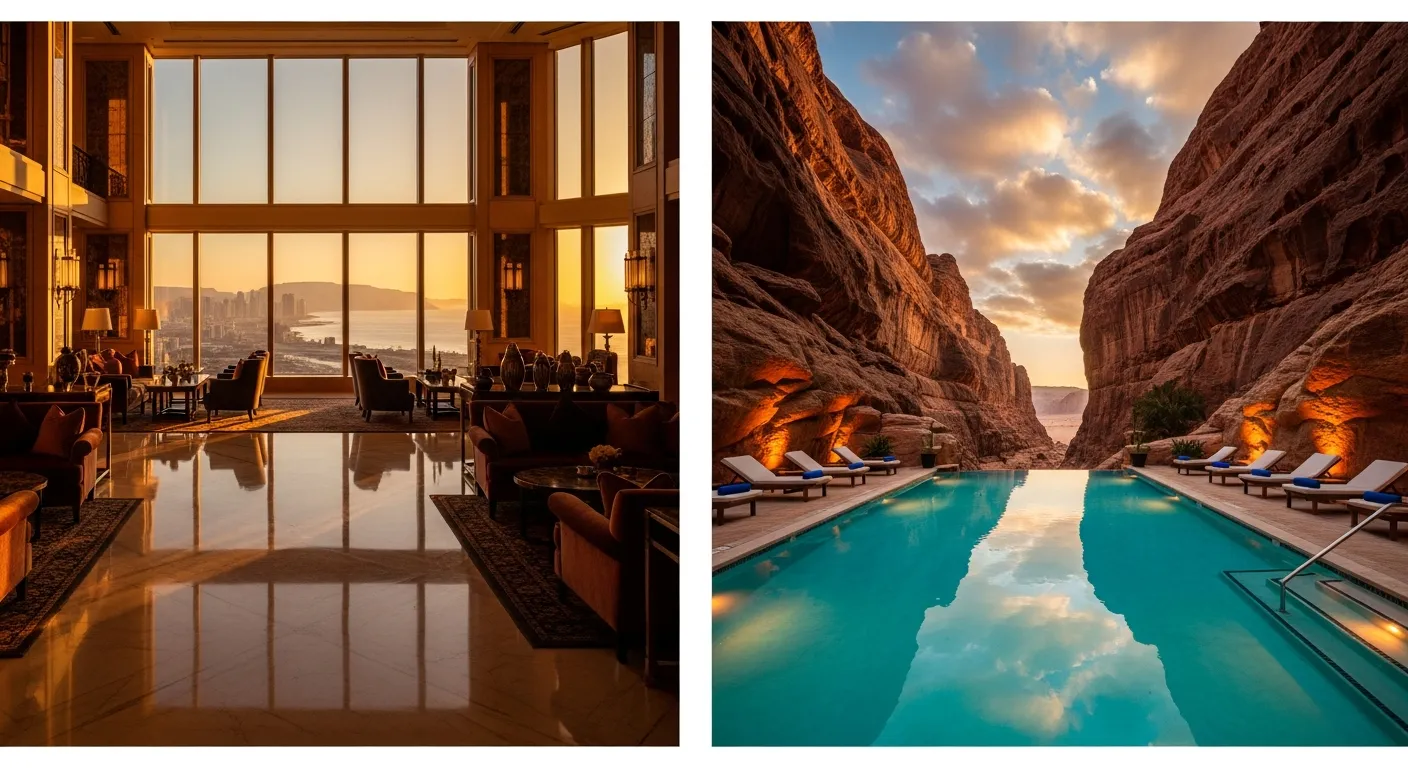
The limestone cliff splits open at dawn like a revelation, and suddenly I’m suspended between ancient sandstone walls in an infinity pool that shouldn’t exist. Water spills endlessly toward the desert horizon while ibis circle overhead, their calls echoing off rock formations that have watched empires rise and fall. This is the Rock Pool at Banyan Tree AlUla, and after swimming here at sunrise, I understand why Saudi Arabia chose this forgotten valley to birth their most ambitious tourism vision.
AlUla feels like stepping onto an empty stage moments before the curtain rises on something magnificent. The Kingdom has invested thirty billion dollars transforming this archaeological wonder into the Middle East’s most exclusive destination, and the hotels arriving here aren’t just accommodations — they’re statements of intent. I’ve spent the last month experiencing every luxury property that’s opened so far, and what I discovered is a collection of hotels so extraordinary they justify the journey to a country most travelers have never considered.
The Chedi Hegra: Sleeping Inside History
Nothing prepares you for breakfast inside a UNESCO World Heritage Site. I’m sitting in Prima Classe restaurant, surrounded by the original stone walls of the 1907 Hegra Train Station, watching sunrise illuminate Locomotive 964 through floor-to-ceiling windows. This is The Chedi Hegra, the only hotel in the world built inside an active archaeological zone, and it opened just months ago with a story so compelling I had to see it myself.
The original Hejaz Railway station has been restored with obsessive attention — every carved stone block preserved, every architectural detail honored. My room overlooks the ancient Nabataean tombs of Hegra, those impossibly perfect facades carved into living rock two thousand years ago. At SAR 3,915 per night (around $1,044), The Chedi commands serious money, but where else can you sleep where Lawrence of Arabia once waited for trains?
The 35 rooms blend Arabian opulence with Asian elegance — think carved wooden screens, silk textiles, and bathrooms lined in locally quarried stone. Service carries that precise Chedi attention to detail I remember from their Muscat property, though being so newly opened, some amenities are still rolling out. The spa promises to be spectacular when fully complete, but for now, the real luxury is exclusivity. Walking these corridors at night, lamp-lit and silent except for desert wind, feels like having a museum to yourself.
What strikes me most is the weight of sleeping inside history. The train station walls remember Ottoman governors, British engineers, pilgrims heading to Mecca. Now they shelter travelers discovering what may become the world’s next great luxury destination.

Banyan Tree AlUla: Where Desert Becomes Poetry
The drive to Banyan Tree winds through Ashar Valley between towering sandstone cliffs until you reach what feels like an ancient Nabataean settlement. Forty-seven tented villas spread across the valley floor, each positioned for maximum drama against the rock formations. At SAR 4,200 per night and climbing, this is AlUla’s most expensive address, and stepping into my villa explains why.
AW2 Architecture has created something extraordinary here — not tents in any traditional sense, but luxury pavilions inspired by Nabataean and Bedouin design. The canvas walls curve like desert winds, while interiors blend contemporary luxury with ancient motifs. My villa’s private terrace faces the cliffs, and I spend each evening watching shadows lengthen across rock faces painted in impossible shades of rose and gold.
The Rock Pool remains the property’s masterpiece — assuming it’s open when you visit. During my stay, it was closed for maintenance, a frustration that stings at these prices. When operational, it’s genuinely one of the Middle East’s most spectacular hotel pools, carved into the valley floor and seemingly suspended between limestone cliffs. The main pool offers consolation, though its adults-only policy (which I appreciate) might disappoint families.
Saffron delivers award-winning Thai cuisine in a setting that shouldn’t exist — carved wooden pavilions surrounded by desert vastness. The tom yum carries proper heat, the massaman rich with complexity, but it’s the setting that lingers. Dining under stars while ancient cliffs stand sentinel feels both surreal and profound.
The property’s weakness reveals itself in logistics. The shuttle system proves unreliable, frustrating when you’re paying over $1,100 nightly. Some guests mention flies in rooms, and at these prices, such issues feel magnified. But when everything aligns — sunset from your terrace, the silence of deep desert, the impossible beauty of this valley — Banyan Tree delivers experiences that justify its premium.
Our Habitas AlUla: Wellness in the Wilderness
I need to be honest about Our Habitas. At $370 per night off-season, it offers exceptional value — eco-luxury villas scattered across dramatic landscape, genuine wellness programming, and that Instagram-perfect infinity pool suspended above the desert. The property earns its #1 TripAdvisor ranking and 9.3 Booking.com score through consistent execution of the “community-driven wellness” concept.
The 96 villas range from Canyon units perched on cliff edges to Celestial villas designed for stargazing. My Alcove villa strikes the perfect balance — private yet connected to the central facilities. Thuraya Wellness Center delivers thoughtful programming: sunrise yoga sessions, sound healing ceremonies, massages that incorporate local traditions. The infinity pool at sunset becomes communal theater, guests gathering to watch the desert transform from gold to deep purple.
But here’s where honesty matters: at peak season rates reaching $1,500 per night, Our Habitas becomes overpriced. The villa quality, while perfectly pleasant, doesn’t justify premium pricing. Service, inconsistent during busy periods, feels stretched thin. Most frustratingly, shuttle rides to town cost 8-10 times normal rates — a nickel-and-diming that feels tone-deaf at any price point, let alone peak rates.
Visit Our Habitas off-season, and you’ll discover one of AlUla’s best values. Book during peak periods, and you might leave questioning the hype. The landscape remains magnificent regardless, but value matters at every level.
Dar Tantora: Poetry Written in Mud and Light
Every evening at Dar Tantora, staff light more than 1,800 candles throughout the property. Watching this ritual from my rooftop terrace, Old Town AlUla spreading below in golden light, I understand why TIME Magazine named this one of 2024’s World’s Greatest Places. This isn’t just a hotel — it’s an artwork carved from the desert itself.
The world’s first earth-built hotel consists of 30 unique “Dars” — traditional mudbrick structures reimagined as luxury accommodations. No two rooms share identical layouts, and electricity exists only in bathrooms. Candlelight illuminates everything else, creating an atmosphere so romantic it borders on the mystical. At around $766 per night, Dar Tantora commands serious money, but the experience feels genuinely unique.
My Dar opens onto a private courtyard with views toward the ancient mudbrick city. Interiors showcase local craftsmanship — carved wooden furniture, handwoven textiles, pottery created by AlUla artisans. The rooftop infinity pool offers the town’s best sunset views, while JOONTOS restaurant earned a Bib Gourmand for cuisine that celebrates regional ingredients.
The 24/7 butler service proves invaluable for navigating life by candlelight, and daily bread-making sessions with Saudi coffee create genuine cultural exchange. What I appreciate most is how Dar Tantora feels authentically connected to its place — not luxury imposed upon the desert, but luxury grown from it.
Dining Beyond the Hotels
AlUla’s restaurant scene extends far beyond hotel dining rooms, though alcohol’s absence throughout Saudi Arabia means every meal pairs with creative mocktails rather than wine. Maraya Social proves particularly impressive, Jason Atherton’s outpost occupying the rooftop of the world’s largest mirrored building. Mediterranean, Arabian, and British influences create sharing plates that surprise — lamb kofta with pomegranate molasses, sea bream with tahini, chocolate soufflé that rivals London’s best. Their non-alcoholic cocktail program deserves special mention, creative enough to make you forget what’s missing.
During winter months, Ducasse in AlUla transforms a desert oasis into fine dining theater. Alain Ducasse’s pop-up celebrates “oasis-to-table” cuisine using ingredients grown in AlUla’s regenerated agricultural zones. Reservations prove essential and expensive, but experiencing world-class French technique applied to Nabataean ingredients creates memories worth the splurge.
OKTO brings authentic Greek flavors to Harrat Viewpoint, every table offering panoramic desert views. The mezze selection particularly impresses, featuring ingredients like locally grown figs and herbs that thrive in AlUla’s unique microclimate.
What’s Coming Next
The hotels open now represent just the beginning. Sharaan Resort, Jean Nouvel’s architectural masterpiece carved directly into sandstone cliffs, has been delayed to 2026 but promises to redefine what desert luxury means. Forty rooms will disappear into living rock, visible only as glowing windows after dark.
Aman Hegra will add 42 keys inside the UNESCO zone itself, while Six Senses AlUla plans 100 villas across dramatic landscape. Most ambitious of all, the Dream of the Desert luxury train launches late 2026, offering overnight journeys from Riyadh to AlUla at SAR 30,000 per cabin — around $8,000 per night for what promises to be the world’s most expensive train experience.
The Hidden Truth About AlUla
What most visitors miss is that AlUla represents more than luxury tourism — it’s Saudi Arabia’s boldest bet on cultural transformation. The Kingdom has invested not just in hotels, but in archaeological research, environmental restoration, and artist residencies. The landscape you’re experiencing today is simultaneously ancient and utterly new, shaped by two thousand years of Nabataean engineering and five years of unprecedented investment.
I’ve watched this destination evolve month by month, and what strikes me most is the genuine respect for landscape and heritage. These aren’t cookie-cutter luxury developments imposed upon the desert — they’re architectural responses to place, attempts to create hospitality that honors rather than overwhelms the extraordinary setting.
Standing in Ashar Valley at sunrise, watching shadows retreat from sandstone walls older than Rome, I realize AlUla offers something increasingly rare: the chance to witness a destination in its absolute infancy. The hotels are world-class now, but prices will only climb as Aman and Six Senses arrive. The raw material — landscape, heritage, vision — may be better than anywhere currently being developed in the Middle East.
Visit AlUla now, while it still feels like a secret shared among travelers who understand that the next great luxury destination has already arrived in the Arabian desert. Just remember to book that sunrise swim at the Rock Pool — assuming it’s open when you arrive.
Worth reading next
More stories worth your time.

The Maldives Question: Is $2,000 a Night Worth It? (An Honest Answer)
I've stayed at four Maldivian resorts across three trips and two budgets. Here's the honest answer to whether those overwater villas are worth what they charge — and what nobody tells you about paradise before you book.

The White Lotus Hotels Are Real. The Experience Isn’t What You Think.
The White Lotus hotels are real, but staying at them now is a different experience than the fantasy the show sells.

St. Regis Bora Bora: Waking Up Above Water Is Not a Spiritual Experience
The brochure for the St. Regis Bora Bora promises a “transformative overwater experience.” The website uses words like “transcendent” and “soul-stirring.” Three different people told me, before I went, that waking up in an overwater villa would “change the way I see the world.” It didn’t change the way I see the world. It changed […]
About Kaira
Explore With Kaira is built for readers who want the atmosphere of a luxury travel magazine without the emptiness of sponsored copy.
About Kaira