The Desert Remembers Everything: Searching for AlUla’s Lost Kingdoms
The canyon walls were whispering when I first heard them — a low murmur of wind through sandstone that carried voices from twenty-five centuries ago. I was standing in Jabal Ikmah at sunrise, my fingers tracing Aramaic letters carved so deep into the rock face that desert storms had only sharpened their edges. Three hundred […]

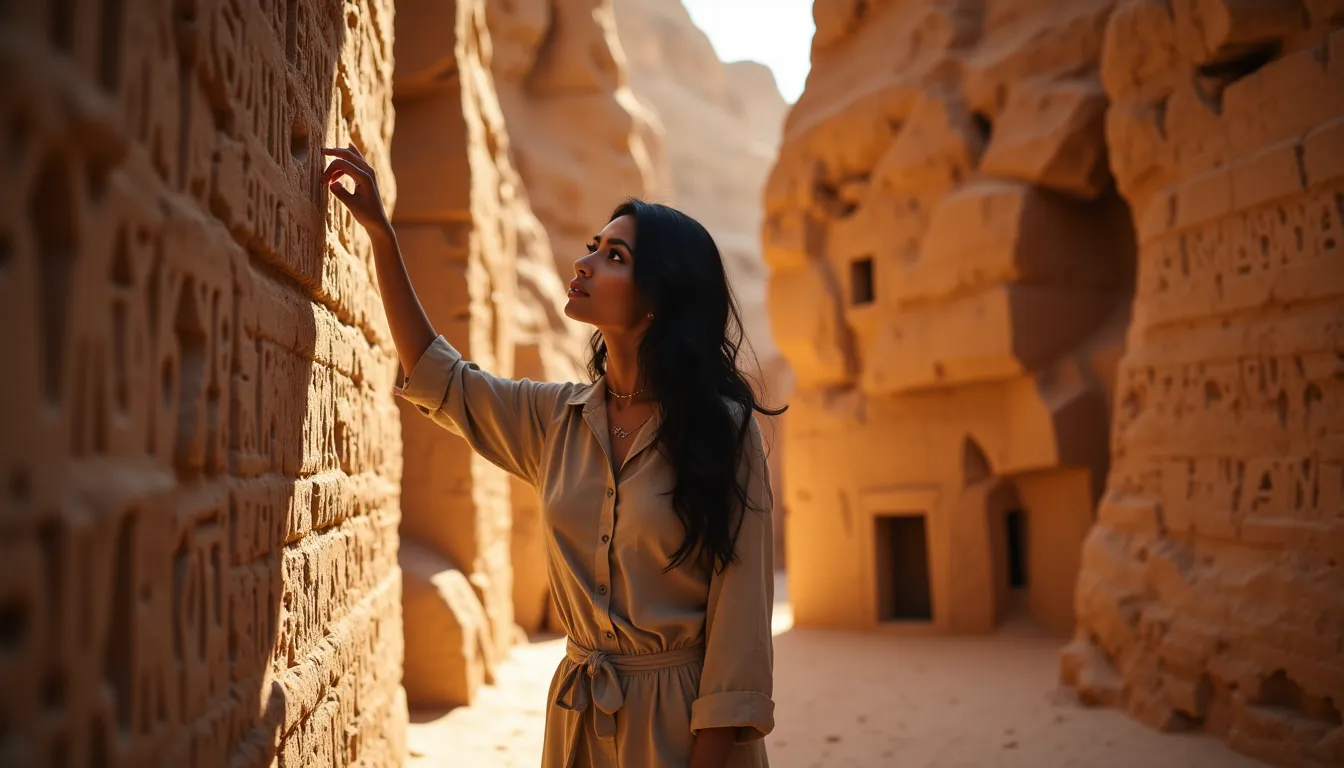
The canyon walls were whispering when I first heard them — a low murmur of wind through sandstone that carried voices from twenty-five centuries ago. I was standing in Jabal Ikmah at sunrise, my fingers tracing Aramaic letters carved so deep into the rock face that desert storms had only sharpened their edges. Three hundred inscriptions surrounded me in this open-air library, each one a message left by traders who crossed these valleys when Rome was still a republic.
The guide’s flashlight illuminated a single line of Dadanitic script. “This one,” he said quietly, “is a merchant’s prayer for safe passage to Gaza.”
I understood then why they call AlUla the crossroads of civilizations. This wasn’t just archaeological tourism — this was standing in the same spot where someone 2,500 years ago had pressed metal to stone, hoping their words would outlast their bones.
Beyond Hegra’s Famous Facades
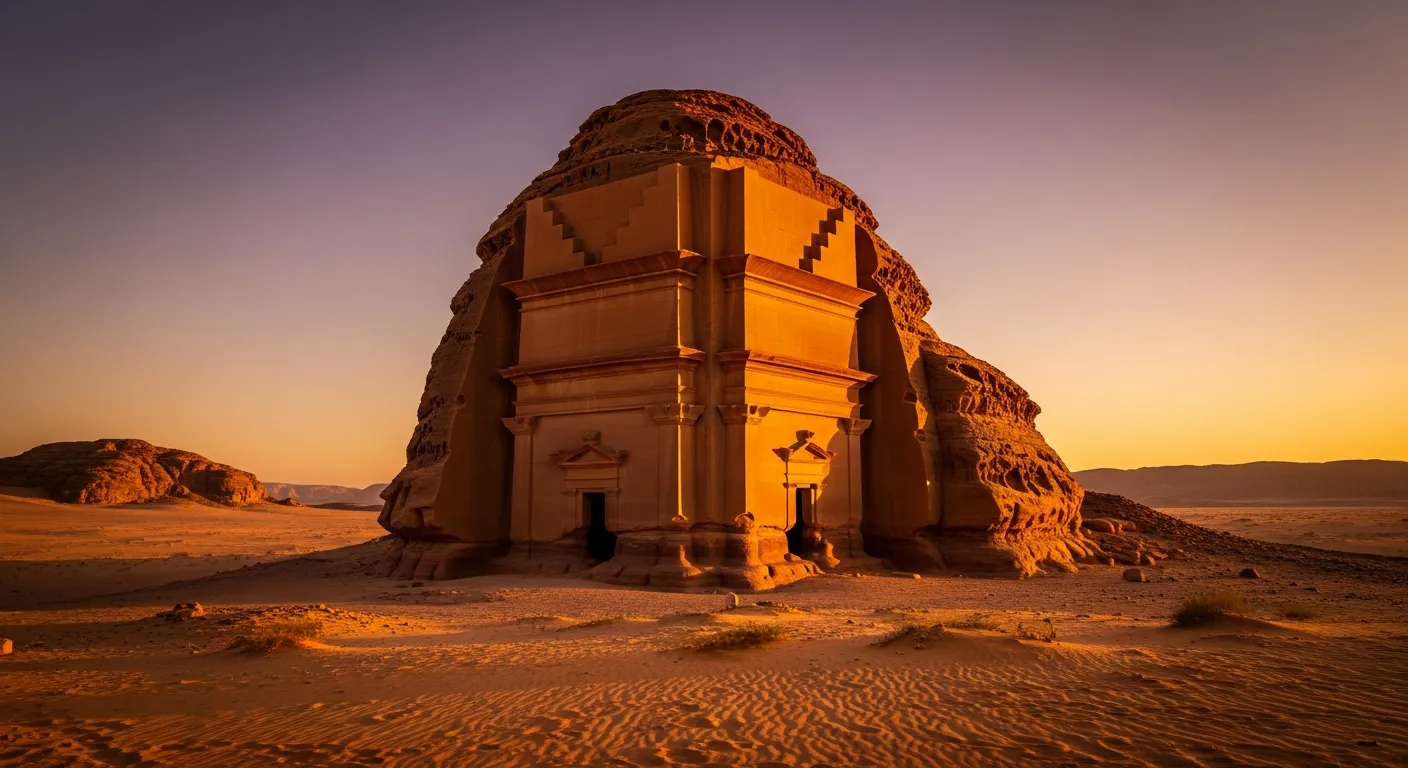
Most visitors come to AlUla for Hegra, Saudi Arabia’s first UNESCO World Heritage Site, and they should. Those 111 Nabataean tombs carved into rust-colored cliffs between the 1st century BCE and 1st century CE are extraordinary — better preserved than Petra, though smaller in scale. Both cities served as sister capitals along the ancient Incense Road, but while Petra crowds with tour groups, Hegra still feels like a secret.
The standard tour costs SAR 95 and covers the essential sites: Qasr Al-Farid, the 22-meter-tall “Lonely Castle” that stands isolated in the desert, its facade carved from the top down but never completed, leaving archaeologists to puzzle over why the Nabataeans abandoned such an ambitious project. The Jabal Ithlib area reveals the Diwan, a triclinium ceremonial hall accessed through a narrow Siq-like corridor that channels the same theatrical drama as Petra’s Treasury approach, but without the crowds.
But I’d been waiting months for the Hegra After Dark experience — SAR 250 for an immersive evening that begins with horse-drawn carriages rolling through the tomb fields as the sun disappears. Theatrical performances bring the Nabataean world to life under star-drunk skies, and suddenly those carved facades aren’t monuments anymore. They’re doorways to stories that refuse to stay buried.
The Kingdoms That Came Before
What most visitors miss entirely are the ruins that predate the Nabataeans by centuries. The kingdom of Dadan ruled these oases from the 6th to 2nd centuries BCE, and walking through their capital feels like discovering a lost civilization that never made it into the guidebooks.
The Dadanite ruins sprawl across several sites, but the lion tombs stopped me cold. Fifty meters above the wadi floor, carved into cliff faces so steep they seem impossible to reach, these tombs were commissioned by Minaean traders from Yemen who wanted to mark their identity in this foreign land. The lions aren’t just decorative — they’re territorial claims, carved with the precision of merchants who understood that visibility meant survival on the trade routes.
November 2025 brought a new exhibit showcasing over 100 discoveries that had never been displayed publicly. I spent an entire morning studying artifacts that rewrote the timeline of Arabian kingdoms — Dadanite inscriptions that prove these weren’t just desert nomads, but sophisticated urban planners who built irrigation systems still visible today. The combined tour with Jabal Ikmah costs SAR 60, but it’s the kind of experience that changes how you see the entire Middle East.
Reading the Desert’s Library
Jabal Ikmah deserves an entire day. This open-air library holds the largest collection of ancient inscriptions on the Arabian Peninsula — over 300 texts spanning 2,500 years, written in Aramaic, Dadanitic, Safaitic, Thamudic, Minaic, and Nabataean scripts. The visitor center serves Saudi coffee and dates that taste like concentrated sunshine, but the real feast happens outside among the canyon walls.
Each inscription tells a story: merchants recording successful deals, travelers leaving their names for posterity, religious invocations for protection against desert spirits. I found myself moving through the canyon like a detective, piecing together fragments of lives lived when this valley hummed with international commerce. The Nabataeans weren’t the first to recognize AlUla’s strategic importance — they inherited a landscape already sacred to kingdoms most people have never heard of.
A Town That Time Abandoned
Old Town AlUla was inhabited continuously until 1983, when the last families moved to modern housing and left behind a mudbrick maze that’s now being reborn as a UNESCO Live Museum. Two hundred and fifty houses are being conserved, their thick walls and narrow alleys restored to show how people lived in this oasis for over 800 years.
Market Street has become the heart of the revival, lined with artisan workshops where I watched silversmiths work techniques passed down through generations. Coffee shops serve cardamom-scented Arabian coffee in traditional dallah pots, while jewelers create contemporary pieces using ancient Dadanite symbols. The Rawi storytelling experiences cost SAR 70 and pair you with local guides who grew up hearing their grandparents’ memories of Old Town life — stories that blur the line between history and legend until you’re not sure which is more powerful.
Walking these restored streets at dusk, when the mudbrick glows amber in the setting sun, feels like stepping into a living museum where the past isn’t preserved under glass but woven into the fabric of daily life.
When the Desert Transforms
Elephant Rock (Jabal AlFil) stands 52 meters tall and entry is free, but timing is everything. The site opens at 4 PM and stays open until midnight, and I learned why during my first sunset there. As the light shifts from harsh afternoon white to liquid gold, the sandstone formation doesn’t just look different — it becomes something else entirely. The elephant trunk appears to move, the body seems to breathe, and the entire landscape transforms from static geology into living sculpture.
The SALT food truck serves surprisingly sophisticated fare — think elevated Arabic street food with views across volcanic fields — while fire pits provide warmth as the desert temperature drops. Most visitors leave after sunset, missing the real show. AlUla became the world’s third-largest International Dark Sky Park in 2024, and staying past 9 PM reveals why. The Milky Way emerges so clearly it looks like it’s been painted across the sky.
The Sharaan and Wadi Nakhlah reserves earned DarkSky accreditation in December 2025, creating protected zones where light pollution is strictly controlled. Stargazing experiences at Gharameel include dinner under a canopy of stars so bright you can read by them, while specialized astrophotography sessions teach you to capture images that seem impossible until you see them on your camera screen.
Landscapes from Another Planet
The Harrat Uwayrid volcanic fields stretch for 240 kilometers, a surreal landscape of black basalt that looks like the surface of Mars. OKTO, a contemporary Greek restaurant perched on a viewpoint above the lava flows, serves sunset dinners that pair Mediterranean cuisine with views that belong in science fiction. The guided sunset tours take you deep into the volcanic landscape, where frozen lava rivers create natural amphitheaters and the silence is so complete you can hear your own heartbeat.
Sunrise tours reveal a different beauty — the black rock slowly warming to reveal hidden colors in the volcanic glass, and the gradual awakening of a landscape that seems too dramatic for Earth.
Art in the Middle of Nowhere
Desert X AlUla 2026 (January 16 – February 28) marks the fourth edition of this remarkable art initiative, themed “Space Without Measure.” Eleven international artists have created site-specific installations across the desert, and the scale is breathtaking — Agnes Denes’ “The Living Pyramid” rises from the sand like something the ancient Egyptians might have dreamed.
What makes Desert X special isn’t just the art but the setting. These aren’t gallery pieces transported to the desert; they’re works conceived for this specific landscape, responding to the geological and cultural layers that make AlUla unique. Entry is free, and the installations are accessible by guided tour or independent exploration, but seeing contemporary art in conversation with Nabataean tombs and Dadanite ruins creates connections across millennia that feel almost mystical.
Mirrors in the Desert
Maraya, the world’s largest mirrored building according to Guinness World Records, contains 9,740 reflective panels that make it nearly invisible against the rocky landscape. The 500-seat concert hall has hosted Alicia Keys, Andrea Bocelli, and Usher, but the guided tours (SAR 95) reveal the real genius of the design — how the building disappears and reappears depending on the time of day and angle of approach.
The building houses Maraya Social, which serves some of the kingdom’s most creative mocktails. Saudi Arabia doesn’t allow alcohol anywhere, but the bartenders here treat non-alcoholic mixology as an art form, crafting drinks that would impress in London or New York.
The Frontier of Everything
Saudi Arabia only opened to tourism in 2019, making eVisas available to 66 countries for around $140, and AlUla feels like the frontier of luxury travel. The infrastructure is flawless — international-standard hotels, world-class restaurants, expert guides — but the destinations still feel undiscovered. You’re often the only visitors at sites that would draw millions anywhere else in the world.
This is heritage tourism at its purest: places where you can still touch history without barriers, where archaeological sites aren’t worn smooth by crowds, where the silence of the desert hasn’t been broken by the noise of overtourism.
Standing again in Jabal Ikmah at the end of my week, I understood what the canyon walls had been whispering. They weren’t just telling stories of ancient merchants and forgotten kingdoms. They were reminding me that some places on Earth still remember everything — and if you listen carefully enough, they’ll tell you their secrets.
The sun was setting behind the inscription-covered rocks, casting shadows that made the ancient letters seem to move and dance. In that moment, 2,500 years collapsed into nothing, and the desert’s memory became my own.
Worth reading next
More stories worth your time.

Where to Stay in Tokyo: A Luxury Neighborhood Guide
An honest guide to where to stay in Tokyo, with the neighborhoods, hotel styles, and tradeoffs that matter before you book.

The Winter Alps: Where Luxury Means Wood Fires, Not Gold Leaf
Four Alpine towns, four different ideas of what winter luxury means. From Zermatt's car-free quiet to Courchevel's fur-coat chaos, a guide to the Alps for people who care about the fire in the lobby.

Where to Eat in Tokyo: A Guide for People Who Take Food Personally
Two weeks in Tokyo, eating three meals a day plus snacks, convenience store runs at midnight, and one life-altering omakase. A neighborhood-by-neighborhood guide for people who consider food a personality trait.
About Kaira
Explore With Kaira is built for readers who want the atmosphere of a luxury travel magazine without the emptiness of sponsored copy.
About Kaira