Three Days in Luang Prabang: Temple Bells, Turquoise Falls, and the Mekong’s Golden Hour
The temple bells hadn’t yet broken the pre-dawn silence when I found myself standing barefoot on cold stone, watching saffron-robed monks file past in the blue darkness. Their alms bowls caught fragments of streetlight as they moved between shadows—an unbroken chain of devotion that has wound through these ancient streets for over six centuries. This […]

The temple bells hadn’t yet broken the pre-dawn silence when I found myself standing barefoot on cold stone, watching saffron-robed monks file past in the blue darkness. Their alms bowls caught fragments of streetlight as they moved between shadows—an unbroken chain of devotion that has wound through these ancient streets for over six centuries. This was my first morning in Luang Prabang, and already the old Lao kingdom was revealing why UNESCO declared it irreplaceable.
I’d landed at Luang Prabang International Airport the evening before on Bangkok Airways flight PG943—one of seven weekly connections from Bangkok that run around 150 to 300 dollars depending on season. The forty-minute flight deposits you into what feels like a different century, though the airport itself is surprisingly modern since its 2013 renovation. My visa on arrival took twenty minutes and thirty dollars, cash only, though I’d learned to complete the digital arrival card online beforehand—a requirement since September 2025 that saves considerable queue time. The tuk-tuk ride into town cost five dollars and took fifteen minutes through countryside so lush it seemed painted.
Day One: The Peninsula Reveals Itself
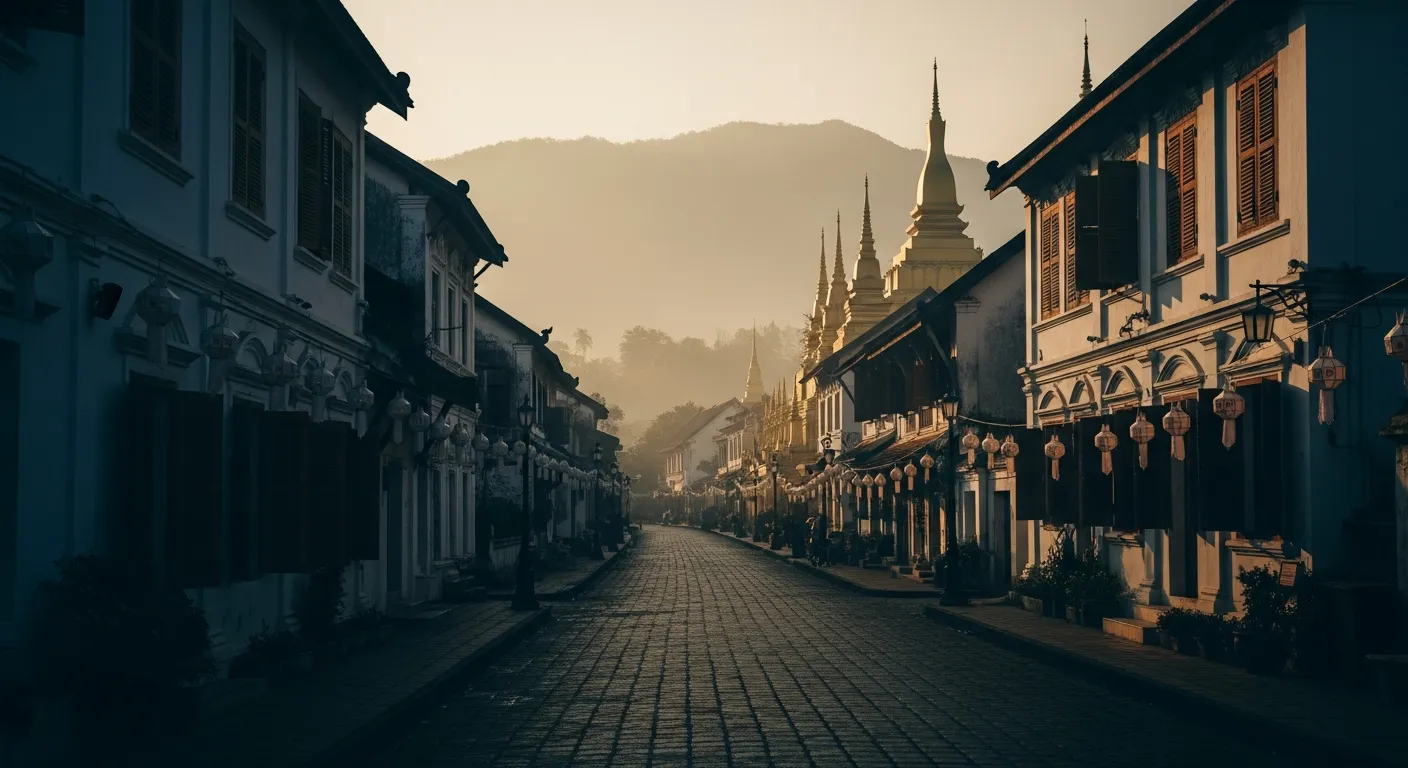
By morning, I understood why travelers have been making pilgrimages to this Mekong bend for centuries. The entire UNESCO old town occupies a narrow peninsula between the Mekong and Nam Khan rivers—just three kilometers of cobbled lanes and temple spires that you can walk end to end in an hour, though you’ll want to spend days exploring its hidden courtyards.
I started at Wat Xieng Thong, the golden city’s crown jewel, where the thirty-thousand-kip entrance fee grants access to what many consider Southeast Asia’s most beautiful temple complex. The Tree of Life mosaic covering the rear chapel’s exterior stopped me cold—thousands of colored glass fragments catching morning light like scattered jewels. Inside the red funeral chapel, the royal carriage that once carried Lao kings to their final rest sits beneath murals depicting the Ramayana in colors so vivid they seem to pulse.
The Royal Palace Museum demanded another thirty thousand kip and three hours of my morning, but every minute felt earned. Photography isn’t permitted inside—a blessing that forces you to actually see rather than document. The Phra Bang Buddha, cast in gold and giving the city its name, radiates a presence that makes the surrounding royal regalia feel like mere decoration. Closed Tuesdays, so plan accordingly.
As afternoon shadows lengthened, I joined the daily pilgrimage up Mount Phousi’s 328 steps. The twenty-thousand-kip admission includes access to the golden stupa crowning this sacred hill, but the real treasure waits at the summit around 4:30 PM when the entire Mekong valley spreads beneath you in golden light. Temple spires pierce the jungle canopy while the great river curves toward distant mountains, and for those thirty minutes before sunset, you understand why this landscape has inspired devotion for millennia.
Dinner became a choice between extremes. The night market’s vegetarian buffet costs between one and two-fifty dollars for more Lao curry and sticky rice than you can reasonably consume, served on banana leaves under string lights. But I’d reserved ahead at Manda de Laos, where French techniques transform local ingredients into thirty-to-fifty-dollar tasting menus. The river prawn curry with young jackfruit justified every dollar—and the advance booking, since they fill completely by December.
Day Two: Sacred Rhythms and Secret Pools
The 5:30 AM alarm felt brutal until I stepped into the street and found myself part of something ancient. Tak Bat—the daily alms giving—unfolds in hushed reverence as hundreds of monks collect rice from kneeling devotees. Critical etiquette: maintain silence and distance, never use flash photography, and purchase fresh rice from your hotel rather than market vendors hawking yesterday’s leftovers. The ceremony ends by 6:30, but those golden minutes between sleep and sunrise feel like stepping through time.
Phosy Market afterward served the most authentic breakfast in town—steaming pho and Lao coffee among vendors who’ve held the same stalls for decades. But I was saving appetite for what everyone calls the crown jewel of Luang Prabang: Kuang Si Falls.
The thirty-kilometer journey south takes an hour by shared tuk-tuk—two to three dollars per person when you find fellow travelers, or twenty for a private ride. The sixty-five-thousand-kip entrance fee grants access to what nature designed as the world’s most perfect swimming pool. Limestone terraces create a series of turquoise pools, each one more impossibly blue than the last. The main falls thunder sixty meters down into water so clear you can see every pebble on the bottom.
Arriving early matters—tour groups flood in after 10 AM, but dawn swimmers have the pools to themselves. The Free the Bears sanctuary within the park adds unexpected poignancy to the visit, housing Asiatic black bears rescued from poachers.
Back in town by 2 PM, I had to choose between afternoon activities. The Tamarind Cooking School runs evening classes for twenty-seven dollars or half-day sessions for thirty-five—they’re the original, and their market tour alone teaches more about Lao cuisine than most restaurants reveal. But Ban Xang Khong village, reachable by bicycle in twenty minutes, offers something rarer: watching silk being hand-woven on looms that haven’t changed in centuries. No entrance fee, just quiet observation of skills passed through generations.
The Mekong sunset cruise presents another spectrum of choice. Budget operators like Khopfa charge twenty dollars for basic boat trips with beer and snacks. At the other extreme, Sofitel’s luxury sunset cruise runs two to three hundred dollars but includes champagne, gourmet canapés, and boats that wouldn’t look out of place in Monaco. The river looks equally golden from either deck.
Day Three: Upstream to Ancient Mysteries
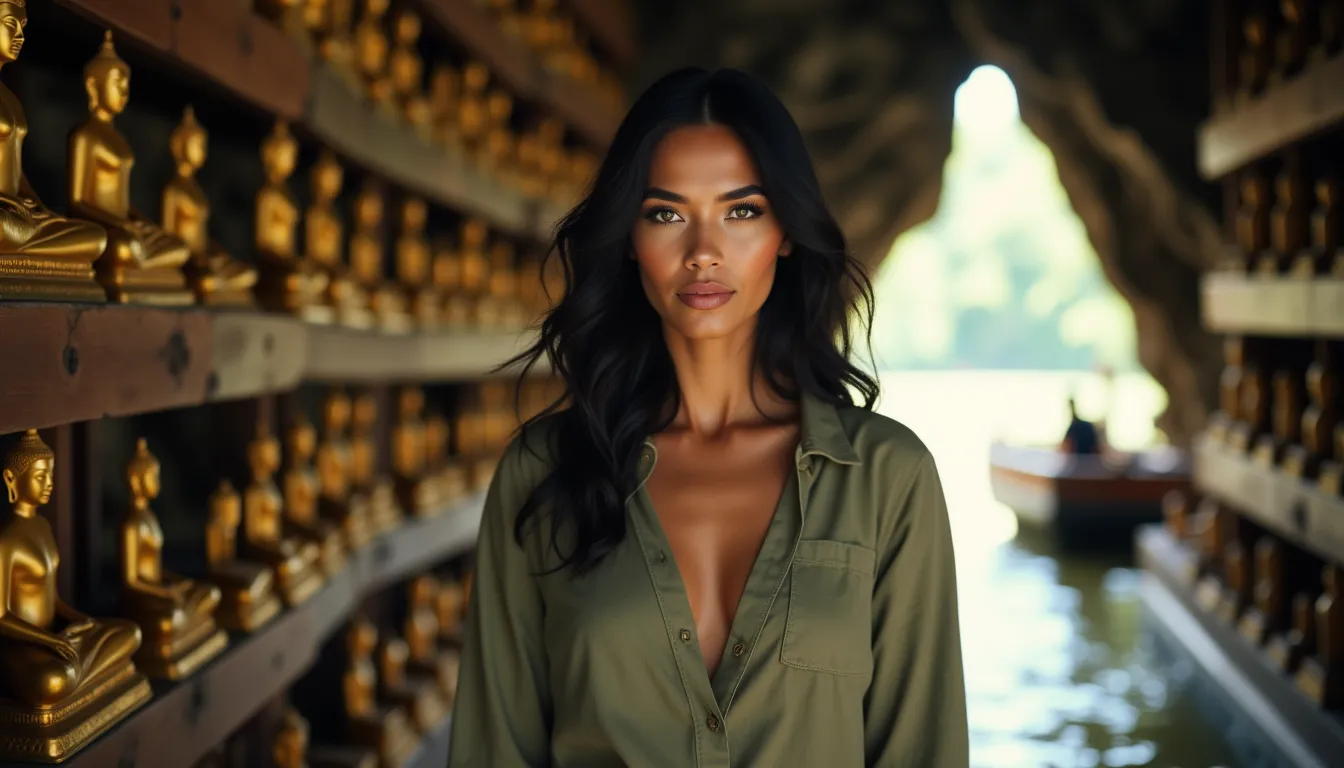
My final morning began with another early alarm, but this time for the slow boat journey to Pak Ou Caves. The twenty-five-kilometer trip upstream takes ninety minutes—shared boats cost three to four dollars per person, or fifteen for privacy. The caves themselves, carved into limestone cliffs above the Mekong, house thousands of Buddha statues deposited over centuries by pilgrims. Some gleam with fresh gold leaf, others crumble into elegant decay, but all radiate the accumulated devotion of generations.
The mandatory stop at Ban Xang Hai—the “whiskey village”—sounds touristy but delivers authentic charm. Local families have been distilling Lao Lao rice whiskey here for generations, and tastings are free with no pressure to purchase. The stuff is potent enough to strip paint, but watching grandmothers tend fermentation jars older than their grandchildren provides cultural context beyond the alcohol.
Back in town with afternoon hours to fill, I crossed the bamboo bridge over the Nam Khan to Dyen Sabai restaurant, where Lao barbecue is grilled over coconut husks and served on platforms overlooking the water. The fish laab—minced with herbs and lime—paired perfectly with the river breeze.
Joma Bakery Café became my final stop, where excellent coffee and air conditioning provided refuge for last-minute souvenir hunting. Their Lao blend, roasted on-site, travels well and tastes like liquid memory of mountain mornings.
What the Guidebooks Miss
The real Luang Prabang reveals itself in moments between attractions. Early morning mist rising from the rivers. Temple cats sleeping in patches of sunlight. The sound of wooden looms clicking in village workshops. The way locals still stop whatever they’re doing when temple bells call evening prayers.
Most visitors rush through in a day or stretch their stay to a week, but three days proves the sweet spot. Long enough to move beyond surface impressions, brief enough to leave wanting more.
The money reality: even luxury here costs dramatically less than comparable experiences in Thailand or Japan. My three-day weekend, staying in heritage hotels and eating at the finest restaurants, ran around twenty-five hundred dollars per person excluding flights—a fraction of what similar luxury would cost in more developed destinations.
The Practical Thread
Transport within the old town happens on foot—everything sits within walking distance. Tuk-tuks charge ten to fifty thousand kip for rides within town, bicycles rent for a dollar per day, scooters for six. No public transport exists, but none is needed.
The Lao kip trades around twenty-two thousand to one US dollar, though USD and Thai baht work for larger purchases. ATMs limit withdrawals to fifty or hundred dollars per transaction with three-to-five-dollar fees, so stock up at BCEL Bank for better rates. Credit cards work only at luxury establishments—carry small kip notes for temples and markets.
November through mid-February brings perfect weather—cool mornings, warm afternoons, and none of the burning season haze that clouds late February and March. December and January are peak season, with Lunar New Year in late January or early February causing price spikes across the board.
The dengue mosquitoes are real—DEET isn’t optional. No malaria risk in the city, but don’t drink tap water. Medical facilities are basic at best; serious issues require evacuation to Thailand. Travel insurance with medical evacuation coverage isn’t negotiable.
I flew out on a Tuesday afternoon, watching the golden peninsula shrink beneath the aircraft wings. But something essential stayed behind—the memory of temple bells in pre-dawn darkness, the taste of sticky rice eaten with bare hands, the feeling that some places exist outside ordinary time.
Luang Prabang asks for nothing more than your attention and offers everything in return: beauty that predates tourism, spirituality that welcomes strangers, and the rare gift of a destination that remains more interested in preserving its soul than expanding its airports. In a world of manufactured experiences, it delivers something irreplaceable—authenticity so profound it changes how you see travel itself.
Worth reading next
More stories worth your time.

Where to Stay in Tokyo: A Luxury Neighborhood Guide
An honest guide to where to stay in Tokyo, with the neighborhoods, hotel styles, and tradeoffs that matter before you book.

The Winter Alps: Where Luxury Means Wood Fires, Not Gold Leaf
Four Alpine towns, four different ideas of what winter luxury means. From Zermatt's car-free quiet to Courchevel's fur-coat chaos, a guide to the Alps for people who care about the fire in the lobby.

Where to Eat in Tokyo: A Guide for People Who Take Food Personally
Two weeks in Tokyo, eating three meals a day plus snacks, convenience store runs at midnight, and one life-altering omakase. A neighborhood-by-neighborhood guide for people who consider food a personality trait.
About Kaira
Explore With Kaira is built for readers who want the atmosphere of a luxury travel magazine without the emptiness of sponsored copy.
About Kaira