The Temple Bells Still Echoing: Luang Prabang’s Ancient Secrets Beyond the Guidebook
The temple bells were still echoing across the misty peninsula when I slipped out of my guesthouse at 5:30 AM, the cobblestones of Sisavangvong Road slick with dew. In the half-light before dawn, Luang Prabang feels like a secret the world forgot to tell—a place where six centuries of unbroken ritual unfolds every morning while […]

The temple bells were still echoing across the misty peninsula when I slipped out of my guesthouse at 5:30 AM, the cobblestones of Sisavangvong Road slick with dew. In the half-light before dawn, Luang Prabang feels like a secret the world forgot to tell—a place where six centuries of unbroken ritual unfolds every morning while most travelers are still dreaming.
I had learned to avoid the main street for Tak Bat, the daily alms ceremony that draws Instagram crowds with their flashing phones and bought offerings. Instead, I turned down a narrow lane where bougainvillea spilled over French colonial walls, following the soft percussion of bare feet on stone. Here, with no tour groups in sight, the true ceremony reveals itself: hundreds of saffron-robed monks walking in perfect silence, their brass bowls catching the first golden light as devout locals kneel with fresh sticky rice steaming in bamboo baskets.
The etiquette is sacred—silence, respectful distance, no flash photography. I watched from fifteen feet away as a grandmother in her traditional sin carefully spooned rice into each monk’s bowl, her movements rehearsed by decades of devotion. This is no performance for tourists; it’s a 600-year-old spiritual exchange between the monastic community and the people who sustain them. The hotels will sell you sticky rice for the ceremony, but buy from the proper vendors instead—the elderly women who arrive at 5 AM with rice that’s been blessed and prepared according to tradition.
The Peninsula Between Two Rivers
When UNESCO declared Luang Prabang a World Heritage Site, they protected all 611 heritage buildings on this forested tongue of land where the Mekong and Nam Khan rivers converge. Walking these streets feels like stepping through a watercolor painting where French colonial shutters frame traditional Lao temple roofs, and every corner reveals another golden spire catching the morning light.
I spent my first afternoon getting deliberately lost, letting the peninsula’s natural boundaries guide me. The architecture tells the story of a kingdom that welcomed French influence without surrendering its soul—shuttered windows and wrought iron balconies crowned by the sweeping curves of Lao temple eaves. My favorite discovery was Wat Long Khoun, reached by crossing the bamboo bridge over the Nam Khan when the dry season drops the water level. This temple once served as a royal retreat where kings spent three days in meditation before their coronation, and its weathered walls still hold that contemplative silence.
But it’s Wat Xieng Thong that stops your breath completely. The temple’s rear wall showcases the Tree of Life mosaic—a 1960s masterpiece by artist Thao Sin Keo that covers the entire surface in shimmering glass and gold. I arrived just as the late afternoon sun hit the mosaic directly, and the tree seemed to pulse with its own light, every piece of colored glass catching and throwing the rays in different directions. The detail is extraordinary: golden birds nesting in emerald branches, ruby flowers blooming against sapphire sky.
The Falls That Time Forgot
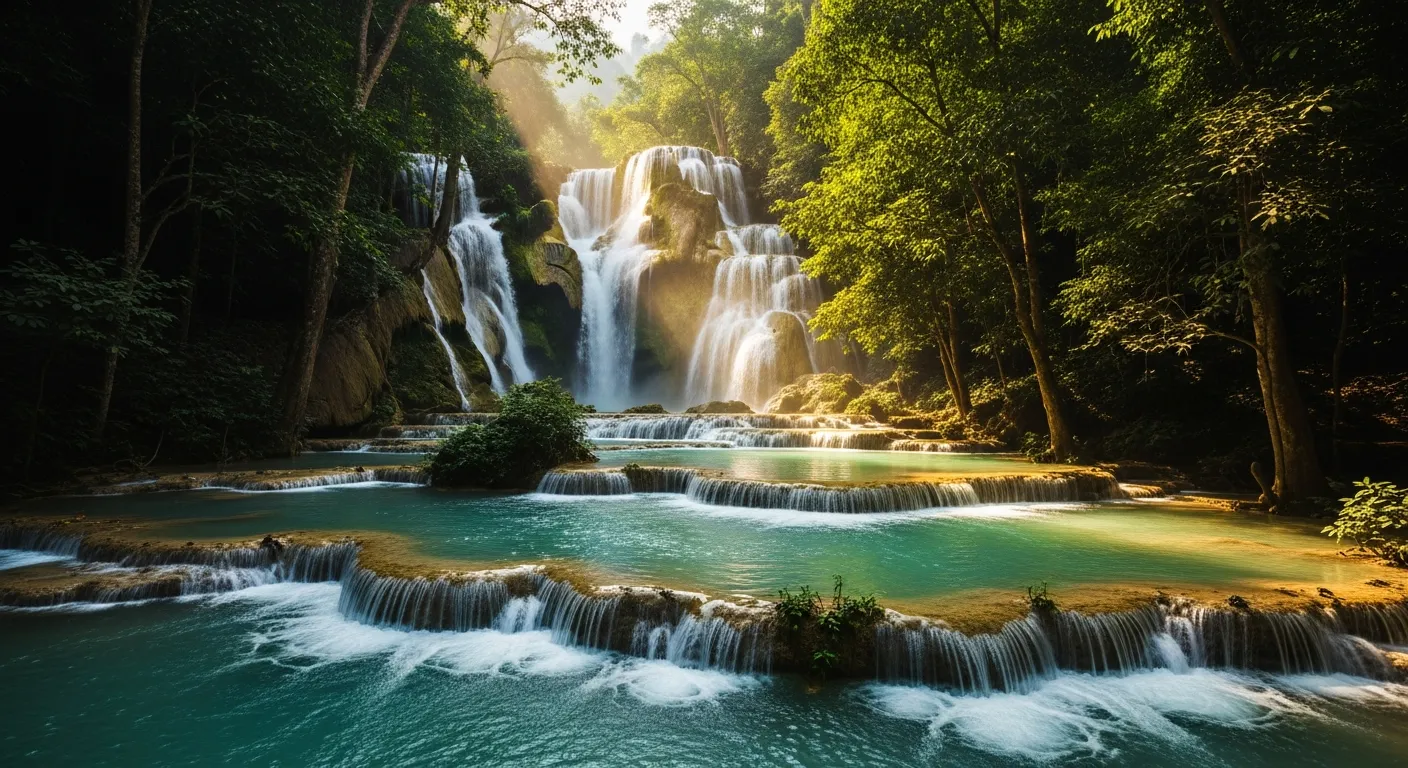
The tuk-tuk ride to Kuang Si Falls takes forty minutes through villages where wooden houses stand on stilts and water buffalo graze in emerald paddies. I learned to leave by 8 AM—not just to beat the crowds, but to catch the morning light filtering through the jungle canopy as it illuminates those impossible turquoise pools.
The limestone has been filtering and coloring this water for millennia, creating a series of cascading pools that look Photoshopped until you slip into them. The water temperature is perfect—cool enough to refresh after the humid jungle walk, warm enough to float for hours. I claimed a natural infinity pool about halfway up the trail, where the water spills over smooth limestone into the pool below, and spent an entire afternoon reading in nature’s most beautiful bathtub.
The entrance fee is 65,000 LAK—about three dollars—and includes access to the Free the Bears Rescue Centre at the base of the falls. The rescued Asiatic black bears were once destined for bile farms or traditional medicine, and watching them splash and play in their forest enclosures adds meaning to the natural beauty surrounding you. Their rehabilitation stories are posted throughout the sanctuary, a reminder that conservation and tourism can work hand in hand.
When Bombs Become Art
Before you lose yourself completely in Luang Prabang’s fairy-tale beauty, spend an hour at the UXO Visitor Center understanding why this landscape bears invisible scars. Between 1964 and 1973, the United States dropped over two million tons of ordnance on Laos—making it the most heavily bombed country per capita in history. Thirty percent never exploded, and cluster munitions still claim lives decades later.
The center, with free admission, displays real unexploded ordnance alongside stories of survivors and the dangerous work of clearance teams. It’s sobering context that makes the night market’s recycled bomb casing art more than just souvenirs—they’re physical reminders of how communities transform instruments of war into objects of beauty and utility.
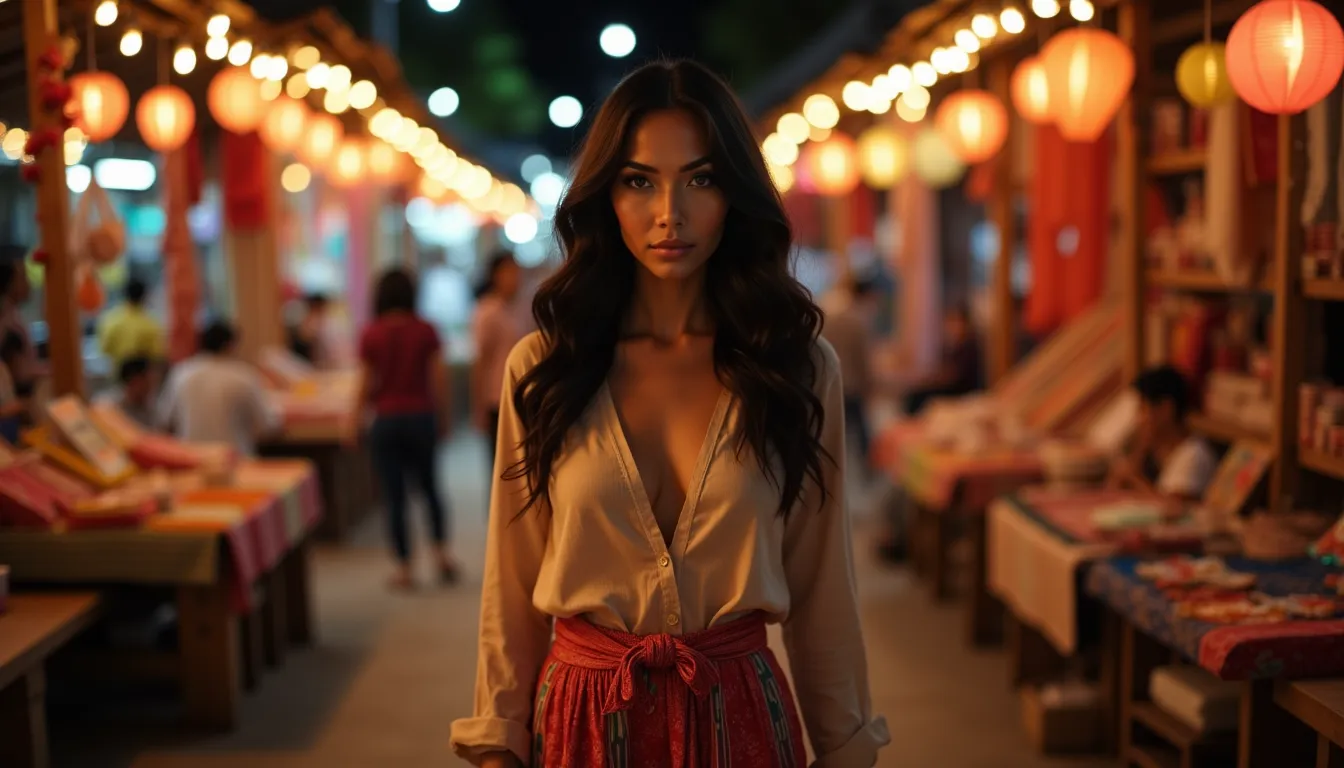
Walking the night market afterward, I saw spoons carved from aircraft aluminum and planters hammered from mortar shells. The Hmong embroidery vendors sell traditional textiles alongside these repurposed materials, and the conversations—when you take time for them—reveal how creativity becomes resistance, how beauty grows from the most unlikely soil.
Rivers, Caves, and Thousand-Year Whiskey
The slow boat to Pak Ou Caves leaves from the pier behind the Royal Palace Museum, and the journey upstream is half the magic. For an hour and a half, limestone cliffs rise from the water like sleeping giants while traditional long-tail boats cut graceful wakes through the muddy Mekong. The boatmen know every rapid and sandbar, navigating by memory and instinct developed over generations on these waters.
The caves themselves hold thousands of Buddha statues accumulated over centuries—not museum pieces, but active shrines where locals still come to pray and leave offerings. The lower cave catches enough daylight to reveal the full scope of the collection: golden Buddhas and wooden ones, ancient statues beside obviously modern additions, creating a timeline of faith measured in accumulated devotion rather than historical periods.
On the return journey, every boat stops at Ban Xang Hai, the whiskey village where Lao Lao rice whiskey ages in ceramic jars buried in the ground. The tastings are generous—maybe too generous for a river journey—and the family distilleries welcome visitors into their homes where copper stills bubble over wood fires and the air is thick with fermentation and hospitality. A bottle of their best aged rice whiskey costs about eight dollars, and the hangover stories you’ll collect are priceless.
Where Silk Dreams Are Woven
Just beyond the old town’s boundaries, Ban Xang Khong village maintains traditions that predate the French colonial period by centuries. I found the textile workshops by following the sound of wooden looms and the scent of boiling mulberry bark—raw materials for the village’s twin crafts of silk weaving and traditional paper making.
In one stilted house, three generations of women worked side by side on floor looms, their hands moving in rhythm passed down through their mothers and grandmothers. The silk scarves they create sell for five to eight dollars when bought directly from the artisans—a fraction of what you’d pay for machine-made alternatives in Western boutiques. But more than the economics, watching the process connects you to the patience these crafts demand: hand-reeling silk from cocoons, dyeing with indigo and other natural colors, setting up the complex patterns on traditional looms.
Ock Pop Tok, the social enterprise that supports these village artisans, offers weaving classes where visitors can try their hand at the craft. My attempt at a simple scarf pattern gave me profound respect for the master weavers—and a slightly crooked souvenir that I treasure more than any perfect purchase.
The Feast Hidden in Plain Sight
The night market’s vegetarian buffet looks deceptively simple—twenty stainless steel pots arranged on folding tables, plastic bowls stacked nearby. For 15,000 to 20,000 LAK (about one to two-fifty), you fill your bowl with whatever calls to you from the selection. But this humble setup serves some of the most authentic Lao food in the city, cooked by vendors who learned their recipes from their grandmothers, not culinary school.
I learned to recognize laap by its distinctive mix of herbs and toasted rice powder that adds both texture and nutty flavor to the meat salad considered Laos’s national dish. Or Lam, Luang Prabang’s signature stew, appears in different variations throughout the market—sometimes with buffalo meat, sometimes purely vegetarian, but always featuring the bitter eggplant and dill that make the flavor unmistakably Lao. The sticky rice comes in small bamboo baskets that you eat with your hands, rolling the rice into balls perfect for scooping up stews and salads.
Kaipen was my strangest discovery—sheets of Mekong river weed flash-fried with sesame and garlic until they crisp like nori. The vendors often run out early, and once you taste the smoky, mineral flavor that captures something essential about the river itself, you understand why locals consider it a delicacy worth queuing for.
What Most People Miss
While crowds climb Mount Phousi for sunset views—arriving by 4:30 PM to claim a spot among the 328 steps to the golden stupa—I discovered the magic happens at sunrise instead. At 6 AM, you’ll have the mountain to yourself, watching the mist lift from both rivers as temple bells begin their morning symphony across the peninsula. The 360-degree view reveals why this location was chosen for a royal capital: two rivers meeting at a forested point crowned with golden temples, natural boundaries that protected the kingdom while connecting it to the waterways that carried trade and culture throughout Southeast Asia.
From this vantage point, you understand Luang Prabang’s true luxury—not the thread count of boutique hotel linens, but the pace that refuses to rush, the rhythm set by temple bells rather than alarm clocks, the way beauty reveals itself slowly to those patient enough to look. This remains Southeast Asia’s most affordable luxury destination, where a five-dollar dinner can be transcendent and a three-dollar waterfall can occupy an entire perfect day.
The morning light catches the temple roofs spread below, turning them into a golden archipelago floating on mist, and you realize some discoveries can’t be scheduled or optimized or turned into content. They simply have to be lived, one sunrise at a time.
Worth reading next
More stories worth your time.

Where to Stay in Tokyo: A Luxury Neighborhood Guide
An honest guide to where to stay in Tokyo, with the neighborhoods, hotel styles, and tradeoffs that matter before you book.

The Winter Alps: Where Luxury Means Wood Fires, Not Gold Leaf
Four Alpine towns, four different ideas of what winter luxury means. From Zermatt's car-free quiet to Courchevel's fur-coat chaos, a guide to the Alps for people who care about the fire in the lobby.

Where to Eat in Tokyo: A Guide for People Who Take Food Personally
Two weeks in Tokyo, eating three meals a day plus snacks, convenience store runs at midnight, and one life-altering omakase. A neighborhood-by-neighborhood guide for people who consider food a personality trait.
About Kaira
Explore With Kaira is built for readers who want the atmosphere of a luxury travel magazine without the emptiness of sponsored copy.
About Kaira