Three Days in Comporta: Rice Fields, Wild Beaches, and the Art of Doing Nothing
The morning mist was lifting off the rice paddies when I first understood why half of Lisbon disappears to Comporta on summer weekends. I’d driven south for an hour and fifteen minutes, leaving the Tagus behind for this strange landscape where emerald fields meet endless Atlantic beach, and suddenly the world had shifted into a […]

The morning mist was lifting off the rice paddies when I first understood why half of Lisbon disappears to Comporta on summer weekends. I’d driven south for an hour and fifteen minutes, leaving the Tagus behind for this strange landscape where emerald fields meet endless Atlantic beach, and suddenly the world had shifted into a lower gear. The air smelled of salt and wild herbs. A white stork stood motionless in the shallows, and time seemed to slow with the rhythm of the tide.
This is Portugal’s best-kept secret hiding in plain sight — a stretch of coast where fishermen’s huts have become the most coveted weekend retreats in Europe, where horses wade through flooded paddies at sunset, and where doing very little has been elevated to an art form.
The Journey South
The drive from Lisbon is deceptively simple: A2 motorway south, exit at Grândola, then twenty minutes through pine forests and agricultural plains that could be Provence if not for the distinctive Portuguese light. I’d collected a rental car from Lisbon airport that Friday morning — absolutely essential, since Comporta exists in a beautiful transportation vacuum with virtually no public transport. The roads are good, though some beach access requires navigating sandy tracks that would defeat a low-slung sedan.
There’s an alternative route via ferry from Setúbal to Tróia peninsula — six to eight euros per person — but it adds complexity for minimal reward unless you’re specifically drawn to the dolphin-watching departure point. The car is freedom here, and freedom is what Comporta sells.
Day One: Arrival and First Impressions
I reached my accommodation by early afternoon, having learned that Comporta rewards the unhurried arrival. The village itself — if you can call a scatter of whitewashed buildings and reed-thatched roofs a village — reveals itself gradually. Traditional fishermen’s huts sit alongside converted warehouse spaces that now house design studios and concept stores, all connected by sandy lanes lined with wild lavender.
The afternoon belonged to Praia da Comporta, the main beach that stretches for twelve uninterrupted kilometers. This isn’t the Mediterranean — the Atlantic here is wild and cold even in summer, with waves that demand respect. But the beach is magnificent: white sand dunes dotted with pine and juniper, backed by the rice paddies that give the region its distinctive character. I spent three hours walking and swimming, encountering more horses than people, and understanding why this place has become synonymous with a particular kind of sophisticated escape.
As the light began to turn golden around seven, I drove to Comporta Café for sunset drinks. The establishment occupies a converted warehouse with floor-to-ceiling windows facing west, and their gin and tonics — twelve euros, garnished with herbs from their own garden — taste like distilled summer evening. The crowd is carefully casual: Lisbon architects in linen shirts, French families who’ve discovered this corner before the tour buses, local surfers still sandy from afternoon sessions.
Dinner was at Museu do Arroz, the rice museum restaurant that sounds impossibly precious but delivers beautifully. The building really was a rice processing facility, and the industrial architecture creates surprising intimacy when filled with candlelight and the scent of wood-fired cooking. The chef focuses on local rice varieties prepared with whatever the fishermen brought that morning — my evening featured a sublime arroz de lingueirão (razor clam risotto) for thirty-two euros that justified the drive from Lisbon by itself. Wine is local and excellent; expect forty to fifty euros for a bottle that would cost twice that in Cascais.

Day Two: Horses, Fish, and Wilderness
Saturday began with horses at sunrise, because this is how mornings should begin in Comporta. The horseback ride through the rice paddies costs fifty euros and starts at 8 AM when the light is soft and the paddies mirror the sky. My guide, António, has been working these waters for thirty years and knows every egret by name, or seems to. We rode for ninety minutes through landscapes that shift between flooded plains and pine forest, with the Atlantic always visible on the horizon.
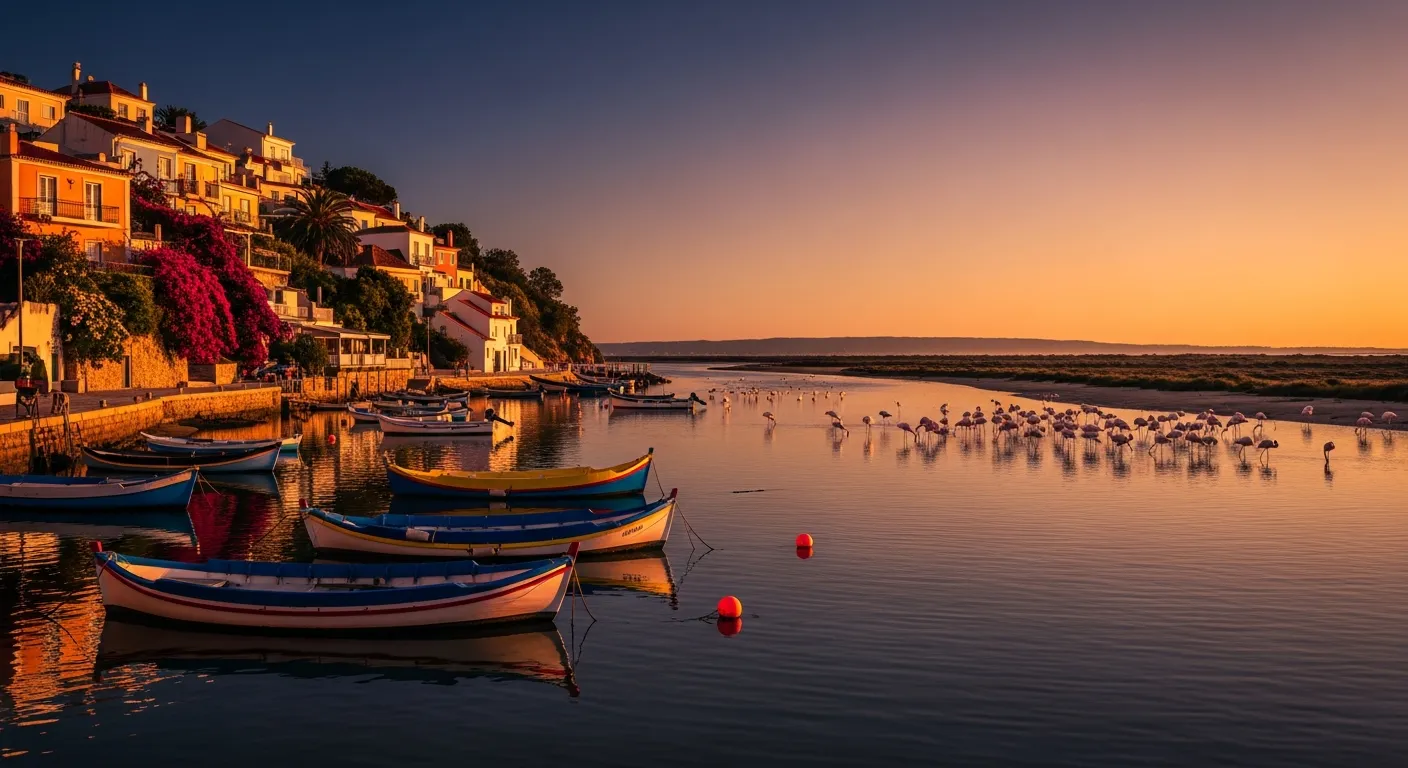
“The rice and the salt and the horses — they’ve been together here for four hundred years,” António told me as we watched a group of flamingos lift off from a distant field. The horses are Lusitanian, bred for this terrain, comfortable walking through knee-deep water with the confidence that comes from generations of genetic memory.
Lunch was at Dona Bia, the roadside fish grill that looks like nothing and serves the best grilled sea bass on the Portuguese coast. Eighteen euros gets you fish that was swimming yesterday, grilled over vine wood and served with nothing but lemon, olive oil, and boiled potatoes. The wine is local white served from an unlabeled bottle, and the entire experience unfolds on a covered terrace that might seat twenty people if twenty people could find it. Dona Bia doesn’t advertise; she doesn’t need to.
The afternoon called for Praia do Pego, the wild beach fifteen minutes south where the dunes are taller and the development nonexistent. This is where Comporta reveals its true character — not as a resort destination but as a place where nature still sets the terms. I walked for two hours and saw six people. The beach cafe serves fresh-caught grilled sardines and cold Sagres beer to whoever finds them, but mostly you’re alone with the wind and the waves and the realization that this kind of emptiness is rarer than luxury.
Evening required Cavalariça, the Michelin-listed restaurant that books two weeks ahead and worth planning around. Chef Rudolfo Paquit trained at Noma before returning home to reimagine Portuguese coastal cuisine, and his tasting menu — seventy-five euros — tells the story of this landscape through techniques borrowed from Copenhagen and flavors drawn from grandmother’s recipes. The standout was sea lettuce aged in rice wine, served with local oysters that taste like the Sado Estuary at high tide. Wine pairings add another forty euros but include bottles from local producers you won’t find in Lisbon.
Day Three: Dolphins and Departure
Sunday belonged to the Sado Estuary and its famous dolphins — twenty-seven residents with names and personalities known to the marine biologists who study them. The dolphin-watching boat departs from Setúbal at 10 AM, costs forty euros per adult, and delivers on its promise with remarkable consistency. The bottlenose dolphins here are one of only two resident populations in European waters, and they seem genuinely curious about their human visitors.
Captain Miguel has been running these trips for fifteen years and can identify individual dolphins by their dorsal fin scars. “That’s Esperança,” he told me as a large female surfaced twenty meters from our boat. “She’s had three calves and teaches them to hunt in the shallows. Very smart family.” The two-hour trip includes exploration of the estuary’s bird life — flamingos, storks, spoonbills — and provides perspective on the rice paddies from the water side.
Lunch in Setúbal’s fish market is Portugal at its most authentic: grilled fresh fish served on paper plates at communal tables, wine from the barrel, prices that feel like time travel. Expect eight to twelve euros for fish that morning’s boats brought in. The market operates Tuesday through Saturday and closes at 2 PM sharp, so timing matters.
The afternoon offered a choice: wine tasting in nearby Azeitão, where José Maria da Fonseca has been making wine since 1834, or a scenic drive through Serra da Arrábida Natural Park. I chose the mountains, following roads that climb through cork forests to viewpoints over the Tróia peninsula and the Atlantic beyond. The drive takes ninety minutes if you stop for photos, which you will.
What Most People Miss
The deeper magic of Comporta happens in the margins — in the early morning walk through rice paddies when mist rises like incense, in conversations with fishermen mending nets outside century-old huts, in the moment you realize that luxury here isn’t about thread counts but about time moving at natural speed.
Most visitors rush between beaches and restaurants, checking experiences off lists. But Comporta rewards stillness. Spend an hour watching horses graze in flooded fields. Follow farm tracks to beaches with no names. Accept invitations to share wine with Portuguese families who’ve been coming here since before it was discovered.
The real secret is seasonal timing: May through June and September through October offer perfect weather without summer crowds or the mosquitoes that make July and August evenings miserable near the paddies. October brings wine harvest and wild mushrooms; May delivers wildflowers and perfect beach weather without the heat.
Before You Go
Comporta operates on different rules from typical beach destinations. Pack linen everything and comfortable sandals — heels are impractical on sand and inappropriate for the aesthetic. Sunscreen is crucial since these beaches offer zero natural shade, and mosquito repellent saves summer evenings.
Skip the Tróia resort peninsula unless generic luxury appeals, and avoid the overpriced beach clubs that opened in 2024 and 2025 — they fundamentally misunderstand what makes this place special. A luxury weekend for two runs 445 to 1,040 euros including accommodation, meals, and activities, but the value lies in what money can’t buy: space, silence, and the rare pleasure of a place that hasn’t forgotten its original purpose.
The drive back to Lisbon takes seventy-five minutes, but feels like crossing between worlds. Comporta exists as a reminder that Portugal’s greatest luxury isn’t found in five-star hotels but in places where the tide still sets the schedule, where horses graze in rice fields, and where doing very little very beautifully remains the highest art.
Worth reading next
More stories worth your time.

Where to Stay in Tokyo: A Luxury Neighborhood Guide
An honest guide to where to stay in Tokyo, with the neighborhoods, hotel styles, and tradeoffs that matter before you book.

The Winter Alps: Where Luxury Means Wood Fires, Not Gold Leaf
Four Alpine towns, four different ideas of what winter luxury means. From Zermatt's car-free quiet to Courchevel's fur-coat chaos, a guide to the Alps for people who care about the fire in the lobby.

Where to Eat in Tokyo: A Guide for People Who Take Food Personally
Two weeks in Tokyo, eating three meals a day plus snacks, convenience store runs at midnight, and one life-altering omakase. A neighborhood-by-neighborhood guide for people who consider food a personality trait.
About Kaira
Explore With Kaira is built for readers who want the atmosphere of a luxury travel magazine without the emptiness of sponsored copy.
About Kaira