Where the Storks Still Remember: Comporta’s Hidden World Beyond the Beach
The first time I saw a white stork land on the bell tower of Comporta’s tiny church, wings spread like calligraphy against the morning sky, I understood why this place guards its secrets so fiercely. It was 7 AM, and I was the only person on the cobbled square except for an old fisherman mending […]

The first time I saw a white stork land on the bell tower of Comporta’s tiny church, wings spread like calligraphy against the morning sky, I understood why this place guards its secrets so fiercely. It was 7 AM, and I was the only person on the cobbled square except for an old fisherman mending nets outside the café, his weathered hands working with the same rhythm as the waves I could hear beyond the pine forest.
This is Portugal’s Hamptons — if the Hamptons were still wild, still whispered about rather than shouted, still a place where bare feet on weathered wood floors constitute the highest form of luxury. Comporta exists in that razor-thin space between discovery and destruction, where Christian Louboutin has had a house since the early 2000s but you’ll never see a red sole on these sand-dusted streets. Here, conspicuous non-consumption is the ultimate status symbol.
The Rice Fields at Dawn
The morning mist was still lifting from the rice paddies when I met João, my guide for a horseback ride that would cost fifty euros and change everything I thought I knew about this stretch of Alentejo coast. Most people see Comporta as beaches and beach clubs, but the real magic happens inland, where centuries-old rice cultivation creates a landscape that shifts like memory — green in spring, golden in September, mirror-silver when flooded.
“The storks know the seasons better than any of us,” João told me as we rode single file through the paddies, his Portuguese-accented English soft against the morning quiet. Above us, white storks stood sentinel on power lines and church towers, part of an ecosystem so delicate that local activists fight daily to protect it. The Dunas Livres movement isn’t just about property development — it’s about preserving a way of life where rice farmers and fishing families have coexisted with migrating birds for generations.
The Museu do Arroz, housed in a former rice mill, tells this story through artifacts and atmosphere rather than placards. For just two euros, you can wander through rooms where the rice was once dried and sorted, learning how this crop shaped the entire region. But the real revelation comes at lunchtime, when the museum transforms into a restaurant where traditional rice dishes cost thirty to thirty-five euros per person — prices that reflect both quality and the chef’s commitment to using only rice grown in these very fields.
Beaches That Choose You
Each beach here has its own personality, its own unspoken rules. Praia da Comporta, the most accessible, is where families gather and the beach club crowd sips wine under umbrellas that cost more than most people’s monthly rent. But walk north for twenty minutes, and you’ll find Carvalhal, where Portuguese families spread picnics on checkered cloths and children build elaborate sand castles that the Atlantic claims each evening.
Pego is where the surfers go — not the Instagram surfers, but the ones whose boards are dinged and faded, who check the waves before coffee and know every reef break by name. The waves here can be temperamental, but when they’re working, they’re perfect. I watched a local catch wave after wave one October afternoon, his wetsuit patched and re-patched, moving across the water like he’d been born to it.
For something completely different, there’s Aberta Nova, where clothing is optional and the atmosphere is European in the most liberating way. The first time I stumbled upon it, I was looking for a quiet spot to read and instead found a community where body consciousness simply didn’t exist. People read newspapers, played cards, and swam in the same unconscious way they might in their own backyards.
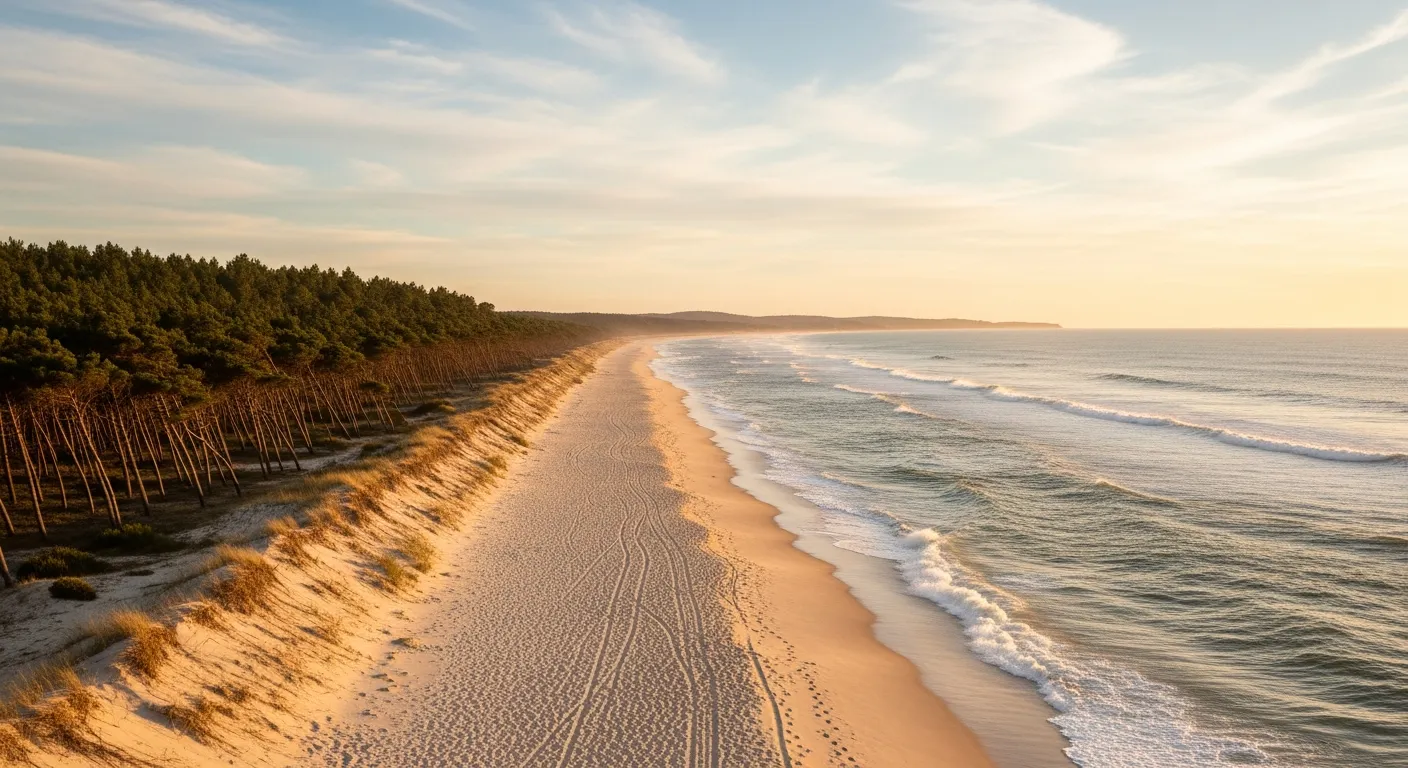
But if you want to understand what Comporta was like before the whispers started, walk the twelve kilometers of Pinheiro da Cruz. This stretch remains stubbornly empty, defended by distance and a complete lack of amenities. I brought water and walked for three hours without seeing another soul, just endless sand and the kind of Atlantic that makes you remember how small you are.

The Red Sole Connection
Christian Louboutin’s relationship with Comporta began in the early 2000s, when this coast was still the kind of secret you shared only with your closest friends. The story goes that he was walking on the beach near his newly purchased house when he noticed the red undersides of Portuguese fishing boats pulled up on the sand — the same red that would later become his signature. Whether apocryphal or not, it captures something essential about this place: inspiration hiding in plain sight.
His hotel, Vermelho, opened quietly in 2018, designed with the same understated luxury that defines everything here. Rooms start around 400 euros in high season, but the real luxury is what’s not there — no logos, no branded bathrobes, no marble-clad lobbies. Just linen curtains that move with the Atlantic breeze and floors that feel good against bare feet.
Where Everyone Knows Your Order
The food scene in Comporta operates on a different frequency than the coastal playground it appears to be. At Cavalariça, a Michelin-listed restaurant housed in a former horse stable, chef Rodrigo Castelo creates dishes that taste like this landscape — rice from the paddies, salt from the traditional salt pans, fish that was swimming this morning. Dinner for two runs about 120 euros, but you’re paying for alchemy as much as ingredients.
For lunch, nothing beats Dona Bia, a roadside fish grill where the menu depends entirely on what the boats brought in. The owner, a woman whose smile could power the village, grills sardines and sea bass over charcoal while her husband pours wine from unmarked bottles. Twenty euros feeds two people generously, and you’ll leave feeling like family.
The surprise is Praia na Comporta, Philippe Starck’s contribution to the beach club scene. Despite the designer pedigree, it feels authentically Portuguese — weathered wood, simple chairs, and a menu that celebrates rather than reimagines local ingredients. A lunch of grilled prawns and wine costs around forty euros, but you’re paying for the sunset and the way the light turns everything golden at 7 PM.
What Most People Miss
The real Comporta reveals itself in the spaces between the obvious attractions. Take the morning boat trip through the Sado Estuary, where twenty-seven resident bottlenose dolphins have been individually named and studied by marine biologists. For forty euros per adult, you’ll spend three hours in waters so rich with life that dolphins often approach the boat out of curiosity rather than training.
Or drive the winding road to Alcácer do Sal, a medieval castle town that feels like Comporta’s more serious older sibling. The drive takes thirty minutes through landscape that shifts from rice paddies to cork forests, ending at a town where the castle overlooks salt pans that have been harvested since Roman times. The municipal museum costs three euros and houses artifacts that tell the story of salt trading that made this region wealthy centuries before anyone discovered its beaches.
The Tróia Peninsula, accessible by a short ferry ride from Setúbal, holds the ruins of a Roman fish-salting operation that exported garum — fermented fish sauce — across the empire. Walking among these ancient walls, with the Atlantic crashing nearby, you realize that Comporta’s relationship with the sea is older and more complex than any modern development.
The Price of Paradise
But there’s tension beneath this barefoot luxury. Property prices have increased fifty-fold in some areas, pricing out fishing families whose roots here go back generations. The white storks still nest on power lines and church towers, but how long before development pressure forces them elsewhere?
Local activists with Dunas Livres organize beach cleanups and protest meetings, fighting against developments that would fundamentally alter this ecosystem. They’re not anti-tourism, but they understand that Comporta’s magic lies in its restraint, its refusal to become just another coastal resort where authenticity is performed rather than lived.
Walking the empty stretches of sand at sunset, watching storks settle into their nests as the rice paddies reflect the last light, I understand what they’re fighting to preserve. This isn’t just a beautiful place — it’s a way of being in the world where luxury means having nothing to prove, where the ultimate sophistication is knowing when enough is enough.
The morning I left, I stopped again at that same cobbled square where I’d first seen the stork on the church tower. The old fisherman was there again, nets spread across his lap, hands moving in the same ancient rhythm. He looked up as I passed and nodded — not recognition exactly, but acknowledgment. I’d been here long enough to see beyond the surface, to understand that Comporta’s greatest luxury isn’t what it offers, but what it chooses to withhold.
Worth reading next
More stories worth your time.

Where to Stay in Tokyo: A Luxury Neighborhood Guide
An honest guide to where to stay in Tokyo, with the neighborhoods, hotel styles, and tradeoffs that matter before you book.

The Winter Alps: Where Luxury Means Wood Fires, Not Gold Leaf
Four Alpine towns, four different ideas of what winter luxury means. From Zermatt's car-free quiet to Courchevel's fur-coat chaos, a guide to the Alps for people who care about the fire in the lobby.

Where to Eat in Tokyo: A Guide for People Who Take Food Personally
Two weeks in Tokyo, eating three meals a day plus snacks, convenience store runs at midnight, and one life-altering omakase. A neighborhood-by-neighborhood guide for people who consider food a personality trait.
About Kaira
Explore With Kaira is built for readers who want the atmosphere of a luxury travel magazine without the emptiness of sponsored copy.
About Kaira