Pine Forests and Infinity Pools: Where to Sleep in Portugal’s Best-Kept Secret
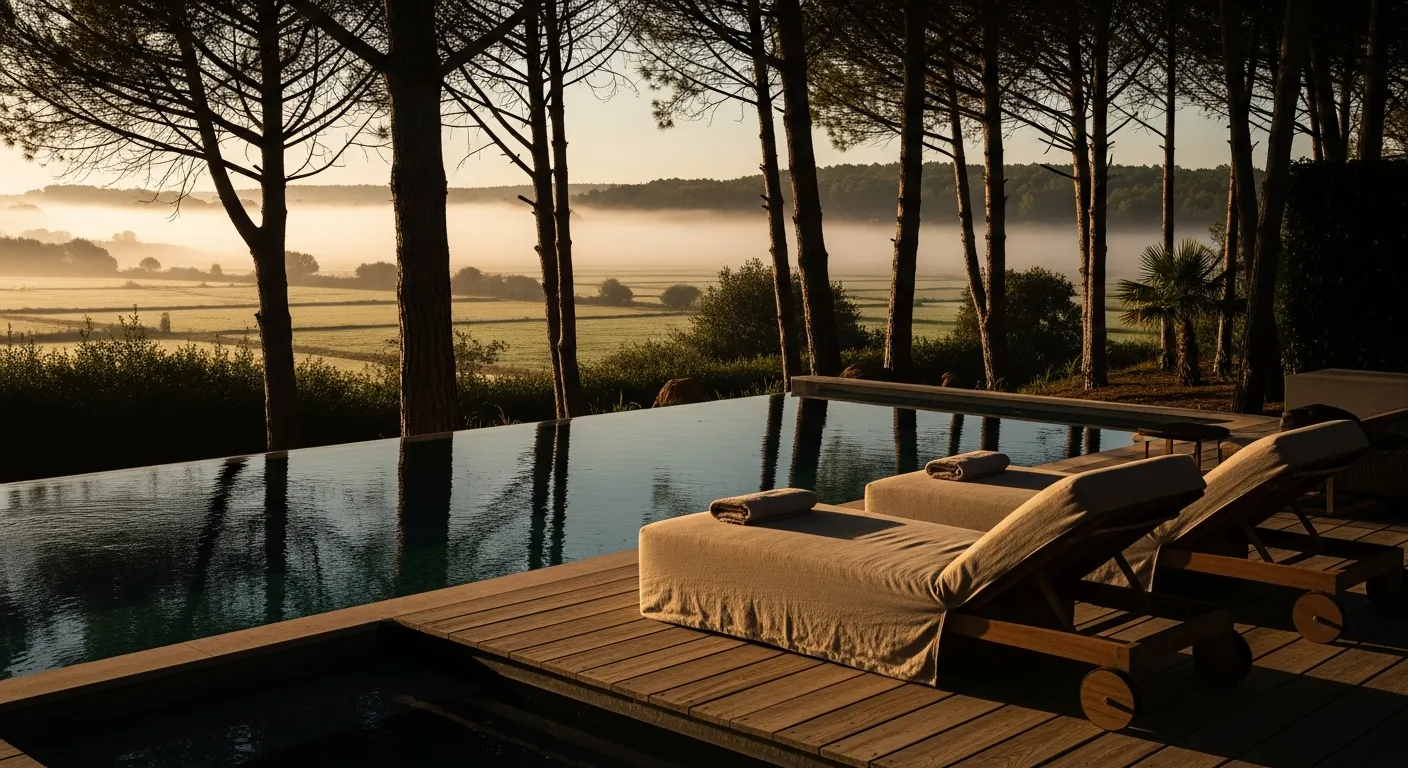
The morning light filters through pine needles at seven AM, casting shadows that move like water across the wooden deck. I’m sitting with coffee at Sublime Comporta, watching rice paddies shimmer gold in the distance, and thinking about how this corner of Portugal has become Europe’s most sophisticated secret. The air smells of maritime pine […]

The morning light filters through pine needles at seven AM, casting shadows that move like water across the wooden deck. I’m sitting with coffee at Sublime Comporta, watching rice paddies shimmer gold in the distance, and thinking about how this corner of Portugal has become Europe’s most sophisticated secret. The air smells of maritime pine and salt, and somewhere a horse is nickering in the distance — the sound carries differently here, where luxury means silence instead of marble lobbies.
Three years ago, I’d never heard of Comporta. Now I return twice a year, drawn by something I’m still trying to name. It’s not the beaches, though they stretch for miles without a single high-rise. It’s not the hotels, though they’re unlike anywhere else in Europe. It’s the way this place holds space — for rice farmers and international creatives, for ancient traditions and Instagram moments, for the kind of luxury that feels like an exhale.
Where Pine Forests Meet Provençal Dreams
Sublime Comporta reveals itself in glimpses — a flash of whitewashed walls through maritime pines, the distant sound of bicycles on gravel paths. The property spreads its 45 keys across the forest like a secret village, connected by pathways that invite wandering. Room rates range from 225 to over 700 euros during peak summer, but that number doesn’t capture what you’re paying for: the feeling of discovering a place that exists outside of time.
I stay in a Pine Forest Suite, where floor-to-ceiling windows frame the canopy like living artwork. The design whispers rather than shouts — Portuguese craftsmanship in bleached wood and linen, ceramics that catch the light just so. By 9 AM, I’ve borrowed one of their vintage bicycles and I’m pedaling toward the beach, pine-scented air rushing past. It’s a fifteen-minute ride through forests that feel ancient, emerging onto Praia da Comporta where the Atlantic stretches endlessly toward the horizon.
But it’s dinner at Sem Porta that captures why I keep returning. The restaurant has no doors — the name means “without doors” — creating this seamless flow between inside and outside that feels revolutionary in a Europe where dining rooms have been formal affairs for centuries. Chef João Rodrigues sources everything within miles: rice from the paddies you see from your terrace, fish pulled from waters you can walk to, vegetables from gardens that have fed this region for generations. The tasting menu runs 85 euros, but you linger for hours, watching stars appear between pine branches as the evening unfolds without urgency.
The Louboutin Fantasy Made Real
If Sublime Comporta whispers, Vermelho by Christian Louboutin announces itself in the most elegant possible way. The property’s 13 rooms, ranging from 342 to 1,200 euros per night, occupy a restored manor house where every detail bears the designer’s unmistakable touch. This is the most Instagram-famous property in Comporta, and for good reason — it’s impossible to take a bad photograph here.
I spent an afternoon in their signature red, watching afternoon light play across surfaces that seem to glow from within. The new villas, priced between 1,700 and 2,200 euros per night, take the concept further — private kingdoms where Louboutin’s aesthetic vision meets Portuguese craft traditions. Red leather banquettes, scarlet-painted shutters, roses blooming in courtyard gardens — it sounds excessive on paper, but in person it feels like stepping into a fever dream that somehow makes perfect sense.
What surprises me most is how lived-in it feels. Despite the designer pedigree, despite the photographers who arrive daily during golden hour, there’s something deeply comfortable about Vermelho. Perhaps it’s the way staff remember your name, or how they’ll pack a perfect picnic for the beach without being asked. Luxury here means never having to perform your vacation for anyone else.

The Wellness Revolution Coming
By 2028, Six Senses will open their 70-room Comporta property, and everything will change. This will be the area’s first true wellness mega-resort, complete with the brand’s legendary spa programming and sustainability initiatives. I’ve walked the construction site with local friends who have mixed feelings about what’s coming — the jobs and international recognition versus the inevitable crowds and Instagram tours.
But for now, Comporta still belongs to those who seek it out deliberately. The Six Senses will bring infrastructure and polish, but it will also bring the end of this particular moment when luxury here feels discovered rather than packaged.
Family Kingdoms and Quiet Alternatives
Quinta da Comporta sprawls across 73 accommodations, making it the area’s largest property. Rates range from 247 to over 2,000 euros per night, and reviews are fascinatingly polarized — families with children rave about the space and programming, while couples seeking intimacy sometimes find it feels too corporate, too much like a resort trying to be a village.
I understand both perspectives. The property excels at logistics — coordinating beach shuttles, organizing horseback rides through the dunes, managing the complex dance of feeding dozens of families simultaneously. But it lacks the soul-stirring magic of smaller properties. It’s competent luxury rather than transformative luxury.
For something different, Spatia Comporta offers 20 rooms of design-forward minimalism. This newer boutique property attracts architects and photographers who appreciate clean lines and negative space. It’s the quieter alternative to Vermelho’s drama, the thoughtful choice for those who prefer their luxury understated.
AlmaLusa Comporta represents perhaps the most honest value proposition — 53 rooms ranging from 120 to 340 euros per night, delivered by a Portuguese hospitality group that understands both service and restraint. It’s luxury without the Instagram tax, comfort without the performance.
Beyond the Hotel Gates
The real Comporta reveals itself at dinner tables scattered across the village. Cavalariça earned its Michelin listing by treating Portuguese ingredients with Japanese-influenced technique — the sea bass with dashi and local herbs stays with me months later. Reservations essential, and they mean it.
Museu do Arroz occupies a converted rice warehouse where chef João Pupo Lameiras has created something between restaurant and cultural experience. The building tells the story of Comporta’s agricultural heritage while the kitchen celebrates it — dishes that taste like place memory, priced fairly for the artistry involved.
For something more elemental, Sal serves grilled fish steps from where it was caught. No reservations, no Instagram-perfect plating — just the kind of meal that reminds you why people have gathered around Portuguese coastlines for centuries. Dona Bia operates from what looks like someone’s backyard, grilling sardines and sea bream over charcoal while conversations flow in three languages.
The beach restaurants master the art of feet-in-sand dining — wooden platforms scattered along Praia da Comporta where you can order grilled prawns and cold wine while waves provide the soundtrack. It’s casual in the most sophisticated way, luxury defined by the absence of unnecessary ceremony.
The Price of Paradise
Here’s what no guidebook mentions: Comporta hotels charge French Riviera prices while delivering intentionally casual service. This is either charming or maddening, depending on your expectations. When you’re paying 600 euros per night, discovering that housekeeping operates on “island time” requires a mental adjustment.
I’ve learned to embrace this disconnect. The high prices reflect genuine scarcity — there simply aren’t many rooms, and demand has exploded among Europeans seeking alternatives to overrun coastal destinations. But the casual service reflects something deeper about Portuguese culture, a resistance to the performative aspects of luxury hospitality.
Book strategically: May through June or September through October offer 30 to 40 percent savings compared to July-August peak season, with better weather than you’d expect and beaches that feel privately yours. August brings crowds and prices that strain even generous travel budgets — 1,200 euros per night for rooms that cost 400 in May.
The Amarello Warning
Hilton’s new Amarello Hotel, opening in 2025, signals Comporta’s inevitable mainstreaming. International brands arrive when a destination reaches critical mass, when the secret becomes too valuable to remain secret. I’m curious to see how Hilton interprets Comporta’s aesthetic, whether they’ll capture the essence or simply copy the surfaces.
This feels like a turning point. Visit now, while Comporta still belongs to rice farmers and design hotels in equal measure, before it becomes another beautiful place that luxury brands have made indistinguishable from every other beautiful place they’ve touched.
The morning light shifts, and my coffee has grown cold. In an hour, I’ll bicycle to the beach for a swim that will taste of salt and possibility. Tomorrow, I’ll return to a world of deadlines and obligations. But Comporta will remain, holding space for the kind of luxury that money can’t manufacture — the luxury of time moving differently, of meals that last until sunset, of places that let you remember who you are when no one is watching.
Worth reading next
More stories worth your time.

The Maldives Question: Is $2,000 a Night Worth It? (An Honest Answer)
I've stayed at four Maldivian resorts across three trips and two budgets. Here's the honest answer to whether those overwater villas are worth what they charge — and what nobody tells you about paradise before you book.

The White Lotus Hotels Are Real. The Experience Isn’t What You Think.
The White Lotus hotels are real, but staying at them now is a different experience than the fantasy the show sells.

St. Regis Bora Bora: Waking Up Above Water Is Not a Spiritual Experience
The brochure for the St. Regis Bora Bora promises a “transformative overwater experience.” The website uses words like “transcendent” and “soul-stirring.” Three different people told me, before I went, that waking up in an overwater villa would “change the way I see the world.” It didn’t change the way I see the world. It changed […]
About Kaira
Explore With Kaira is built for readers who want the atmosphere of a luxury travel magazine without the emptiness of sponsored copy.
About Kaira