Oman: The Gulf State That Chose Silence Over Spectacle
While Dubai builds islands and Saudi Arabia builds cities from scratch, Oman chose to invest in what it already had — fjords, canyons, rose villages, and 5,000 years of civilisation. The luxury hotels have arrived. The crowds haven’t. This is the window.

I spent three days in Dubai before crossing the border. The transition from a city that screams at you to a country that whispers might be the most dramatic tonal shift in world travel. One moment you’re standing in a mall the size of a small nation, staring at an indoor ski slope that exists because someone decided the desert needed snowfall. The next you’re driving a rented 4WD through the Al Hajar mountains at dawn, the road carving switchbacks up basalt cliffs, and the only sound is the engine and whatever the wind is doing to the dust.
Nobody told me about Oman. Not the travel agents, not the luxury magazines, not the algorithm. While Dubai built islands and Abu Dhabi bought museums and Saudi Arabia announced a mirrored city in the desert that may or may not happen, Oman invested in what it already had — fjords carved by ancient geology, canyons older than civilization, rose villages where women distill perfume in copper stills using a method that hasn’t changed in centuries, and a coastline where twenty thousand green turtles nest on beaches that have no hotels, no lifeguards, and no entrance fees.
The luxury hotels have arrived. The crowds haven’t. This is the window, and it won’t stay open.
Muscat: The Capital That Refuses to Shout
Muscat has a building height restriction. This single detail explains everything. While Dubai races toward the sky and Riyadh announces towers that will cost more than some countries’ GDP, Muscat decided that nothing should rise above the mountains behind it. The result is a city that feels like a coastal village that happens to have an opera house — and the opera house, completed in 2011, was the first in the Gulf region. Oman invested in Italian marble, Burmese teak, and Austrian crystal chandeliers while Dubai invested in theme parks. That choice speaks.
The Sultan Qaboos Grand Mosque is free to enter and open to non-Muslims every morning except Friday, from half-past eight until eleven. The dress code is strict — women cover arms, legs, and hair; men wear long trousers and sleeved shirts — and that strictness is the respect. Inside, one of the world’s largest handmade Persian rugs covers the prayer hall floor, and a chandelier that weighs eight tons hangs from a ceiling that makes you understand why people build monuments. I stood in the courtyard for twenty minutes after everyone else had moved on because the silence felt earned in a way that silence in a new building rarely does.
Muttrah Souq is the opposite energy. Over two hundred years old, narrow covered alleys stacked with frankincense, silver, oud, spices, and the kind of handwoven textiles that would cost four times as much in a Dubai boutique. The smell is what I remember most — layers of it, oud and saffron and dried lime and frankincense resin, accumulating as you walk deeper into the market. This isn’t the sanitized gold-souk experience of the Emirates. This is a market that exists for the people who live here, and the fact that you’re wandering through it is incidental to its purpose. The best frankincense in the world comes from Oman — Omani resin is considered the finest on earth — and you can buy a bag of it in Muttrah for a few rials while the vendor tells you how his grandfather harvested from the same trees.
The Muttrah Corniche stretches three kilometres along the harbour, traditional dhows on one side and mountains on the other, and at sunset the Al Hajar range glows behind the city in colours that would look artificial in a photograph. The fish market at the northern end opens early, and the men who work there have been doing this long enough that the choreography of knife and scale and ice looks like something rehearsed.
The Mountain: Jebel Akhdar
The police checkpoint at the base of Jebel Akhdar turns back anything without four-wheel drive. They check your vehicle, your license, your insurance, and if you’re driving a sedan they point you back toward the highway with the kind of firm politeness that doesn’t invite negotiation. The drive up is forty-five minutes of switchbacks carved into the Al Hajar range, paved but steep, and the temperature drops noticeably with every thousand feet of elevation. At the top — two thousand metres above sea level — the air is thin and clean and cool in a way that makes the coastal heat feel like a memory from another country.
Two luxury hotels sit up here: the Alila Jabal Akhdar and the Anantara. The Alila is the one that changed how I think about hotel location. It’s perched on the edge of what they call Oman’s Grand Canyon — the second-deepest canyon in the world — and the heated infinity pool overlooks a drop so sheer that swimming in it feels like an act of faith. Rooms start around $350 in low season, climbing past $650 in peak winter months. The transfer from Muscat airport runs about $470 roundtrip per vehicle, which is a lot until you see the canyon.
But it’s the villages that make Jebel Akhdar worth the drive. Al Aqr, Al Ayn, and Ash Shirayjah are connected by cobblestone paths and ancient irrigation channels — the falaj system, a UNESCO-recognized engineering marvel that has distributed water through these mountains for over a thousand years. The three-village walk takes about three hours at a moderate pace, through terraced orchards of pomegranate and peach, past stone houses where families have lived for generations, along cliff paths where the valley drops away below your feet.
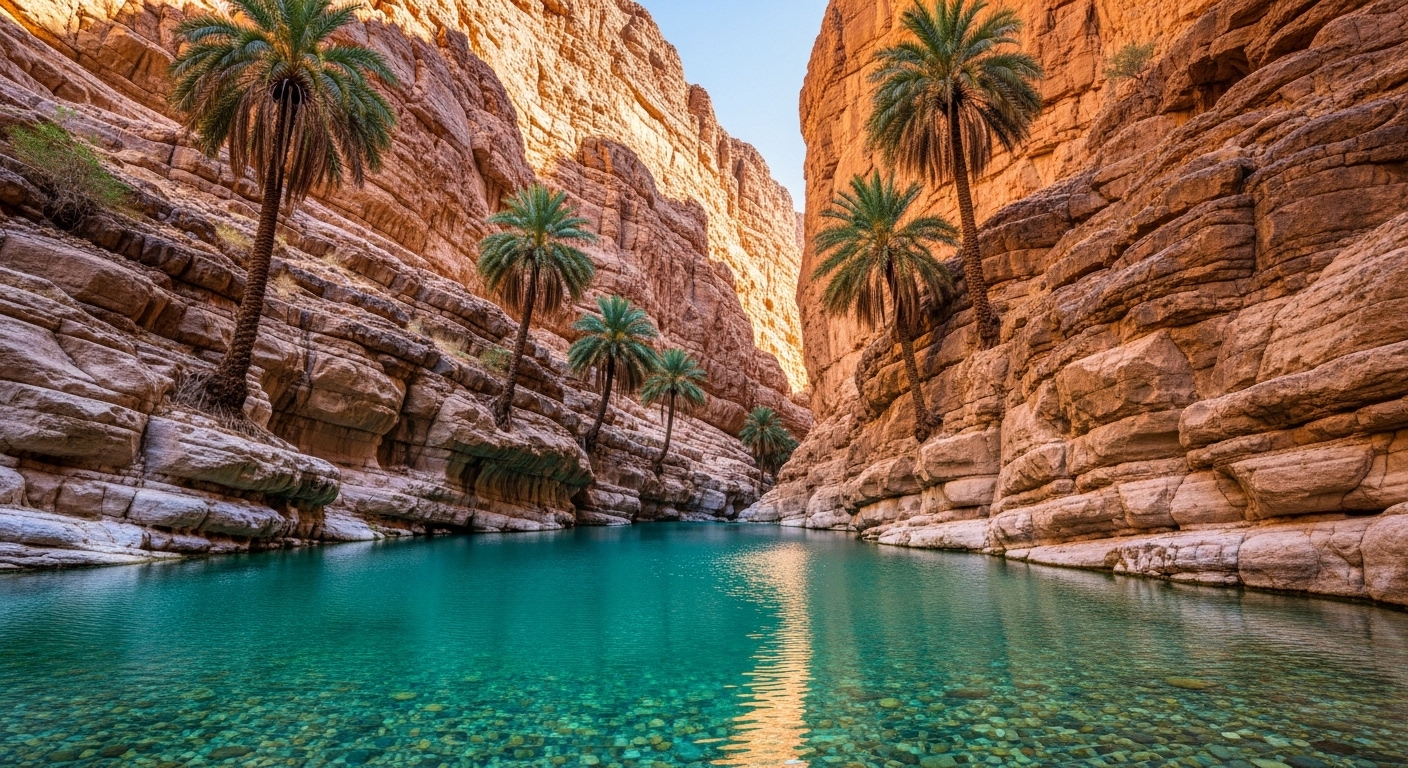
In March and April, the Damask roses bloom. The entire plateau smells like a perfume counter that someone left open in the sun. Women harvest the petals by hand and distill them in copper stills — the same stills, the same method, for centuries — producing rose water that sells for a fraction of what it costs in Parisian boutiques. I watched the process in a stone building in Al Ayn where the steam rose through gaps in the roof, and the woman running the still explained that her mother taught her, who was taught by her mother, and so on backward through time until the origin of the knowledge disappears into the mountain itself. You can buy a bottle for a few rials. You’ll smell it on your clothes for days.
The Desert: Wahiba Sands
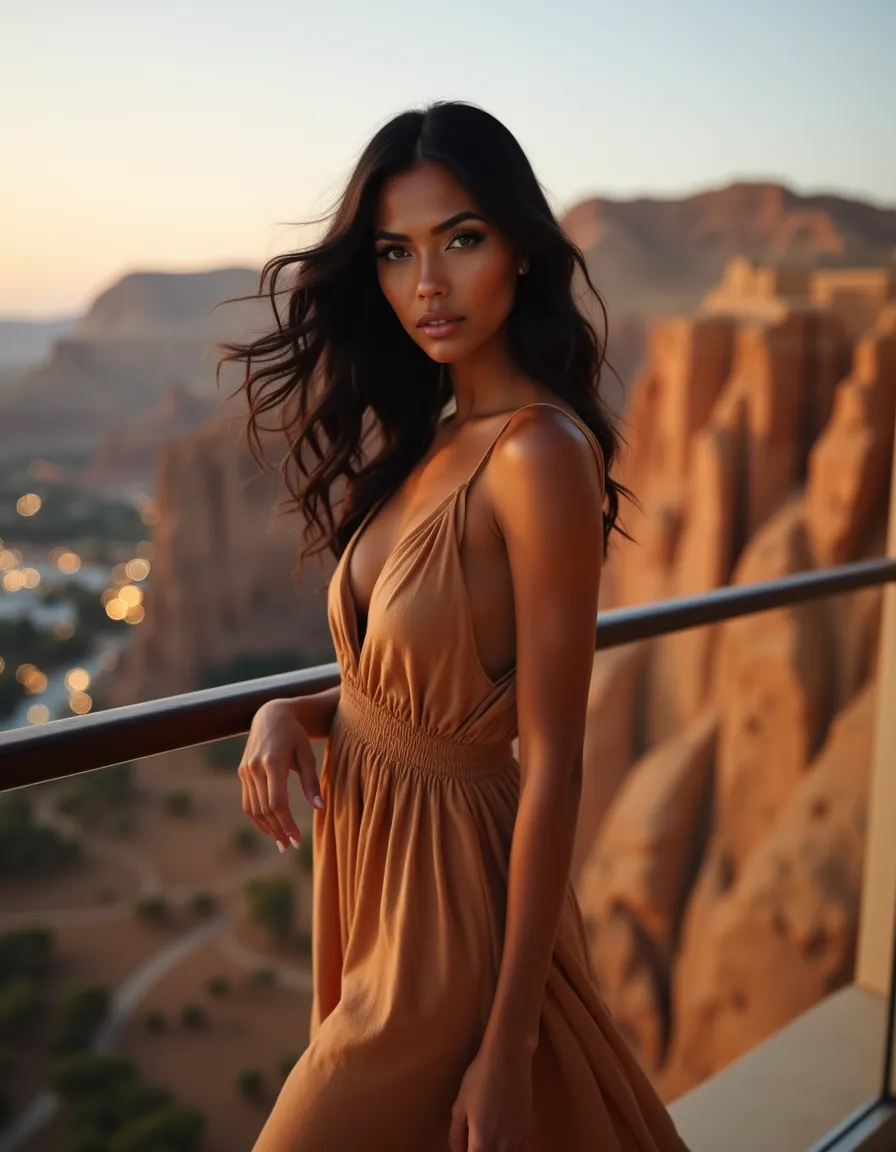
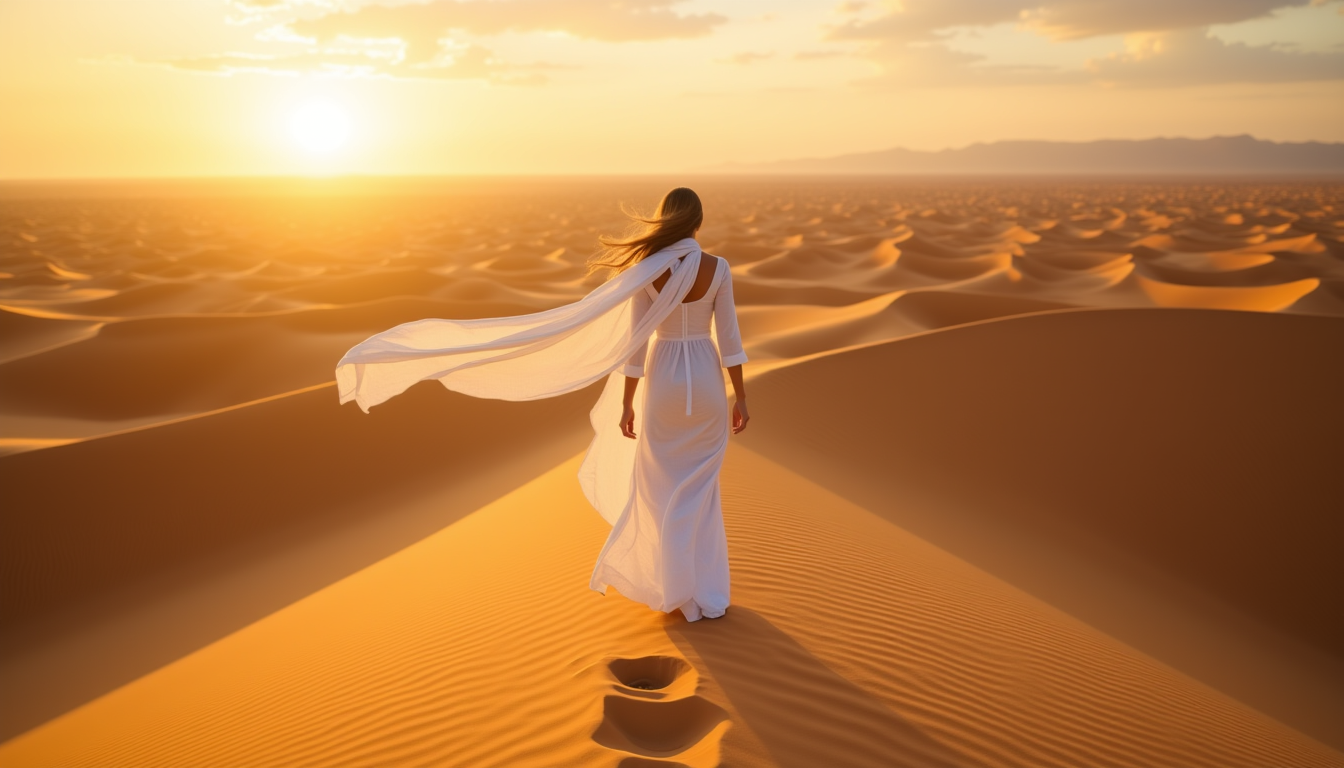
Three hours southeast of Muscat, the road simply ends and the dunes begin. The Wahiba — or Sharqiyah Sands, as Oman officially calls them — are the Arabian desert of imagination: golden, rolling, enormous, and almost completely empty of anything except Bedouin camps and the kind of silence that makes your ears ring.
I stayed at Thousand Nights Camp, which manages to be both luxurious and genuinely Bedouin in a way that most “glamping” operations fail spectacularly at achieving. Traditional architecture built with natural materials. Tents with proper beds. A campfire where the staff tell stories and the stars are visible in quantities that urban eyes have forgotten are possible. Camel rides at dawn. Sand boarding down dunes that seem to shift shape overnight. And shuwa — lamb slow-roasted underground in sand for up to forty-eight hours, wrapped in banana leaves, seasoned with cumin and chili and coriander — served under open sky. Shuwa is Oman’s national dish, and eating it in the desert where it was invented, cooked the way it has always been cooked, is the kind of experience that no Michelin star can replicate.
The luxury camps range from around $150 to $500 a night depending on exclusivity. Magic Camp offers eco-chic glamping with sixteen tents, private bathrooms, and no fossil fuels — it won World Luxury Hotel Awards in 2023 and 2024. For absolute privacy, The One Tent Camps operate on a concept of exactly what the name suggests: one tent, one guest, maximum solitude.
Getting into the dunes requires deflating your tyres — local shops at the desert’s edge will do it for you and reinflate on exit — and a 4WD that can handle soft sand. This is not optional. I watched a couple in a rental sedan get stuck within thirty metres of the pavement. The Bedouin who pulled them out charged nothing and looked unsurprised.
The Fjords: Musandam
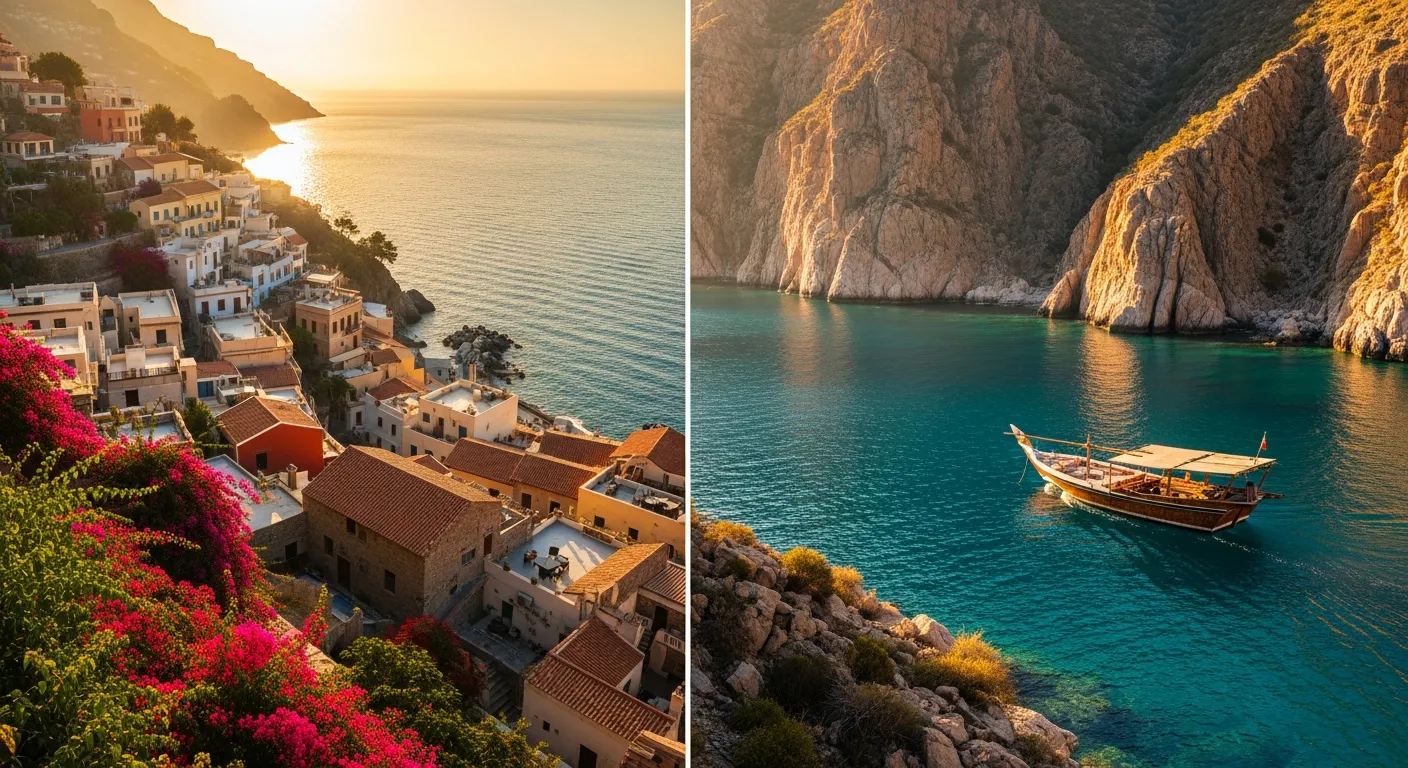
Musandam is geographically absurd. It belongs to Oman but is separated from it by the UAE, jutting into the Strait of Hormuz like an afterthought that turned out to be the most beautiful part of the sentence. They call it the Norway of Arabia, and the comparison isn’t lazy — the limestone fjords plunge into turquoise water with the same drama as the Scandinavian originals, just warmer and with dolphins instead of whales.
Khasab is the capital and the base for dhow cruises. The boats are traditional — decorated wood with Omani carpets and cushions — and the half-day trips run about $39 per person, which might be the best value in luxury travel. You motor through fjords where the cliffs rise vertically from the water, stop at Telegraph Island — where the British once ran a telegraph station and the heat drove operators to jump into the sea, possibly giving us the phrase “going around the bend” — and snorkel over coral where the Gulf of Oman is so clear you can see your shadow on the ocean floor twenty feet below.
Spinner dolphins travel in pods along the fjords, and the captain cuts the engine when they appear, letting the boat drift as they surface and dive and spin within arm’s reach. I’ve done whale watching in four countries. This was better, because nobody on the boat was performing a role. The captain smiled because the dolphins made him happy, not because he was supposed to.
Club Med has announced a $100-million resort in Musandam, their first in the Middle East, opening in 2028. When it opens, the fjords will still be there. The solitude won’t.
The Wadis
Oman’s wadis — seasonal river valleys carved through rock over millennia — are the country’s best-kept open secret, and they’re free.
Wadi Shab is the one that ruins you for swimming pools. You park, pay one rial for a boat ride across lily-pad-covered water, and then hike for about two hours through a canyon that narrows as it goes. The terrain shifts from gravel to boulders to slippery rock, and good shoes earn their keep. At the end, you swim — through turquoise pools, through a narrow gap in the rock where the water rises to your chin and you’re not entirely sure you should keep going — and then you’re in a hidden cave with a waterfall. No signage. No lifeguard. No entrance fee beyond the boat. Just the cave and the water and the sound of it falling.
Wadi Bani Khalid is more accessible — a five-minute walk from the car park to crystal-clear emerald pools with golden cliffs sculpted by time. Dress conservatively; signs are posted. Visit on a weekday if you can — weekends bring local families and the pools lose the meditation quality that makes them special.
The Turtles
Ras Al Jinz is a turtle reserve on the eastern coast, and the experience of being there at four in the morning makes everything else I’ve described feel like preamble.
Twenty thousand green turtles nest on Oman’s beaches. At Ras Al Jinz, you join a guide at nine PM to watch them come ashore and lay eggs, or at five AM to watch hatchlings — palm-sized, frantic, ancient — scramble for the waterline. I chose the dawn tour. The beach was dark and cold and the guide spoke in whispers, and when the first hatchling appeared — emerging from sand it was buried in sixty days ago, navigating by starlight toward water it had never seen — I understood something about instinct and survival and the planet’s refusal to stop trying that I hadn’t understood before.
Tickets are 7 OMR — about $18. The reserve is the only legal place to watch turtles in Oman, and the restrictions exist because they work. Peak nesting is June through August, but turtles come year-round.
Where to Stay (The Full Picture)
The Chedi Muscat remains the standard-bearer for Omani luxury — $225 to $400 a night, beachfront, three swimming pools including the 103-metre Long Pool that is possibly the most photographed hotel feature in the Middle East, and a Balinese spa that makes no geographical sense but works beautifully. The founding family behind The Chedi is now building The Malkai, which opens in autumn 2026 and might be the most interesting hotel concept in the Gulf: three tented camps — coast, mountain, desert — connected by Land Rover Defender, with a personal Murshid — guide, butler, philosopher — who accompanies you for a four-to-ten-night journey across the country. Rates start at $2,200 a night inclusive. I haven’t stayed there. I’m counting the months.
Six Senses Zighy Bay is the dramatic choice — $730 in summer to $2,200-plus in peak season, on the Musandam Peninsula, accessible by speedboat or by paragliding from 960 feet above, which is the only hotel check-in procedure that requires a waiver. The villas are private, the wellness programming is genuine, and the restaurant at the top of the mountain — “Sense on the Edge” — earns its name.
The Anantara Al Jabal Al Akhdar starts from about $416 a night and sits at the same elevation as the Alila but plays more to the adventure set — Via Ferrata climbing, abseiling, guided canyon hikes. The Alila is the contemplative one; the Anantara is the one that makes you earn your cocktail.
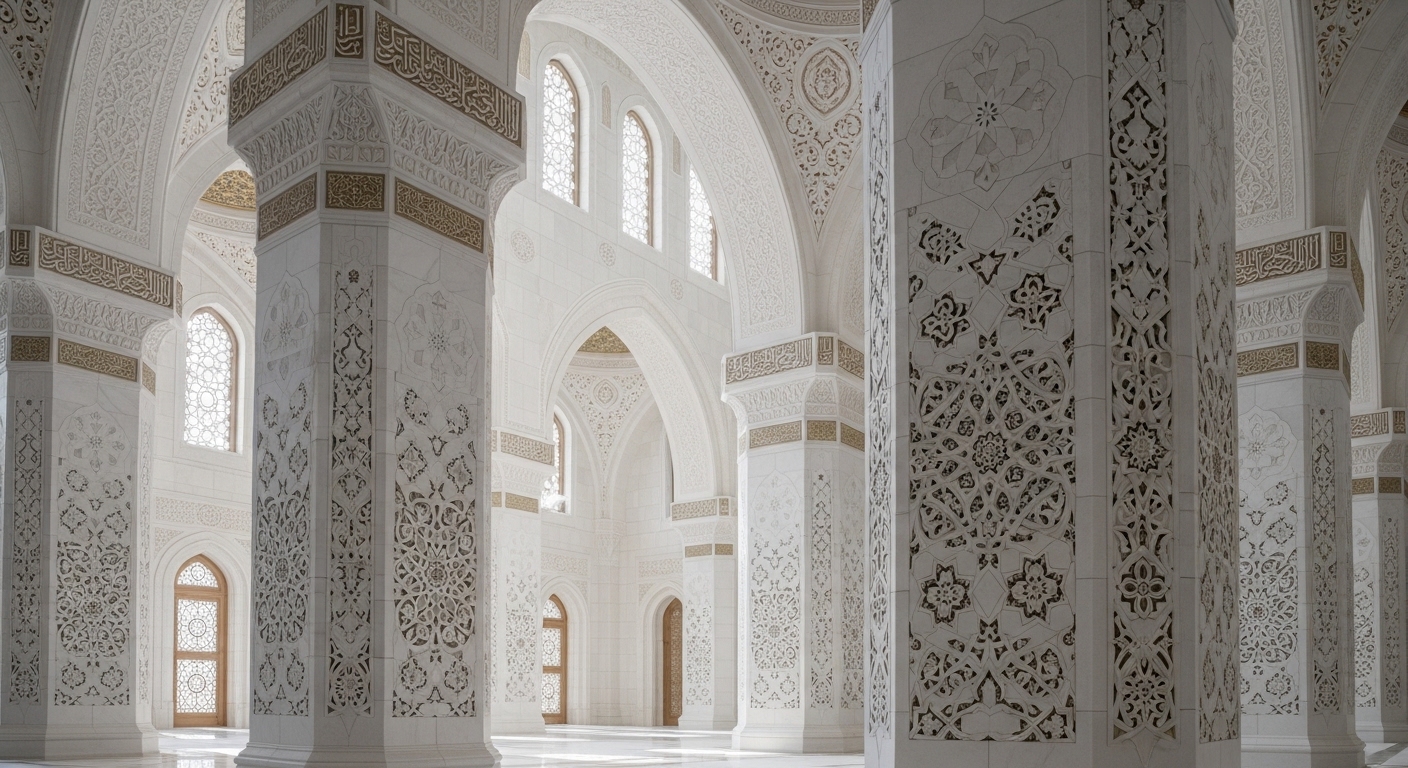
The Waldorf Astoria Muscat Al Husn opened in January 2026 — 180 rooms, five dining venues, a private beach cove, a full Hilton complex alongside a Hilton and DoubleTree. It’s Oman’s newest luxury property and the first Waldorf in the country. The Mandarin Oriental opened in June 2024, 103 rooms designed with Omani cultural symbols by local artisans, feeling more like a “warm family home” than a corporate luxury property. And Al Bustan Palace, a Ritz-Carlton Hotel, offers a kilometre-long private beach and rates that start as low as $138 in the off-season — perhaps the best entry point to Omani luxury hospitality.
The Practical Truth
Oman gives you fourteen days visa-free if you hold a passport from over a hundred countries — US, UK, EU, Australia, Japan. No pre-registration. Walk in, get stamped, start driving. The Omani rial is pegged and stable, the third-strongest currency in the world, which means prices look small and punch above their weight — 1 OMR is about $2.60.
Rent a 4WD. You’ll need it for Jebel Akhdar and the desert, and you’ll want it for the wadis. Budget about $70 a day with full insurance. Fuel is $0.68 a litre — essentially free by European standards. The highways are excellent, signage is clear in English and Arabic, and the driving culture is calmer than anything you’ve experienced in the Gulf. Don’t drive at night. Unlit roads and camels don’t mix.
The best window is October through March. November and February are my picks — good weather, thinner crowds than the December-January peak, and hotel rates that haven’t inflated for the holiday season. Avoid summer unless you’re going to Salalah, where the monsoon transforms the southern coast into something that looks more like Sri Lanka than Arabia. The rest of the country will melt you — 45°C-plus with coastal humidity that turns the air into a warm towel.
Alcohol is available in licensed hotel bars and restaurants. Nowhere else. Public intoxication is illegal. The dress code is modest — shoulders and knees covered in public — and enforced more by cultural expectation than by law. Oman is conservative but not restrictive, and the Ibadhi Islamic tradition that shaped this country is doctrinally committed to tolerance in a way that most Gulf states are not. Ibadhi theology emphasises elected leadership, peaceful coexistence, and the principle that disagreement is not grounds for hostility. This is why Oman mediates between Iran and the US, between Saudi Arabia and Qatar, between everyone and everyone. Diplomacy isn’t a strategy here. It’s a theology.
The Window
Oman has committed $31 billion to tourism development through 2040. Forty new hotels are being built. Oman Air has launched eight new routes since December 2025. A GCC unified visa — one visa for all Gulf states — is expected in 2026. Club Med is coming. The St. Regis is coming. The Malkai is coming. Occupancy currently averages 55%, which means the infrastructure is outpacing the demand, which means you’re staying at world-class hotels that are half-empty.
This is the moment. Not five years from now, when the Club Med in Musandam has opened and the Instagram algorithm has discovered Wadi Shab and the fjords are full of dhow cruises running twenty-minute intervals instead of drifting alone with the dolphins. Not ten years from now, when the unified visa has turned Oman into a day-trip from Dubai and the rose villages have visitor centres and gift shops.
Right now, Oman is a country that hasn’t yet decided to perform for visitors. The goat auction at Nizwa every Friday morning — where men in dishdashas parade goats around a circular pavilion while the bidding rises in Arabic and the whole thing looks like organised chaos because it is — exists because it has always existed. Not because a tourism board decided it would make good content. The dhow yards at Sur, where craftsmen build boats from memory without plans or drawings using teak imported from India, are declining because fibreglass is cheaper, not because a heritage foundation is staging demonstrations. The turtles at Ras Al Jinz come ashore because this is where they’ve come ashore for a hundred thousand years, and the $18 ticket goes to the reserve that protects them, not to a shareholders’ meeting.
Dubai is a mall. Abu Dhabi is a museum. Saudi Arabia is a construction site. Oman is a country. And the difference, once you feel it, is the difference between a city that was built for you and a place that exists despite you — and is generous enough to let you in anyway.
Worth reading next
More stories worth your time.

Where to Stay in Tokyo: A Luxury Neighborhood Guide
An honest guide to where to stay in Tokyo, with the neighborhoods, hotel styles, and tradeoffs that matter before you book.

The Winter Alps: Where Luxury Means Wood Fires, Not Gold Leaf
Four Alpine towns, four different ideas of what winter luxury means. From Zermatt's car-free quiet to Courchevel's fur-coat chaos, a guide to the Alps for people who care about the fire in the lobby.

Where to Eat in Tokyo: A Guide for People Who Take Food Personally
Two weeks in Tokyo, eating three meals a day plus snacks, convenience store runs at midnight, and one life-altering omakase. A neighborhood-by-neighborhood guide for people who consider food a personality trait.
About Kaira
Explore With Kaira is built for readers who want the atmosphere of a luxury travel magazine without the emptiness of sponsored copy.
About Kaira