The Scent of Orange Blossoms: Marrakech’s Hidden Gems Beyond the Souks
The scent of orange blossoms drifting over a crumbling wall led me to Marrakech’s real treasures — the gardens that open only on Fridays, the 20-dirham museum that changed how I see Africa, and the artisan alleys where a brass lantern still carries a soul. A guide to the hidden city behind the famous one.
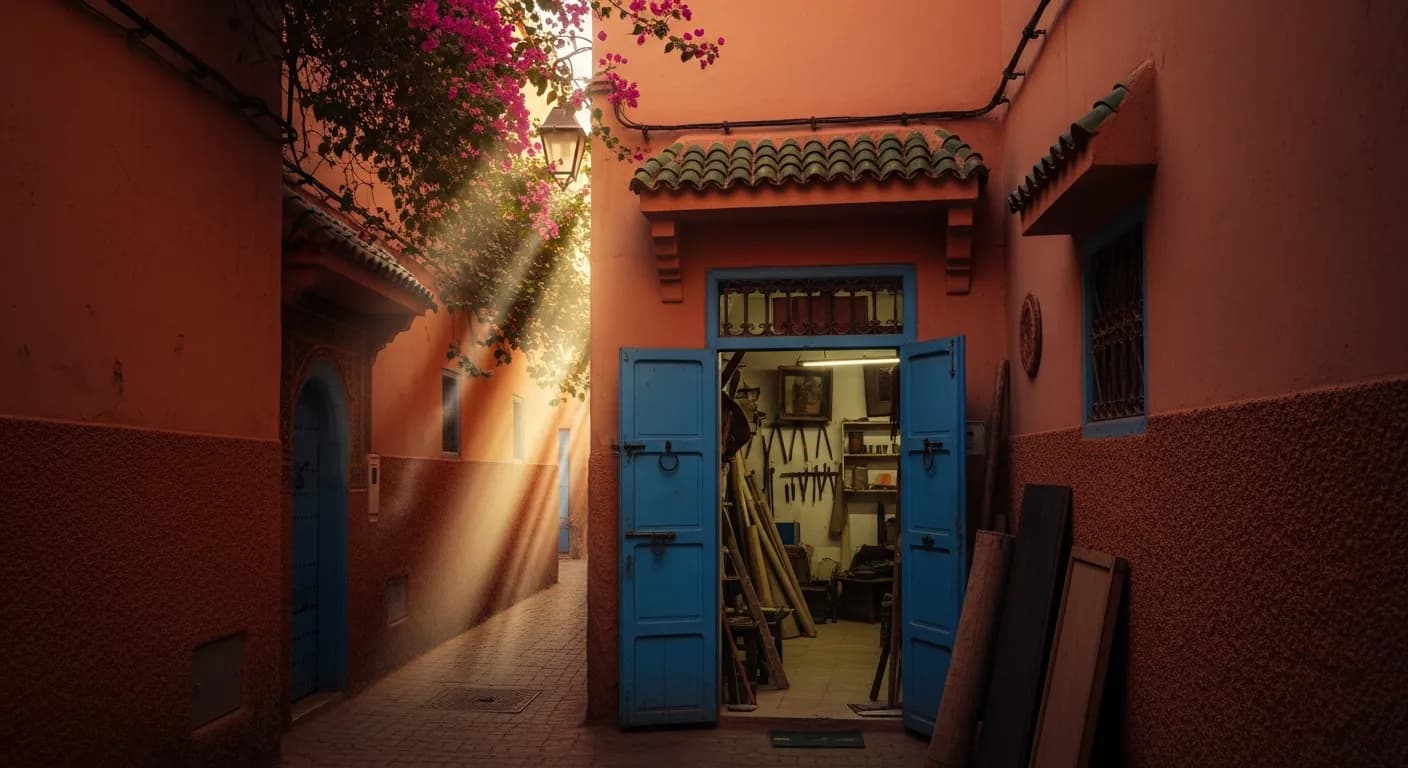
The Door That Wasn’t on Any Map
The first thing that stopped me wasn’t the famous chaos of Jemaa el-Fnaa or the tourist-heavy souks — it was the scent of orange blossoms drifting over a crumbling wall in the mellah. I’d been walking aimlessly, following the sound of hammer on metal through alleys so narrow my shoulders brushed both walls, when the fragrance stopped me mid-step. Beyond a weathered door I glimpsed something extraordinary: a courtyard where time had paused, where jasmine climbed forgotten fountains and pomegranate trees heavy with fruit cast shadows on tiles that no guidebook had ever mentioned.
Marrakech is full of these thresholds — moments where the city peels back a layer and shows you something older, stranger, and more beautiful than what’s on the surface. The trick is knowing which doors to push open, which alleys to follow, and which crowds to leave behind.
The Gardens That Compete with Dreams
Everyone queues for Jardin Majorelle, and I won’t pretend you shouldn’t. That electric blue against every shade of green — it genuinely startles, even when you’ve seen a thousand photographs. But here’s what the photographs don’t tell you: arrive at 8 AM when the gates open, and the gardens are yours. By 10, the tour buses have arrived and the magic evaporates into selfie sticks and shuffling queues. Tickets are 170 MAD and online purchase only now — I watched a couple get turned away at the gate last October because they didn’t know. The Berber Museum inside is worth the extra 30 MAD for the textile collection alone.
What I love more, though, are the gardens the crowds never find.
Le Jardin Secret hides in the northern medina near Mouassine Mosque — a restored 16th-century riad complex that’s everything Majorelle isn’t. Quiet. Uncrowded. Deeply thoughtful. The Islamic garden design follows mathematical principles of geometry and water management that have been perfected over a thousand years, and the signage actually explains them beautifully. At 80 MAD it’s half the price of Majorelle, and if you climb the tower for an extra 40 MAD, you’ll get a panoramic view of the medina that’s better than most rooftop restaurants charge you dinner prices to see.
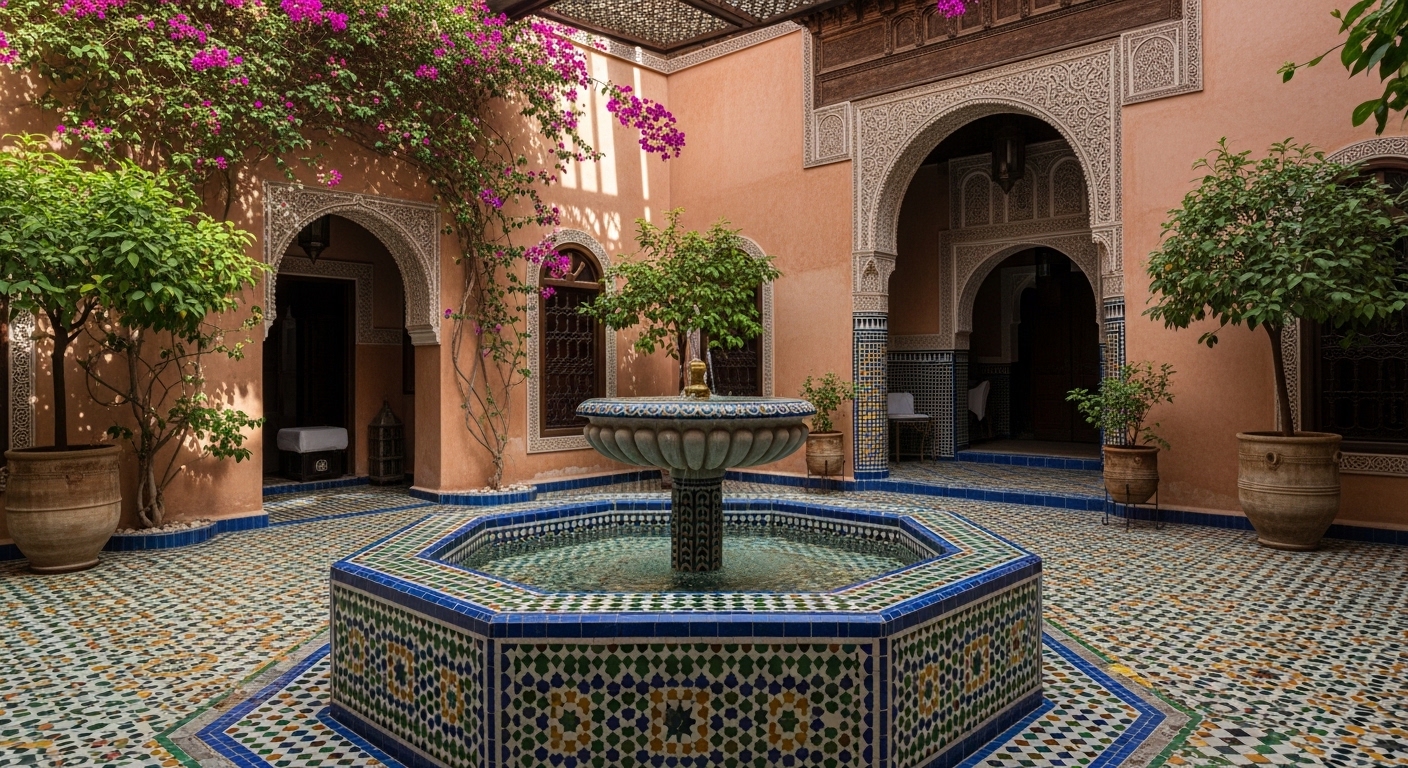
But my true favorite requires a bit of luck. The Agdal Gardens — the royal orchards south of the Kasbah — date to the 12th century and span over 400 hectares of olive, orange, and pomegranate groves irrigated by an ancient underground water system. They’re free, and they feel like stepping into a medieval painting. The catch: open to the public only on Fridays and Sundays, and only when the King isn’t in residence. No signs, no ticket booth — just a gate near the Royal Palace that’s either open or it isn’t. I’ve walked through those orchards three times now, and each time the gardener Hassan has appeared from nowhere to lead me through pathways to corners where roses bloom year-round, their petals destined for the rose water that perfumes the city’s traditional pastries.
If you have half a day to spare, take the free shuttle from near Majorelle to Anima Garden — Austrian artist André Heller’s fantastical creation in the Ourika Valley foothills, 27 km south of the city. Sculptures and installations woven through exotic plantings, part botanical garden, part open-air gallery. Tickets are 140 MAD, and the whole experience feels like wandering through someone else’s vivid dream.

The Interiors That Silence You
There’s a moment inside Ben Youssef Madrasa — the 14th-century Quranic school that reopened in 2022 after years of restoration — when you stop taking photos and just stand there. The carved stucco, the cedar wood, the zellige tilework, the 130 tiny student cells arranged around a courtyard of impossible beauty. The Marinid craftsmen who built this place understood something about the relationship between geometry and the divine that I still can’t articulate. Fifty MAD to enter. Go between 9 and 10 AM or after 4 PM, and you might get a minute alone with it.
The Saadian Tombs were hidden for centuries — literally bricked up and forgotten until an aerial survey rediscovered them in 1917. The Chamber of the Twelve Columns, with its Italian Carrara marble and muqarnas ceiling, is extraordinary at any hour, but I’ve learned to come at closing time — 5:30 PM in winter, 6:30 in summer — when the last tour groups have left and the golden light pours through the doorways as if the building itself is exhaling. The guards will sometimes let you linger if you’re quiet and respectful. A hundred MAD well spent.
But the place I send everyone — the one that makes me feel like I’m sharing a secret — is Maison Tiskiwin. In a narrow passage between Rue Riad Zitoun el-Kedim and the spice market, a small brass plaque marks a door that leads to someone’s life’s work. Dutch anthropologist Bert Flint spent decades traveling ancient Saharan trade routes, collecting textiles, jewelry, and artifacts that reveal the deep connections between Morocco and kingdoms far to the south. It’s 20 MAD — twenty dirhams, barely two dollars — and it’s not a museum so much as a man sharing his obsession in his living room. I’ve never seen more than three other visitors inside at once.
Artisan Souls
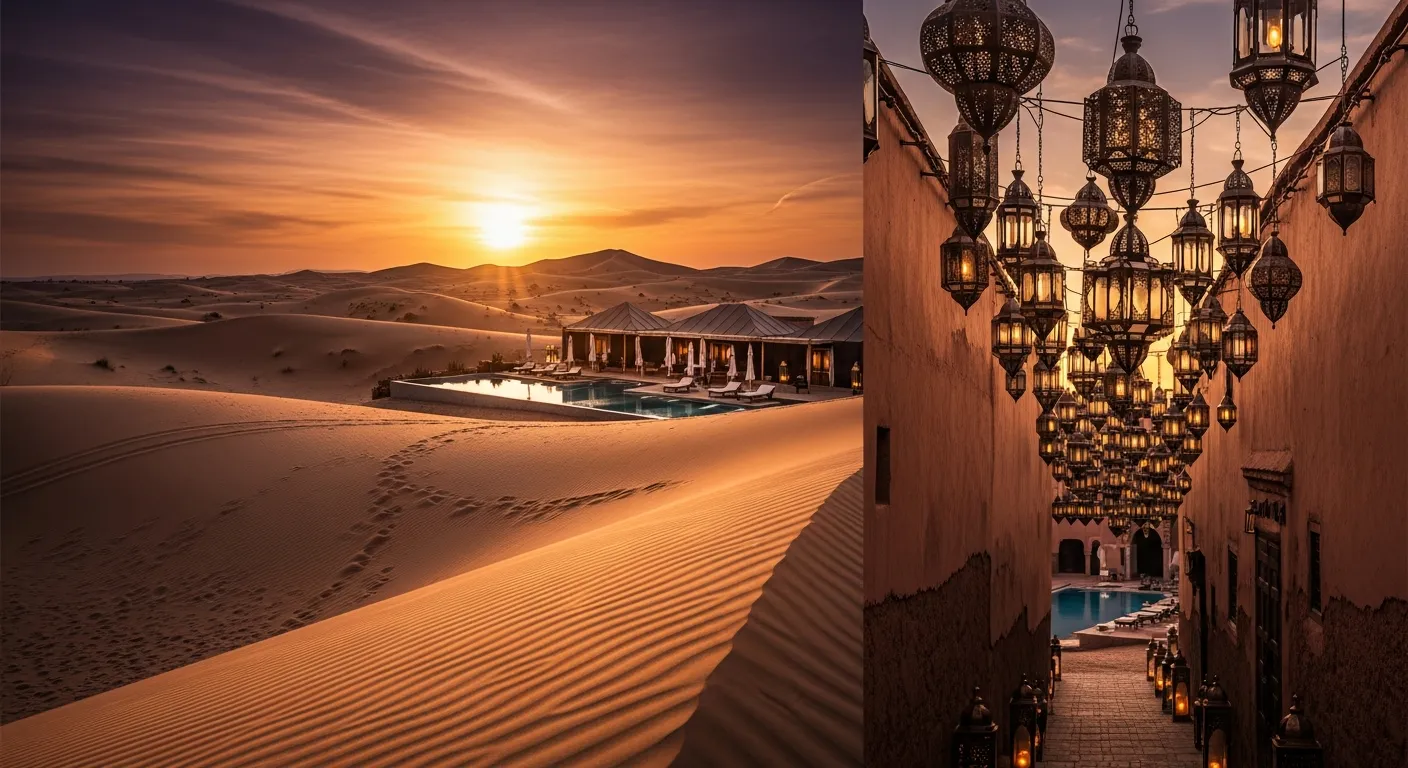
In a narrow alley near Place des Ferblantiers, I discovered Maître Brahim, whose hands shape metal into geometric patterns that would make mathematicians weep. “Each piece must have a soul,” he explained through the rhythmic percussion of his hammer. “If I make it only for money, it has no life.” I bought a brass lantern from him — after the customary negotiation that both of us enjoyed — for about 350 MAD, knowing that the same lantern in the tourist souk would cost triple and have half the craft.
The zellige workshops near Bab Debbagh offer something rarer: the chance to try it yourself. Half-day classes run €60 to €100, and watching your own clumsy attempts beside an artisan who’s been cutting tiles for thirty years is the fastest way to understand why these patterns take months to complete. Book directly with the workshop — the booking platforms add 30 to 40 percent markup, and the artisans see none of that margin.
And if you want to understand Moroccan culture through its food rather than its crafts, a cooking class changes everything. The best ones start in the market — your guide helps you select ingredients while explaining the difference between various ras el hanout blends and why the slightly more expensive saffron is worth every dirham. Then three or four hours of cooking tagine, couscous, and pastilla. Group classes run $34 to $65; private sessions with a riad’s own chef feel more intimate at $80 to $150. La Maison Arabe has been teaching since 1946, but I often prefer the smaller programs where the kitchen smells like someone’s grandmother’s house.
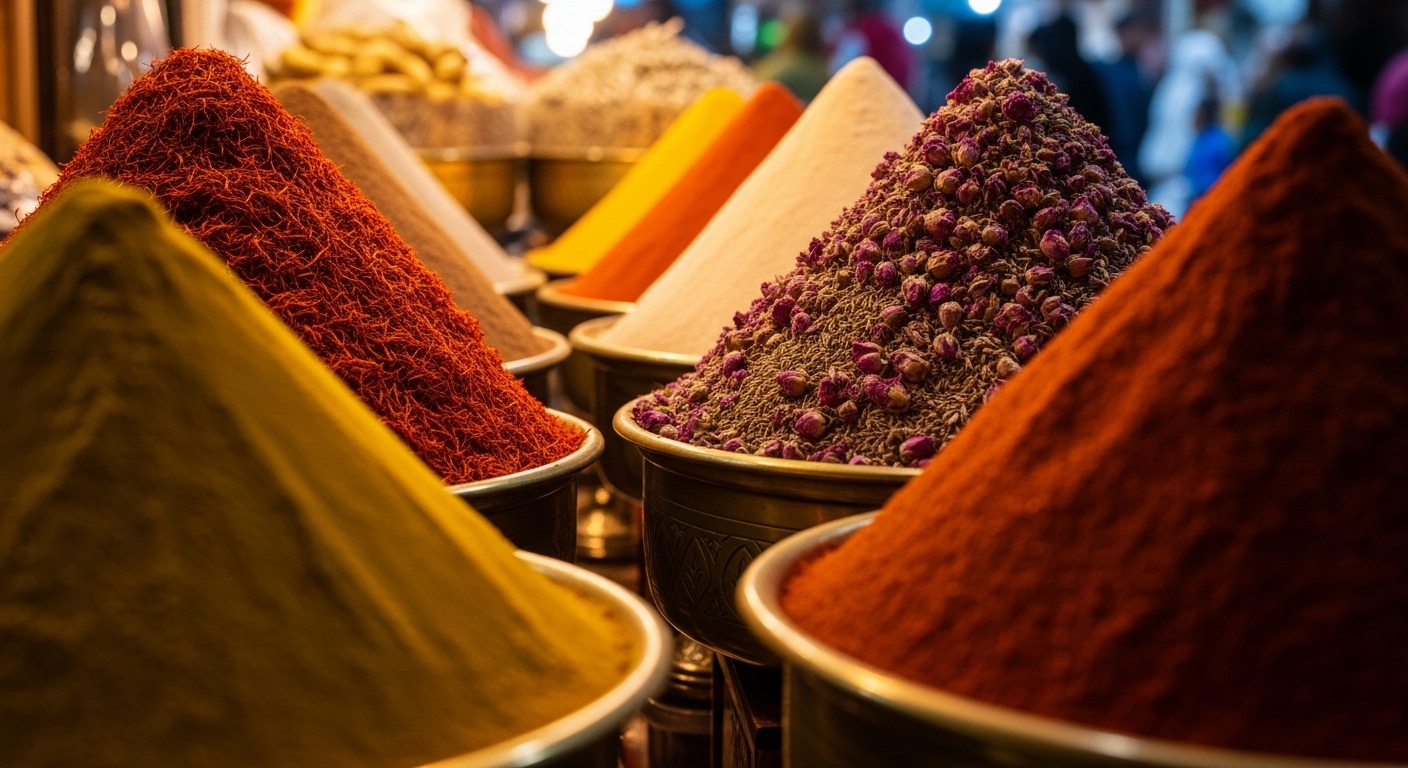
The Souk as Theater
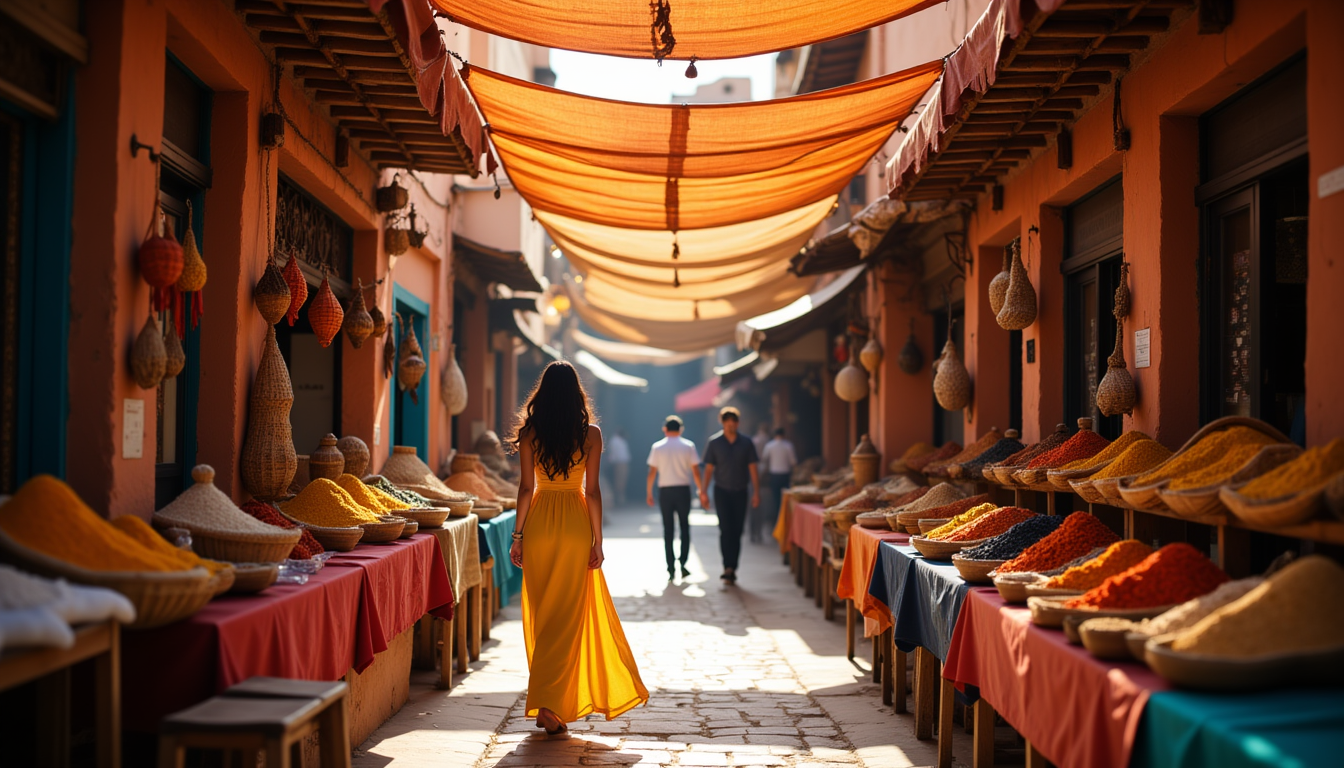
The souks are where Marrakech performs — where commerce becomes conversation becomes performance becomes something approaching art. But they’re also where tourists routinely pay four or five times what things are worth, and knowing the real prices transforms the experience from stressful to electric.
Leather babouche slippers that vendors open at 300 to 400 MAD should land between 80 and 150. A small Berber rug — the kind you can actually carry home — ranges from 800 to 2,000 MAD depending on quality, age, and the strength of the story behind it. Brass lanterns: 200 to 500 MAD. Argan oil, a liter of the cosmetic grade: 250 to 400 MAD. Start at about a third of whatever they ask, expect to meet around 40 to 50 percent, and know that walking away slowly is the most powerful negotiating tool you have.
Here’s the rule I follow: never name a price you wouldn’t happily pay. In Moroccan trading culture, your number is a commitment, not a starting position. And the best shopping happens between 10 and 11 AM when shops are open but the crowds haven’t descended, or between 4 and 5 PM when vendors are more motivated to close before evening.
The discoveries I treasure most happened in the transitional spaces between the official souks — the unmarked doorways and half-hidden staircases. I found my favorite leather craftsman this way: an elderly man who’s been hand-tooling bags for forty years in a space no bigger than a closet, who charged me fairly because I sat with him for an hour and asked about his grandchildren before I asked about prices.

The Quarter That History Forgot
South of the spice souks, the mellah — Marrakech’s Jewish Quarter — tells a story the medina tourist trail ignores entirely. Once home to a thriving community, the neighborhood retains its distinctive architecture: outward-facing balconies (unusual in Moroccan design, where life turns inward), the Lazama Synagogue still standing behind an unmarked door, and a haunting Jewish cemetery where the gravestones catch the afternoon light. It’s quieter here, less commercial, and the street food is some of the most honest in the city — maakouda fritters and msemen flatbread for 30 to 50 MAD.
The Valley an Hour Away
When the medina’s intensity reaches its peak — and it will — the Ourika Valley offers resurrection. An hour south, the Atlas Mountains rise so suddenly from the plains that the temperature drops ten degrees, the air clears, and you remember what silence sounds like. At Setti Fatma, waterfalls cascade down rose-colored rocks, and a local guide — 100 to 150 MAD for the hike — will point out medicinal plants his grandmother still uses, explain which peaks are sacred and why, and share the kind of knowledge that turns a pretty walk into something that reshapes how you understand this country.
How Not to Get Lost (and Why You Should)
The petit taxis — beige, metered, and everywhere — will take you across the city for 15 to 25 MAD. Insist on the meter; if the driver refuses, step out and find another. For the medina itself, Google Maps works for main routes, but maps.me with offline data saved my evening more than once in the deeper alleys. When truly, genuinely lost, ask a shopkeeper — not a random stranger who materializes offering help — to point you toward Jemaa el-Fnaa. Everyone knows the way.
The “guides” who approach near tourist sites with offers to show you “something special” are persistent but not dangerous. A firm la shukran — no thank you — handles nearly everything. The henna artists in the main square will grab your hand and apply ink before you’ve agreed, then demand 200 MAD or more. If you want henna, arrange it through your riad for 50 to 100 MAD. And the most common line you’ll hear — “the souk is closed this way, follow me” — is never true. The souk is never closed.
But here’s my real advice: for at least one afternoon, put your phone in your pocket and let the maze take you. The city was designed before maps existed, and it rewards those who trust it. Every wrong turn in Marrakech leads somewhere beautiful — a courtyard you weren’t meant to find, a craftsman who wasn’t expecting visitors, a door that opens onto a world the guidebooks missed entirely.
Worth reading next
More stories worth your time.

Where to Stay in Tokyo: A Luxury Neighborhood Guide
An honest guide to where to stay in Tokyo, with the neighborhoods, hotel styles, and tradeoffs that matter before you book.

The Winter Alps: Where Luxury Means Wood Fires, Not Gold Leaf
Four Alpine towns, four different ideas of what winter luxury means. From Zermatt's car-free quiet to Courchevel's fur-coat chaos, a guide to the Alps for people who care about the fire in the lobby.

Where to Eat in Tokyo: A Guide for People Who Take Food Personally
Two weeks in Tokyo, eating three meals a day plus snacks, convenience store runs at midnight, and one life-altering omakase. A neighborhood-by-neighborhood guide for people who consider food a personality trait.
About Kaira
Explore With Kaira is built for readers who want the atmosphere of a luxury travel magazine without the emptiness of sponsored copy.
About Kaira