Dubai’s Hidden Gems: The City Behind the Glass
Behind the glass towers and engineered superlatives, there’s an older Dubai — one that smells of cardamom and creek water and frankincense smoke curling through coral-stone alleyways. The city most visitors never find is the one I keep going back to.

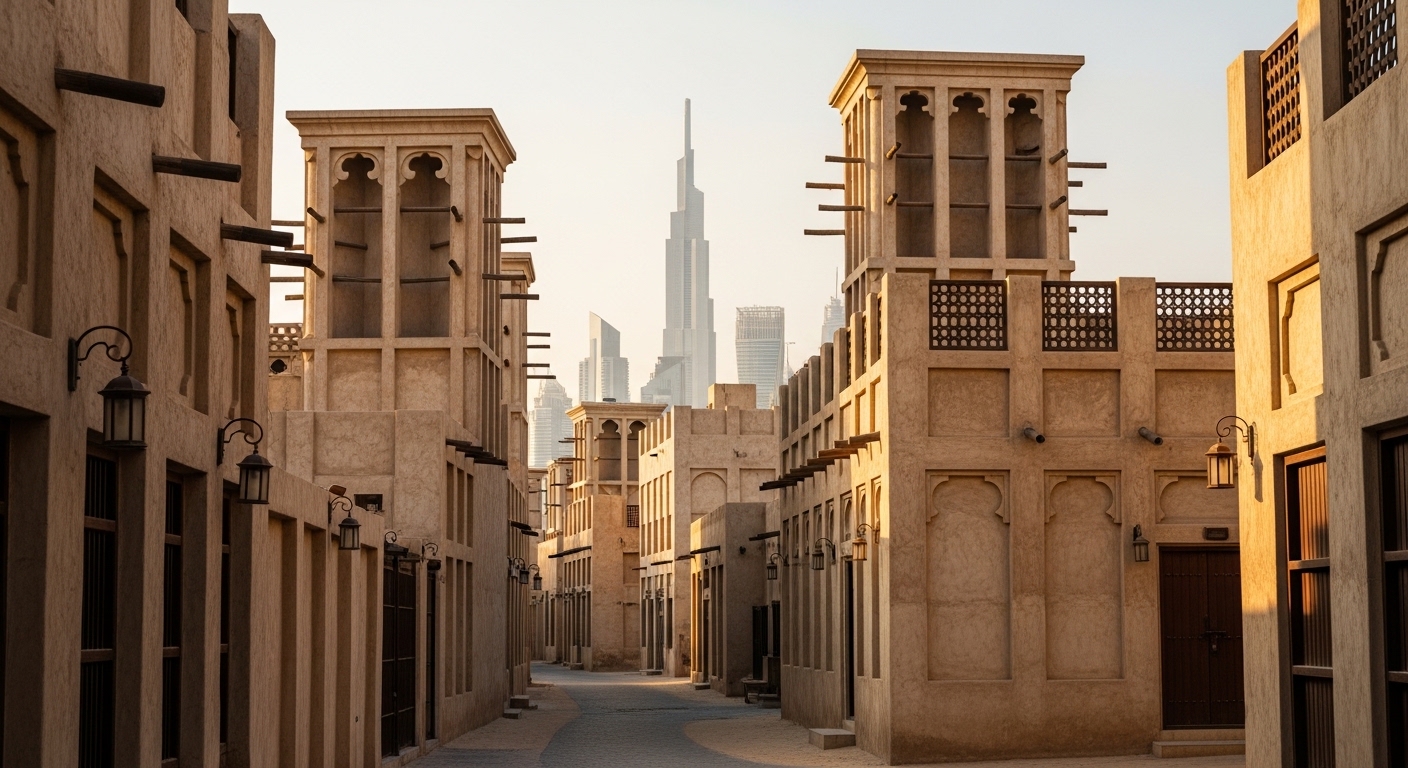
The call to prayer was still fading when I turned the corner and lost the twenty-first century. One moment I was on a road choked with construction cranes and LED billboards, and then I ducked through a gap in a sand-coloured wall, and the sound changed. The traffic dissolved. The air conditioning units disappeared. What replaced them was silence — not empty silence, but the kind that accumulates in places where people have been living quietly for a very long time. I was standing in a narrow alley paved with worn stone, looking up at a wind tower that has been pulling cool air down into the rooms below since before Dubai had electricity, before it had oil, before anyone alive could have imagined what would rise on the other side of that wall.
This is Al Fahidi. And this is the Dubai that nobody puts on the postcards.
I’ve been to Dubai four times now. The first time, I did what everyone does — I looked up at the Burj Khalifa and felt appropriately small, I wandered the Dubai Mall until my feet ached and my credit card whimpered, I took a photograph of the Atlantis from a beach that could have been anywhere. I left thinking I’d seen it. I hadn’t seen anything. It took a friend who’d lived in Bur Dubai for six years to show me the city that exists behind the glass, and now that’s the only Dubai I go back for.
The Wind Towers of Al Fahidi
Al Fahidi Historical District sits on the southern bank of Dubai Creek, and walking into it feels like stepping through a fold in time. The neighbourhood dates to the 1890s, when Persian and Indian merchant families built their homes from coral stone and gypsum, and engineered the heat out of their lives with barjeel — wind towers that rise from the rooftops like chimneys in reverse. They’re four-sided, open at the top, partitioned inside so that whatever breeze comes off the creek gets funnelled down into the rooms below. On a forty-degree afternoon, the air under a wind tower is ten degrees cooler than the air outside, and it’s been doing this for over a century without a single watt of electricity. The number of wind towers a house had once told you how wealthy the family was. Walking through Al Fahidi, counting them, is like reading a neighbourhood’s social history in silhouette.
The narrow lanes — they’re called sikkas — run roughly north-south, oriented toward the creek so that the breeze threads through them like a river through a canyon. In the early morning, before the heat builds, the light falls between the walls at an angle that turns the sand-coloured stone golden, and the shadows are sharp enough to cut. I spent an entire morning wandering without a map, which is the correct way to experience Al Fahidi, because the lanes dead-end and double back and open suddenly onto courtyards you didn’t know were there, and the whole point is to be lost in a place where being lost costs you nothing but time.
The XVA Art Hotel is the reason to stay overnight. It occupies a restored traditional house — fifteen rooms, each designed by a different regional artist, wrapped around courtyards overgrown with greenery that softens the hard desert light. Rates start around 340 AED a night, which is roughly ninety dollars, which is absurd for what you get: a room that feels like sleeping inside a piece of art, in the oldest neighbourhood in a city where a standard glass tower hotel room costs three times that. The courtyard cafe serves vegetarian food made with fresh regional ingredients, and the gallery on the ground floor rotates exhibitions by contemporary Arab artists whose work you won’t find in the sanitised commercial galleries of DIFC. I sat in that courtyard at sunset with a mint tea and the sound of the call to prayer drifting over the walls, and I thought: this is the Dubai that existed before Dubai became a brand.
Two minutes’ walk from the XVA, the Arabian Tea House occupies another courtyard — this one painted in white and turquoise, draped with vines, scattered with blue cushions and lace-curtained nooks that make it look like something between a Greek island cafe and a secret garden. Breakfast here is a ceremony. Order the Emirati tray: scrambled eggs, labneh, halloumi, zaatar with olive oil, rose jam, and a basket of traditional breads that arrive warm — chebab, khameer, and the one you’ll remember, regag, a flatbread so thin it’s almost translucent, cooked on a domed griddle right in front of you. A karak chai alongside it — thick with cardamom, sweet with condensed milk — and you’ve spent maybe fifty dirhams for a breakfast that is more culturally rich than anything you’ll eat in a hotel restaurant charging five times the price. Go before nine, when the courtyard still belongs to the light and the sparrows and one sleepy cat who has claimed the best table.
The Coffee Museum and the Art of Slowing Down
Still in Al Fahidi, tucked inside Villa 44 on a lane you’ll walk past twice before you notice it, the Coffee Museum is the kind of place that could only exist in a neighbourhood where people aren’t in a hurry. It’s small — two floors in a traditional house — and it traces the history of coffee from its Ethiopian origins through the Arabian Peninsula to the ornate Turkish ibrik and the Italian espresso machine. The ground floor is a shop and tasting room. The first floor is a library of manuscripts and books about coffee that feels more like someone’s private collection than a museum, because it essentially is.
Entry is ten dirhams — less than three dollars — and they press a small cup of Arabic coffee into your hand as you walk in, brewed with cardamom in the traditional Gulf style, served without sugar because the dates on the table beside it are the sweetener. I stayed for an hour. I watched a demonstration of Ethiopian coffee preparation — the slow roasting of green beans in a long-handled pan, the grinding in a mortar, the pouring from a jebena — and I tasted coffees from five different regions, and by the time I left I understood something about the way this part of the world relates to coffee that no Starbucks will ever teach you. It isn’t fuel here. It’s hospitality made liquid. The museum is quiet on weekday mornings, nearly empty. I shared it with two Emirati women and a French photographer, and none of us were in any rush to leave.
Crossing the Creek
The abra station at Al Fahidi is a five-minute walk from the museum, and the ride across Dubai Creek costs one dirham. One. In a city where a taxi from the airport to your hotel runs two hundred, the most beautiful journey you can take costs twenty-seven cents. The boats are wooden, open-sided, powered by a rattling diesel engine that sounds like it’s been running since the sixties and probably has. You sit on benches that line the gunwales, shoulder to shoulder with commuters and labourers and schoolchildren and the occasional tourist who’s figured out what the rest of the tourists haven’t, and the crossing takes about five minutes, and in those five minutes the skyline of old Deira slides toward you — minarets and wind towers and the dense, low-rise fabric of a city that was a trading port centuries before anyone discovered oil.
Step off on the Deira side and the Spice Souk hits you before you see it. The air changes — it thickens with saffron and dried lime and turmeric and the woody, resinous sweetness of frankincense, which is sold here in fist-sized chunks of amber resin that the vendors will burn for you on small charcoal discs, filling the narrow lane with smoke that smells like church and desert and something ancient that you can’t name. Saffron runs about fifteen to twenty dirhams a gram for good Iranian threads — the vendors know what they have and they price accordingly, but start by offering half and you’ll usually land around sixty percent. Bags of whole cardamom, cinnamon bark rolled into fat quills, sumac the colour of dried blood, za’atar mixed to family recipes that nobody writes down. I bought a bag of Omani frankincense for thirty dirhams that lasted me six months of burning it in my apartment, and every time I lit a piece, the smell took me back to that lane.
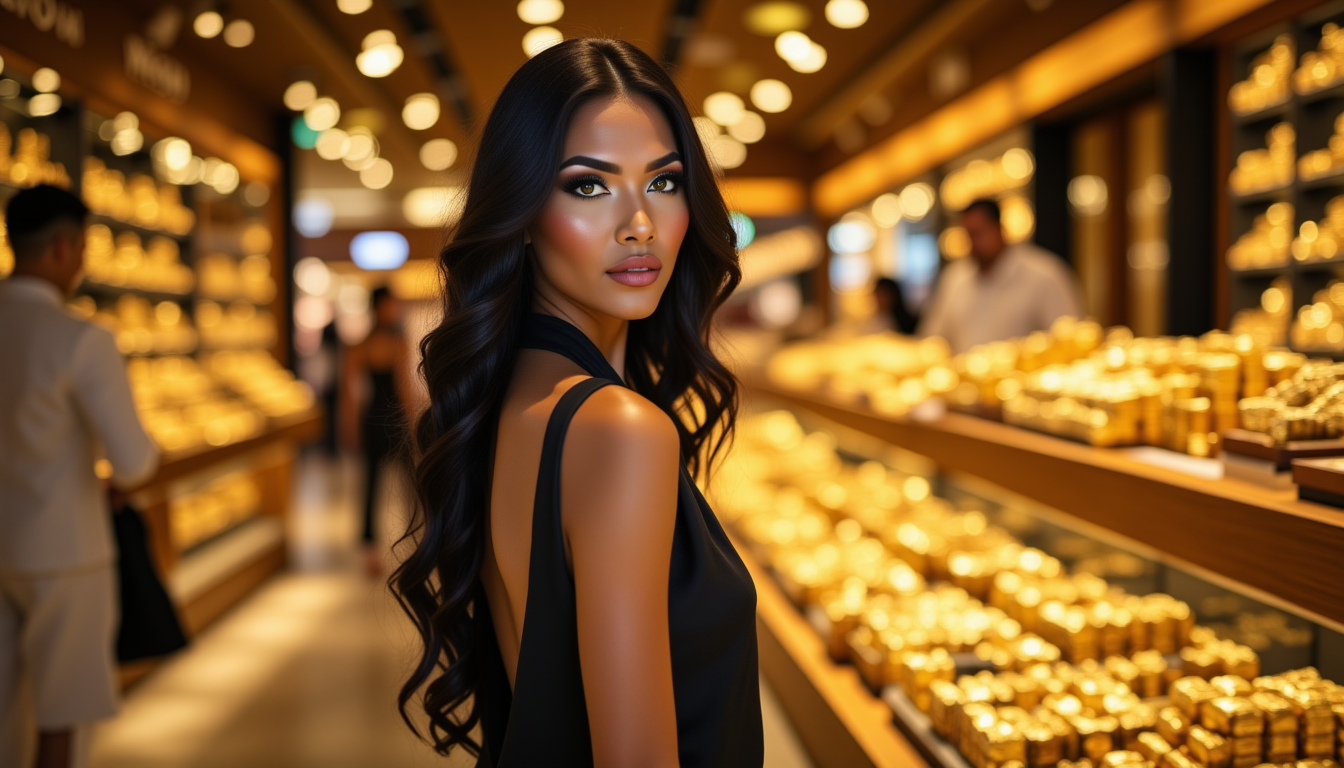
The Gold Souk is a ten-minute walk deeper into Deira, and it’s overwhelming in the way that abundance always is — shop after shop of twenty-two-carat gold jewellery blazing under fluorescent lights, necklaces displayed in windows like armour, bracelets stacked in towers. Gold is sold by weight here, priced to the gram based on the daily rate, with a making charge on top that’s where the negotiation happens. I didn’t buy gold. I went for the spectacle, and the spectacle delivered. But the real discovery is the Textile Souk back on the Bur Dubai side — quieter, less touristed, rolls of silk and cotton and embroidered fabric stacked floor to ceiling, where Indian and Pakistani merchants who’ve been trading in these lanes for decades will pull down bolt after bolt without pressure, and where a two-metre length of handwoven pashmina costs a fraction of what it costs in a Dubai Mall boutique.
Where the Art Lives
Alserkal Avenue is forty-five minutes from Al Fahidi in spirit and about twenty in a taxi, and the contrast is the point. Where Al Fahidi is coral stone and heritage, Alserkal is corrugated steel and concrete — a former industrial warehouse district in Al Quoz that someone with vision decided to fill with art instead of auto parts. The complex spans five hundred thousand square feet and houses over seventy creative enterprises, and entry to all of it is free, and almost no one you meet at the Dubai Mall knows it exists.
The Third Line was my introduction — a gallery founded in 2005 that has become one of the most important platforms for contemporary Middle Eastern art, showing work that ranges from video installation to calligraphic abstraction, all of it engaged with questions of identity and place and what it means to make art in a region that the rest of the world persistently misunderstands. I walked in on a Thursday afternoon and had the gallery to myself for twenty minutes, standing in front of a piece that made me think differently about a culture I thought I already understood. That doesn’t happen at the Louvre Abu Dhabi, where the crowds and the architecture compete with the art for your attention. It happens here, in a converted warehouse, in silence.
Leila Heller Gallery is the largest in the UAE — fourteen thousand square feet across three exhibition spaces — and it shows the kind of work that bridges the gap between Middle Eastern and Western contemporary art with an ambition that matches its scale. Carbon 12, a few warehouses down, leans edgier, introducing international artists to the region with a programme that takes risks. Green Art Gallery has been operating since 1995 and carries the kind of institutional memory that gives its exhibitions weight. All free. All open. All virtually empty on a weekday afternoon, which means you experience the art the way art should be experienced — alone with it, without an audio guide or a queue or a gift shop between you and whatever the artist was trying to say.
After the galleries, Nightjar Coffee Roasters. Their flagship roastery is right here in Alserkal, and the coffee is roasted and brewed on site, and the flat white I ordered was the best I had in Dubai by a margin that embarrassed every hotel lobby coffee I’d been drinking. They also do nitro cold brew on tap and creative non-alcoholic drinks that take coffee seriously enough to treat it as an ingredient rather than a delivery mechanism for caffeine. I sat on a stool in a space that smelled like freshly roasted beans and industrial concrete, surrounded by people who looked like they’d come here to create something, and I thought about how every great city needs a neighbourhood like this — one that exists not for tourists or developers but for the people who make the culture that the rest of the city eventually takes credit for.
The Desert They Don’t Sell You
There are two versions of the desert in Dubai. There’s the version where you pay three hundred dirhams to be driven up and down sand dunes in an SUV while an electronic music playlist competes with the engine, followed by a “traditional” dinner in a camp that seats four hundred people, a belly dance performance, and a henna station. That version exists because tourists want it, and I’m not going to pretend I haven’t done it. But there is another desert.
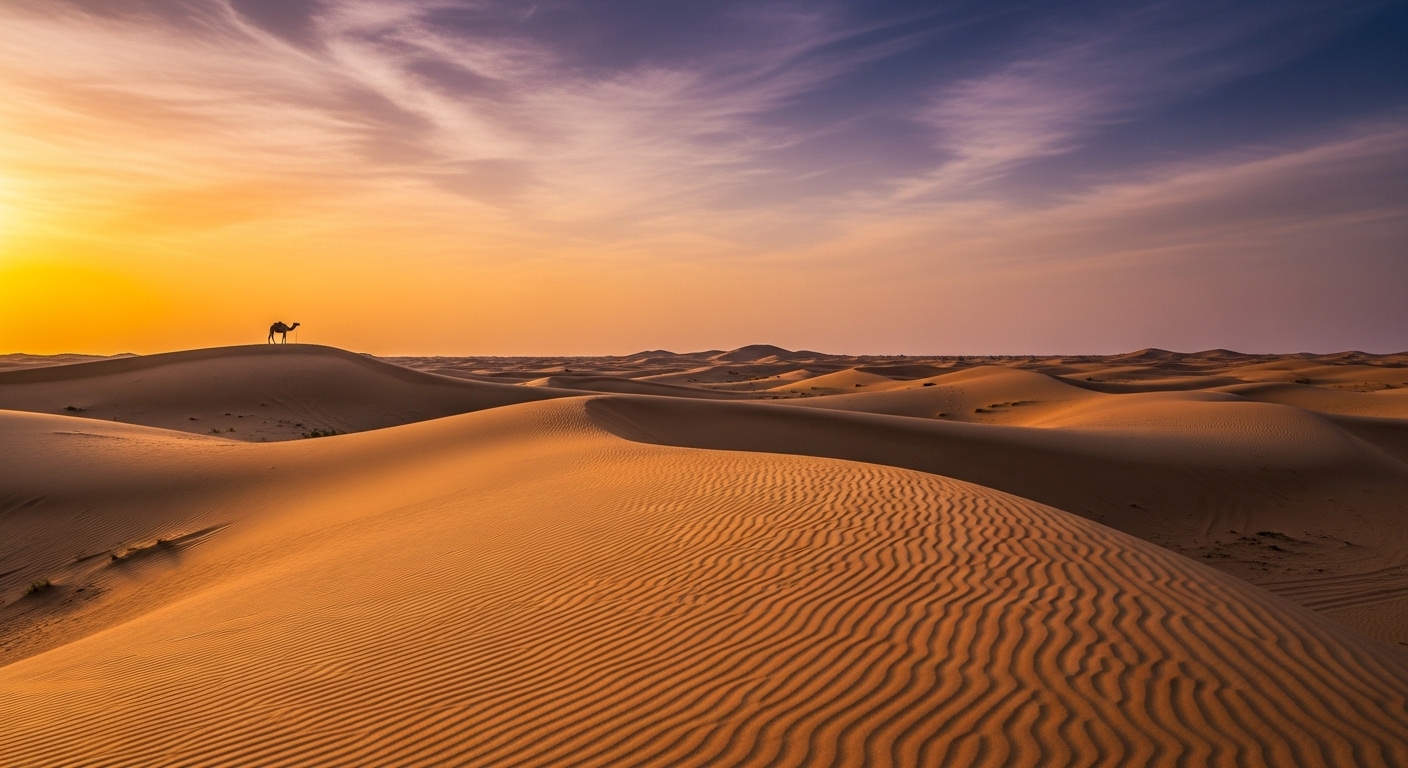
Al Marmoom Desert Conservation Reserve is a forty-square-kilometre unfenced sanctuary — the first of its kind in the UAE — and it is the opposite of everything the commercial desert safari industry represents. There are no SUVs doing donuts on the dunes. There are no buffet stations. There are Arabian oryx, moving in small herds through scrubland that looks barren until you learn to see what lives in it — sand gazelles, desert foxes, over three hundred and sixty species of birds. I went at dawn, which is the only time to go, when the sand is cool and the light is pink and the oryx stand in profile against the dunes like something from a nature documentary that you’ve accidentally walked into. The reserve is part of the same protected area that contains Al Qudra Lakes, and the silence out here is the silence of a landscape that hasn’t been curated for anyone’s Instagram feed.
Al Qudra Lakes themselves are a man-made oasis about a forty-five-minute drive from Downtown, and they’re strange and beautiful in the way that only a desert city’s relationship with water can be. Flamingos — actual, wild, pink flamingos — stand in the shallows, unbothered by the desert that surrounds them on every side. Love Lake, nearby, is shaped like two interlocking hearts when seen from above, which sounds absurd and is absurd, but standing on the wooden viewing platform at sunset, when the water catches the last light and the flamingos are feeding and the dunes are turning from gold to rose, the absurdity becomes something else. Entry is free. Facilities are minimal — bring your own water, your own shade, your own snacks. The best months are November through March, when the heat retreats enough to make an evening here feel like a gift rather than an endurance test. I stayed until the stars came out, and there were more of them than I’d seen anywhere in the Emirates, because out here, the light pollution that drowns the rest of Dubai hasn’t reached.
Ten minutes’ drive from Al Qudra, Ras Al Khor Wildlife Sanctuary sits at the inland end of Dubai Creek, and it’s the thing I tell everyone about and almost no one believes. A flamingo colony. Hundreds of them. Visible from three viewing hides that are open to the public, free of charge, from half past seven in the morning until half past five in the afternoon during winter. From the main hide, you look out across mudflats and salt flats and shallow water where greater flamingos stand in that improbable way they do — one-legged, heads down, pink against grey-blue water — and behind them, in the distance, the skyline of Downtown Dubai rises like a mirage. The Burj Khalifa is visible from the flamingo hide. I need you to understand what that means: one of the most engineered cities on earth has, at its edge, a wetland where wild flamingos feed, and you can watch both at the same time, and entry costs nothing. The best season is November through March, when the migratory populations swell. Late afternoon light is kindest for photographs. Bring binoculars if you have them.
Open Doors, Open Minds
Jumeirah Mosque is the most beautiful mosque in Dubai that non-Muslims can enter, and the programme that makes this possible — called, simply, Open Doors Open Minds — is one of the most graceful cultural initiatives I’ve encountered anywhere in the world. Guided tours run at ten in the morning and two in the afternoon, Saturday through Thursday, and they last about seventy-five minutes, and they are not what you expect.
The mosque itself is a Fatimid-style structure in white stone, with twin minarets and a dome that photographs beautifully against the blue sky but is better experienced from inside, where the light filters through carved screens and the carpet is soft enough that you forget you’ve removed your shoes, and the scale of the prayer hall makes you understand, physically, what it feels like to be in a space designed for devotion. But the programme isn’t really about the architecture. It’s about conversation. The guides — Emirati nationals, warm, articulate, clearly practised at answering every question you can think of and several you wouldn’t dare ask — walk you through the Five Pillars of Islam, the ritual of ablution, the mechanics of prayer, and then open the floor for questions. Real questions. Hard questions. The kind that most cultural tourism carefully avoids.
I asked about the role of women. I asked about the relationship between Islam and modernity. I asked things I’d have been embarrassed to Google. And the answers were thoughtful, personal, unscripted, and honest enough that I left with a different understanding of a faith that I’d previously understood only through headlines. Registration opens thirty minutes before each tour. Tickets are forty-five dirhams, which includes light refreshments and a traditional Emirati breakfast spread. Women should bring a headscarf — they’ll provide one if you forget, but bringing your own feels like the right gesture. Dress modestly. Shoulders and knees covered. This isn’t a rule designed to exclude; it’s a form of respect, and it costs you nothing to offer it.
The Frame Between Two Cities
I’m ambivalent about the Dubai Frame. I’ll say that upfront. It’s a 150-metre-tall picture frame — literally, a rectangular structure plated in gold-coloured steel — positioned so that when you stand at the top and look one direction, you see the old city, the creek, Al Fahidi’s wind towers, Deira’s minarets, and when you turn around, you see the new city, the Burj Khalifa, the Marina towers, the engineered skyline that the world associates with the word Dubai. The metaphor is not subtle. It was never trying to be.
But I’ll tell you this: the Sky Deck at the top has a glass floor walkway that you step onto at a hundred and fifty metres, and the city spreads below your feet, and in that vertiginous moment the metaphor stops being a metaphor and becomes a physical experience. You can see, literally, both Dubais at once. The ancient and the engineered. The creek and the canal. The coral stone and the glass. And something about standing at that height, with both versions visible simultaneously, made the city make sense to me in a way that neither version alone ever had.
Tickets are about fifty dirhams — roughly fourteen dollars — and the queue moves faster in the late afternoon, which is also when the light is best, when the old city glows amber and the new city catches the sun on ten thousand panes of glass. I’d go between four and five in the afternoon and stay until the light changes. The galleries on the ground floor trace Dubai’s transformation from fishing village to metropolis with a timeline exhibition that’s more moving than it has any right to be, because the speed of the transformation is hard to grasp until you see the photographs side by side: a creek lined with barasti huts in 1960, and the same creek lined with glass towers today. Sixty years. That’s all it took.
What Dubai Teaches You
There’s a narrative about Dubai that says it has no culture, no history, no soul — that it’s a theme park built on oil money and migrant labour, all surface and no depth. I believed that narrative the first time I came. I believed it because I only looked where everyone else was looking: up.
The hidden Dubai — the one in this piece, the one I keep returning to — doesn’t argue against that narrative so much as make it irrelevant. Yes, the glass towers exist. Yes, the malls are staggering. Yes, the engineering is a spectacle that runs on money and ambition in proportions that can make you uncomfortable. But beneath all of that, and before all of that, and continuing stubbornly alongside all of that, there’s a city of wind towers and creek crossings and spice merchants and coffee rituals and flamingos standing in salt flats while the skyline blazes behind them. There’s a warehouse district where artists are making work that asks harder questions than any tourist attraction, and a mosque where strangers are invited to ask about faith, and a desert reserve where oryx walk at dawn in the same sand they’ve walked for centuries.
The two Dubais don’t contradict each other. They explain each other. The old city tells you what the new city was built on — not just oil, but trade, and hospitality, and a merchant culture that understood long before the skyscrapers that the way you welcome a stranger says everything about who you are. The new city tells you what happens when that ambition gets a blank cheque and an empty desert and the conviction that tomorrow should be bigger than today.
I left Dubai the last time at midnight, driving along Sheikh Zayed Road toward the airport, the towers lit up like a circuit board on both sides, the road almost empty, the desert beyond the last building as dark and vast as it’s always been. And I thought about the abra driver who’d taken me across the creek that morning for one dirham, who’d been making that crossing for thirty-one years, who’d watched the skyline grow from his boat the way you watch a child grow — too close to it to see it happening, but knowing, every day, that it has. That’s the Dubai that stays with me. Not the one that tries to impress you. The one that was here before there was anything to be impressed by, and will still be here long after the next tower breaks the next record and the world moves on to the next superlative.
The wind towers are still pulling cool air down into quiet rooms. The creek is still running. The abras are still crossing, one dirham at a time.
Worth reading next
More stories worth your time.

Where to Stay in Tokyo: A Luxury Neighborhood Guide
An honest guide to where to stay in Tokyo, with the neighborhoods, hotel styles, and tradeoffs that matter before you book.

The Winter Alps: Where Luxury Means Wood Fires, Not Gold Leaf
Four Alpine towns, four different ideas of what winter luxury means. From Zermatt's car-free quiet to Courchevel's fur-coat chaos, a guide to the Alps for people who care about the fire in the lobby.

Where to Eat in Tokyo: A Guide for People Who Take Food Personally
Two weeks in Tokyo, eating three meals a day plus snacks, convenience store runs at midnight, and one life-altering omakase. A neighborhood-by-neighborhood guide for people who consider food a personality trait.
About Kaira
Explore With Kaira is built for readers who want the atmosphere of a luxury travel magazine without the emptiness of sponsored copy.
About Kaira