Barefoot on Benguerra: Where to Stay in Mozambique’s Secret Archipelago
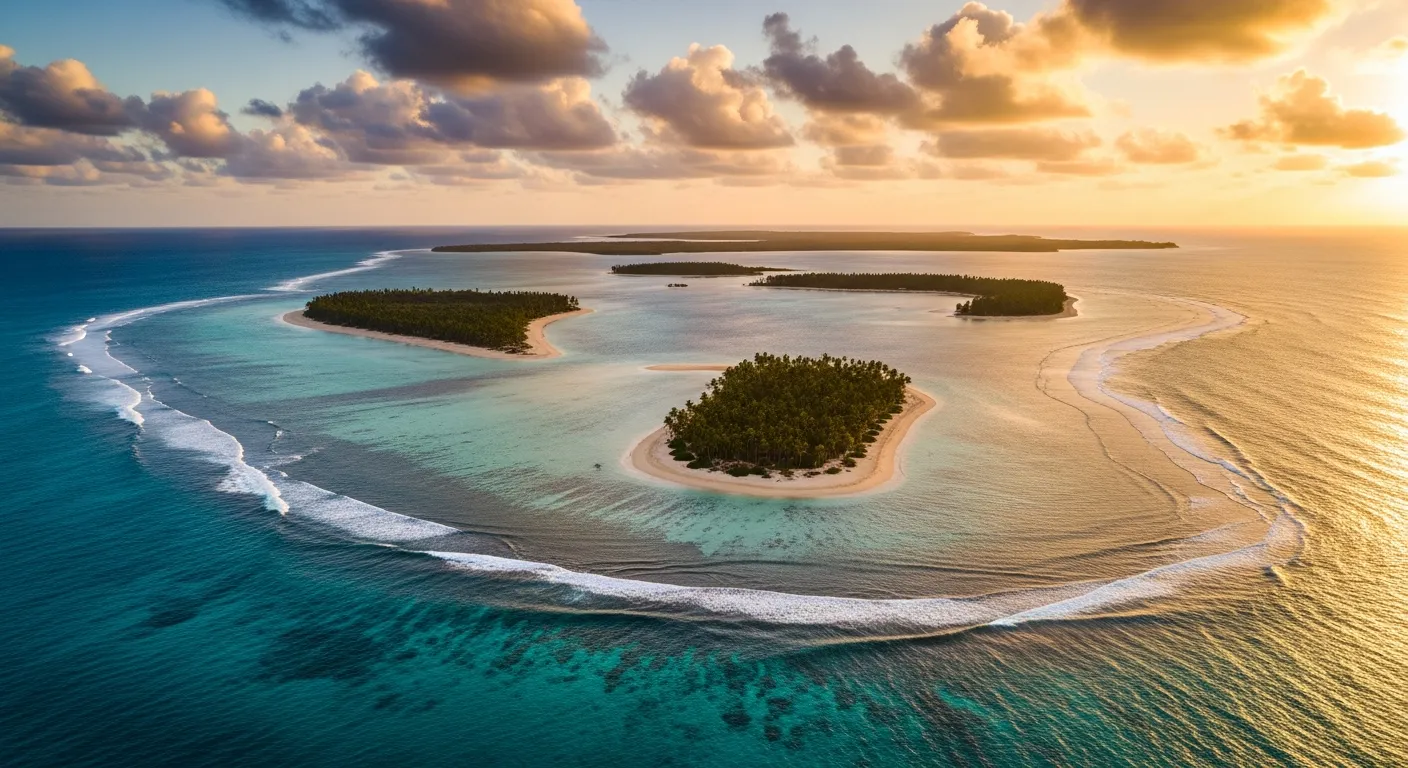
The helicopter banks left over powder-blue shallows, and suddenly I’m looking down at something that shouldn’t exist — a chain of sand islands floating in the Mozambique Channel like scattered diamonds, their beaches so white they hurt to look at. Below, a pod of humpback whales surfaces near Bazaruto’s southern tip, their spray catching the […]

The helicopter banks left over powder-blue shallows, and suddenly I’m looking down at something that shouldn’t exist — a chain of sand islands floating in the Mozambique Channel like scattered diamonds, their beaches so white they hurt to look at. Below, a pod of humpback whales surfaces near Bazaruto’s southern tip, their spray catching the afternoon light. The pilot’s voice crackles through my headset: “First time?” I nod, though I’ve been coming here for three years now. Each arrival feels like discovering a place that exists outside of time.
This is the Bazaruto Archipelago — five islands that most people couldn’t find on a map, yet harbor some of Africa’s most extraordinary luxury resorts. Unlike the Maldives with its uniform perfection, Bazaruto feels wonderfully unfinished. Dhows with patched sails navigate channels where dugongs graze. Local fishermen beach their boats beside infinity pools. And in this collision of worlds, I’ve found accommodations that range from barefoot sophistication to architectural marvels that shouldn’t be possible.
The Island That Remembers Its Soul
I first stayed at andBeyond Benguerra Island three summers ago, drawn by a promise that seemed too good to be true: a luxury resort where scuba diving was included in the rate. Not “introductory dives” or “basic snorkeling” — full certification courses, unlimited diving, equipment, boat trips to remote sites. At $900 to $1,200 per person per night all-inclusive, it seemed almost suspiciously comprehensive.
The helicopter touches down on a crushed-coral helipad, and within minutes I’m standing in my Casinha, watching geckos dart across timber beams twenty feet overhead. This is andBeyond’s gamble — ten open-air thatched pavilions, two larger Cabanas, and one Casa Familia scattered along two kilometers of pristine beach. No glass walls, no air conditioning, just sea breezes and the sound of waves filtering through palm-frond screens.
The lizards become part of the experience. I wake to find a bright green gecko perched on my mosquito net, watching me with ancient eyes. My butler, João, apologizes with a smile. “The islands belong to them first,” he says, gently coaxing it toward the open wall. “We are just visiting.” This is Benguerra’s charm — it never pretends to tame the wilderness, just finds elegant ways to live within it.
What andBeyond does include still surprises me. Every meal, every drink, horseback rides along empty beaches, sunset dhow cruises to catch the golden light on Bazaruto’s massive dunes, castaway picnics on uninhabited sandbanks. The dive operation runs like clockwork — morning dives to Manta Reef where I’ve encountered devil rays with twelve-foot wingspans, afternoon explorations of pristine coral gardens, night dives where Spanish dancers unfurl like underwater flowers.
The food consistently earns the highest ratings on the archipelago, and after eating my way through every resort here, I understand why. Chef Marina sources spiny lobster from local fishermen, serves peri-peri prawns the size of my palm, creates curries that somehow capture the Portuguese-African soul of Mozambique. Dinner is served under stars so bright they cast shadows on the sand.
But Benguerra keeps you honest. Weather can turn without warning — I’ve been trapped in my Casinha for six hours while tropical storms lashed the island, grateful for the library of books and bottle of wine João had thoughtfully provided. The open-air design means everything moves with the wind, including your belongings if you’re not careful.
The Resort That Reaches Too Far
Anantara Bazaruto sprawls across the main island like a small town, its 44 villas connected by sandy paths that stretch for nearly three kilometers. At $1,093 to $1,973 per night, it’s positioned as the archipelago’s flagship resort, with three restaurants, a full spa, and the region’s most extensive wine cellar. The private beach feels endless, and the horseback riding program — their signature experience — offers sunrise gallops along surf that stretches to the horizon.
I’ve stayed here twice, drawn back by the sheer scale and the promise of variety. Clube Naval serves Portuguese classics with views over the channel. Tartaruga specializes in seafood that arrives by dhow each morning. Golfinho offers Asian fusion that feels incongruous but occasionally brilliant. The resort’s “Dining by Design” can arrange dinner on a private sandbar, complete with a chef who arrives by speedboat as the sun sets.
But Anantara suffers from the curse of ambition. The facilities feel dated despite recent renovations — villa furnishings that seemed fresh a decade ago, bathrooms that need updating, technology that struggles with the island environment. More frustrating is the service inconsistency. One night I’ll have a meal that rivals anything in Cape Town; the next, I’m waiting forty minutes for a cocktail that arrives lukewarm.
Their “Fully Inclusive Plus” package promises comprehensive luxury but misleads in crucial details. Deep-sea fishing costs $800 extra per boat. Helicopter transfers are additional. Even some spa treatments require supplements. You realize quickly that despite the premium pricing, you’re nickeled and dimed for experiences that competitors include without question.

The Resort Built on Dreams
Azura Benguerra occupies the sweet spot between andBeyond’s wilderness intimacy and Anantara’s scale. Twenty villas, each with private plunge pools, spread along a horseshoe bay that feels like your own private lagoon. At $905 to $955 per person per night, it offers the archipelago’s best value-to-luxury ratio, but that’s not what makes it special.
This was Mozambique’s first eco-resort, hand-built by the local community through a partnership that continues today. The Rainbow Fund employs local artisans, funds schools, supports healthcare initiatives. Your villa’s furniture was carved by craftsmen in nearby villages. Your meals feature ingredients from community gardens. It’s development tourism done right — luxury that enriches rather than exploits.
The butler-host model here surpasses anything I’ve experienced. Maria has been my host for three stays, and she remembers that I prefer fresh fruit to pastries at breakfast, that I like to dive in the mornings when visibility is best, that I’m always cold in air conditioning. She arranges experiences I didn’t know existed — sunset walks to a lighthouse built by the Portuguese, visits to the island’s sacred baobab tree, private dinners in hidden coves accessible only at low tide.
Consistently rated the highest in the archipelago, Azura achieves something its competitors struggle with — it has genuine soul. You feel the difference immediately in how staff interact with guests, in the thoughtful placement of each villa to maximize privacy while preserving the natural environment, in meals that celebrate Mozambican flavors rather than trying to replicate international cuisine.
The Future Built from Sand
Kisawa Sanctuary exists in a category of its own. Twelve residences scattered across 750 private acres on Benguerra Island, each starting at EUR 5,000 per night, representing ultra-luxury at its most experimental. The architecture alone justifies a visit — every structure 3D-printed from sand and seawater, creating organic curves that seem grown rather than built.
I spent two nights in the Infinity residence, which comes with its own private beach, infinity pool, full kitchen, and dedicated team of five staff members. The bedroom opens to unobstructed ocean views through floor-to-ceiling windows that disappear into the walls. The bathroom features a tub carved from a single piece of marble, positioned to overlook the Indian Ocean.
This is accommodation as art installation. Solar panels hide within sculptural roof lines. Rainwater collection systems double as decorative features. The infinity pool appears to spill directly into the ocean, its edge so perfectly aligned that you lose track of where human creation ends and nature begins.
But at EUR 5,000 per night, Kisawa targets guests for whom money is irrelevant. The experience justifies the cost — complete privacy, unprecedented luxury, architecture that will influence resort design for decades. Whether it offers five times the value of Azura is a question only you can answer.
What the New Kid Promises
Opening in May 2025, Azura Marlin Beach represents the archipelago’s next evolution. Ten villas on Benguerra Island, featuring the region’s first PADI 5-star dive center and a more contemporary, social atmosphere. Early renderings suggest a departure from traditional thatched-roof aesthetic toward clean lines and modern materials, targeting younger luxury travelers who value experience over seclusion.
The View from Shore
Sometimes the best archipelago views come from the mainland. Santorini Mozambique perches on red cliffs outside Vilanculos, its whitewashed Greek-Mediterranean architecture creating dramatic sunset silhouettes over the distant islands. At $778 per person per night, it offers luxury accommodation without island transfer costs, plus access to Vilanculos’s emerging dining scene — Bazaruto Brewing Co for craft beer and wood-fired pizzas, Dugong Dude’s for fresh seafood with your toes in the sand.
The trade-off is obvious — you’re looking at paradise rather than living within it. But for travelers who want archipelago views with mainland accessibility, Santorini provides elegant compromise.
The Mathematics of Paradise
Booking strategy matters enormously here. Shoulder seasons — April to May and October to November — offer 20 to 30 percent savings without sacrificing weather or marine life. Book six to twelve months ahead for peak season; these resorts sell out despite their premium pricing.
Transport costs vary dramatically. Helicopter transfers run $265 per person one-way but compress a two-hour boat journey into fifteen breathtaking minutes. Road-and-boat combinations cost $50 to $100 return but require early morning departures and tolerance for rough seas.
The all-inclusive comparison reveals crucial differences. andBeyond’s package genuinely includes nearly everything — even unlimited scuba diving, which can cost $150 per day elsewhere. Azura offers solid middle-ground inclusion. Anantara’s “Fully Inclusive Plus” misleadingly excludes popular activities, making it less comprehensive than its premium pricing suggests.
The Paradise You Can’t Instagram
Three years of returns have taught me that Bazaruto succeeds because it remains wonderfully imperfect. Unlike the Maldives with its overwater villa uniformity and reliable wifi, these islands offer cultural depth, better marine diversity, horseback riding on empty beaches, encounters with communities who’ve fished these waters for centuries.
The Maldives wins on polished service and Instagram-perfect accommodations. Bazaruto wins on authentic encounters and transformation — the kind where you return home different than when you left. Last October, I spent an afternoon with João learning to repair dhow sails, my hands sticky with traditional fish-scale glue, while humpback whales surfaced in the channel beyond. No overwater villa could match that moment.
In the helicopter banking toward Vilanculos as my latest stay ends, I watch the islands shrink into blue-green jewels. But I’m already planning my return, drawn by the promise of places that reveal new secrets with each visit, accommodations that understand luxury as transformation rather than mere comfort.
Worth reading next
More stories worth your time.

The Maldives Question: Is $2,000 a Night Worth It? (An Honest Answer)
I've stayed at four Maldivian resorts across three trips and two budgets. Here's the honest answer to whether those overwater villas are worth what they charge — and what nobody tells you about paradise before you book.

The White Lotus Hotels Are Real. The Experience Isn’t What You Think.
The White Lotus hotels are real, but staying at them now is a different experience than the fantasy the show sells.

St. Regis Bora Bora: Waking Up Above Water Is Not a Spiritual Experience
The brochure for the St. Regis Bora Bora promises a “transformative overwater experience.” The website uses words like “transcendent” and “soul-stirring.” Three different people told me, before I went, that waking up in an overwater villa would “change the way I see the world.” It didn’t change the way I see the world. It changed […]
About Kaira
Explore With Kaira is built for readers who want the atmosphere of a luxury travel magazine without the emptiness of sponsored copy.
About Kaira