Paris Hidden Gems: Secret Places Worth Finding
A guide to Paris hidden gems beyond the postcard version, with quieter streets, rooms, tables, and corners that still feel discovered.

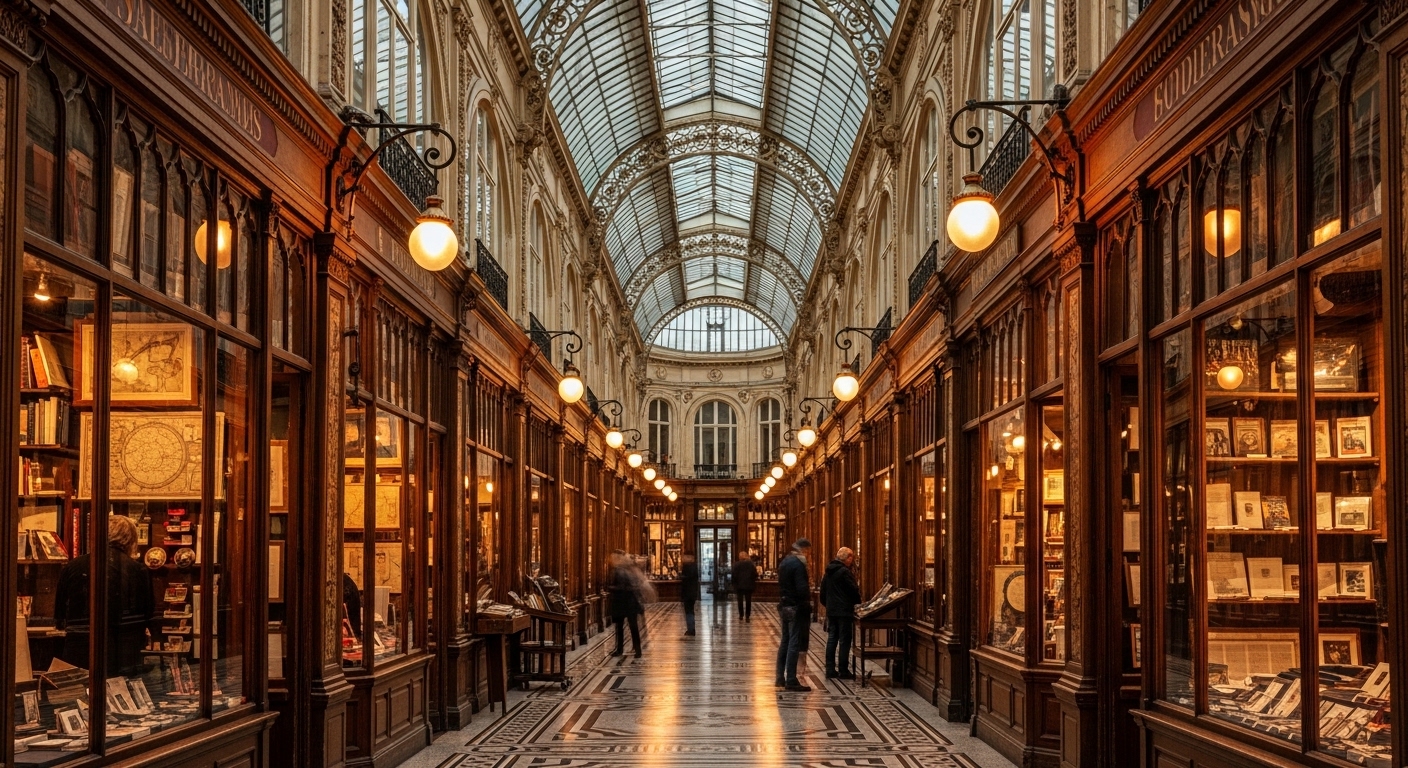
The morning light hit the mosaic floor of Galerie Vivienne at an angle that turned it to liquid gold, and I stood there in the entrance, alone, holding a coffee I’d forgotten to drink. It was barely nine on a Tuesday in October, and the passage was empty except for me and the ghost of every woman who’d walked these tiles since 1826 — their heels clicking on the same mosaics, their eyes drawn upward to the same glass canopy, the same painted nymphs gazing down from the arched ceiling. Paris has a thousand famous views. This one, I think, is the one it keeps for the people who know where to look.
I’d come to Paris for the fourth time. Not for the Eiffel Tower — I’d done that at twenty-two and felt nothing but cold wind and the particular disappointment of a thing that looks exactly like its photograph. Not for the Louvre, though I love the Louvre. I’d come this time for the city behind the city. The passages and gardens and wine bars and workshops where Paris still belongs to itself, where the tourist economy hasn’t polished the edges smooth, where you can sit in a room that’s been doing the same thing for a hundred years and feel, for a moment, like you’ve slipped through a crack in the century.
This is what I found.
The Covered Passages: Walking Through Glass and Time
In the 1820s, Paris had more than 150 covered passages — glass-roofed arcades that served as the city’s first shopping malls, before Haussmann cut his boulevards and daylight reached the streets. About twenty survive today, clustered mostly around the Grands Boulevards in the 2nd and 9th arrondissements, and walking through them is like stepping into a daguerreotype that someone forgot to drain of colour.
Galerie Vivienne is the most beautiful, and I’ll say that plainly because it’s true. Designed by François-Jean Delannoy in 1823, it stretches 176 metres through a neo-classical dreamscape of mosaic floors, half-moon windows, and painted allegorical figures representing commerce and success — which feels ironic, given that the passage’s greatest success is how thoroughly it resists the commercial machinery of modern Paris. At the bend in the gallery, where the passage changes direction, Librairie Jousseaume faces itself across the corridor — two shops belonging to the same family since 1900, the oldest in the arcade. The smaller one feels like an elderly gentleman’s study: shelves sagging with rare editions, a narrow spiral staircase climbing to a mezzanine that overflows with paperbacks, the kind of place where you find a first-edition Baudelaire tucked behind a stack of maritime atlases. I spent forty minutes in there and left with a 1920s printing of Colette’s short stories for twelve euros, which the bookseller wrapped in brown paper without being asked.
A few steps further, Legrand Filles et Fils has been selling wine since 1919 — a gourmet cave and bistro where you can sit at the marble counter with a glass of something biodynamic from the Loire and a plate of comté, and watch the light move across the glass canopy while Paris happens somewhere above you, irrelevant. A glass of wine with cheese starts around nine euros, and it’s one of the best-value pleasures in the 2nd arrondissement, though calling it a “value” feels like an insult to how good it is.
Cross the Grands Boulevards and you’ll reach Passage des Panoramas, the oldest surviving covered passage in the city. The atmosphere shifts here — less polished, more eccentric. This is where Paris keeps its collectors: stamp dealers at number 22, vintage postcard merchants at number 26, coin sellers and autograph hunters in tiny shops that haven’t changed their window displays since someone decided that was someone else’s job. At number 47, the former atelier of Graveur Stern — the famous engraver who set up here in 1834 — has been transformed into Caffe Stern, but the original mouldings and woodwork remain intact, listed as a Historic Monument, and you can eat a plate of cacio e pepe surrounded by nineteenth-century engravings while the passage fills with the after-work crowd. It’s the sort of place where the past isn’t preserved — it’s just still happening.
Directly across the boulevard, Passage Jouffroy was the first in Paris built entirely of metal and glass when it opened in 1847, and the first to install under-floor heating — a detail I love because it tells you that even in the Industrial Revolution, the Parisians were thinking about comfort first and engineering second. The Musée Grévin wax museum has its entrance here, but the real attraction is the passage itself: the toy shops, the secondhand bookstalls, the vintage walking-cane dealer whose shopfront looks like a prop from a Wes Anderson film nobody made yet.
Walk all three in sequence — Passage Verdeau to Jouffroy to des Panoramas to Vivienne — and you’ll cover a route that takes maybe ninety minutes, costs nothing, and teaches you more about nineteenth-century Paris than any museum. Go on a rainy weekday morning. The rain on the glass ceilings is part of the point.
Sainte-Chapelle: Thirteen Hundred Scenes of Light
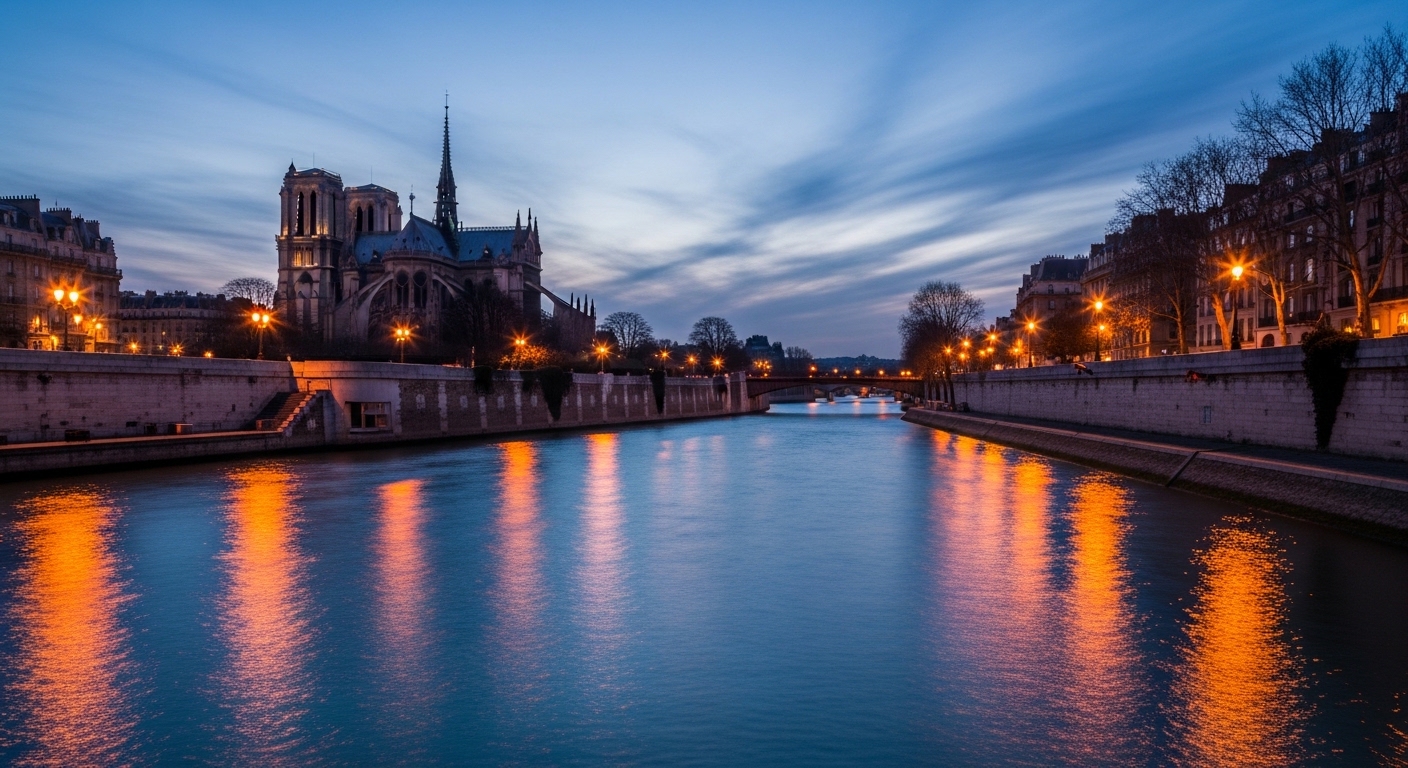
Everyone goes to Notre-Dame. And yes, Notre-Dame is extraordinary, and the restoration is a marvel, and the line wraps around the Ile de la Cité in summer. But five minutes’ walk away, on the same island, Sainte-Chapelle holds something that Notre-Dame — for all its scale — cannot match: the moment when the sun finds the upper chapel’s fifteen stained-glass windows and six hundred square metres of thirteenth-century glass ignite simultaneously, and the room disappears into light.
I don’t say that for effect. I say it because I stood in the upper chapel on a Thursday in late October at half past eleven in the morning, and the sun came through the south-facing windows, and the room turned red and blue and gold, and I understood — in the way that you understand things in your body before your mind catches up — why Louis IX spent the equivalent of three times the chapel’s construction cost on the relics it was built to house. He believed he was housing pieces of the divine. Standing in that light, even a sceptic would pause.
The chapel holds 1,100 biblical scenes across those fifteen windows, each one legible if you bring binoculars — which I recommend, because the detail at the top of the panels is astonishing and invisible to the naked eye. The lower chapel, which you enter first, is darker and smaller, painted in deep blue and gold, and most visitors hurry through it. Don’t. It’s a different kind of beauty — intimate rather than transcendent, the kind of room where medieval servants would have prayed while the king prayed above.
Tickets are thirteen euros if you book online, fourteen at the door — a fraction of what most Parisian museums charge. From November through March, admission is free on the first Sunday of the month, and on those mornings the line is long but the crowd is local, which changes the energy entirely. Visit between ten and noon on a sunny day for the best light. The whole experience takes about forty-five minutes, and you’ll carry the afterimage of those windows for the rest of the day — possibly longer. I’m still carrying mine.
The Marais: Ateliers and the Smell of Beeswax
The Marais gets written about constantly, but almost always for the wrong things — the falafel on Rue des Rosiers, the Picasso Museum, the boutiques that sell four-hundred-euro candles. What nobody tells you is that the Marais is still, stubbornly, a neighbourhood of artisans, and if you walk the smaller streets with your eyes open, you’ll find workshops that make the whole district smell like leather and linseed oil and beeswax.
On Rue Saintonge, Atelier de Reliure du Marais has been binding books since 1984. Celia Malouvier, who’s practised the craft for over thirty years, runs the studio in the 3rd arrondissement, and if you peer through the glass you’ll see the presses and the bone folders and the stacks of marbled endpapers drying on racks. It’s not a shop — it’s a working atelier that offers courses in art bookbinding, and watching someone hand-stitch a signature through a text block is the kind of slow, precise act that makes your phone feel obscene in your pocket.
Around the corner, Le Studio des Parfums invites you into a workshop where, guided by a working perfumer, you can compose a bespoke fragrance from over a hundred notes sourced from Grasse. Sessions run about two hours and you leave with a bottle of something that smells like no one else on earth — which, in a city that invented modern perfumery, feels like the right souvenir. Nearby, Histoires de Parfums takes a different approach: each scent tells a story inspired by a historical figure, a year, or a place, and browsing the collection is less like shopping and more like reading a library with your nose.
Then there’s Palmaccio, a leather workshop where two artisans produce barely three hundred bags a year from recycled hides sourced from the luxury houses. They work in the room beside the boutique, and you can watch the cutting and stitching while you decide whether you need a bag that was made by two people in a room that smells like saddle leather. You need the bag. Trust me on this.
The Marais’s artisan life is quietest in the mornings and loudest on Saturdays. Go on a Tuesday or Wednesday before noon. Bring cash — some of the smaller workshops don’t take cards, and negotiating a price for a hand-bound notebook feels more honest when paper money changes hands.
Canal Saint-Martin and the Art of Doing Nothing Well
There’s a stretch of Canal Saint-Martin, between the Quai de Valmy and the Rue Beaurepaire, where the plane trees lean over the water and the iron footbridges arch like the spines of sleeping cats, and on a late afternoon in autumn, when the light goes amber and the locks open and close with the particular hydraulic patience of infrastructure that’s been working since 1825, you understand why the 10th arrondissement is where Parisians go when they want to feel like they still live in a city that belongs to them.
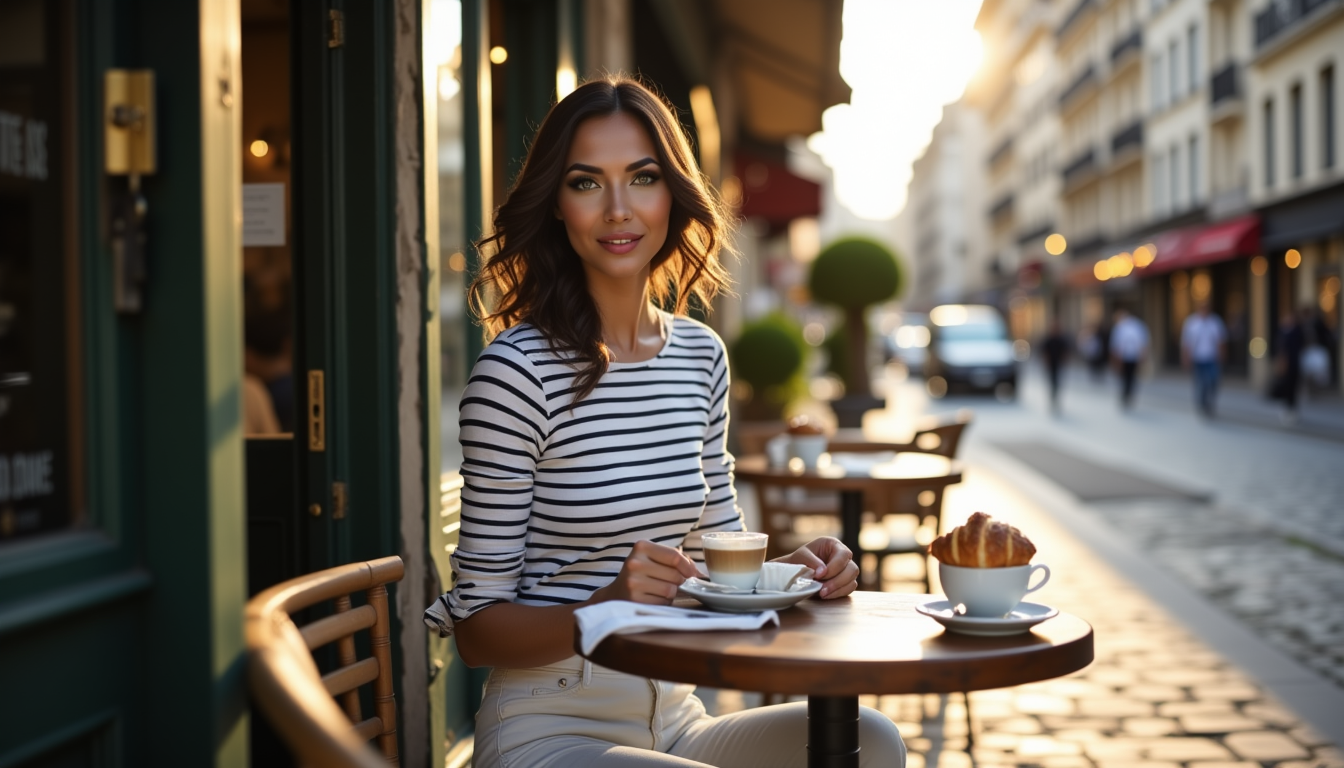
Chez Prune sits at 36 Rue Beaurepaire with its unmistakable purple awning and a waterside terrace that’s been magnetising locals since the late nineties. The coffee isn’t the best in Paris. The croque-monsieur isn’t either. But the position — facing the canal, watching the boats negotiate the locks — is irreplaceable, and the crowd is the kind of crowd that makes you feel welcome without making you feel seen: art students, off-duty chefs, couples arguing in that beautiful French way where both people are right and both people know it.
Two streets back, Le Verre Vole at 67 Rue de Lancry is one of the restaurants that started Paris’s natural wine revolution in 2000, and it still operates with the confidence of a place that doesn’t need to prove anything. The wine list runs to over four hundred references — all natural, all from artisan winemakers devoted to their terroirs — and the daily-changing menu of starters and mains begins around sixteen euros for a main course. Lunch with a glass of something alive from the Jura costs about thirty euros per person, and it’s the kind of meal where you lose track of time and remember why you came to Paris in the first place.
Walk the canal in either direction and you’ll find vintage shops, independent bookstores, and the kind of cheese shops where the owner will give you three tastes before you buy and then wrap your selection in wax paper with the seriousness of someone handling a diplomatic document. The area around Square des Recollets has the highest concentration, and on Sunday mornings the canal banks fill with picnickers who’ve assembled their supplies from the surrounding shops with an attention to detail that borders on performance art. A baguette, a slab of comte, a bottle of something cold and slightly cloudy — this is the Parisian lunch that no restaurant can replicate, because the setting is the Seine’s quieter sibling, and the company is whoever happens to sit down beside you.
The Wine Bars of the 11th: Where Paris Drinks After Dark
If the 10th arrondissement is where Paris goes to feel like itself on a Sunday, the 11th is where it goes to drink on a Tuesday night. The concentration of natural wine bars in the streets around Oberkampf and Charonne is absurd — you could spend a week and not repeat a glass — and the culture here is the opposite of the grand wine bars of Saint-Germain, where the sommelier wears a tie and the bottle list reads like a mortgage.
Septime La Cave, at 3 Rue Basfroi, is the wine bar offspring of Bertrand Grebaut’s Michelin-starred Septime, and it operates with the same precision in a fraction of the space. The room is small and intimate, the wine list evolves with the seasons, natural viticulture dominates every conversation, and a glass starts at four euros fifty — a price that would be criminal in the 6th arrondissement and feels like a gift in the 11th. The small plates echo the refined spirit of the mother restaurant: terrines, seasonal vegetables, cheese selected with an attention that borders on obsession. No reservations. Show up at six on a weeknight, stand at the bar if there’s no seat, and let the staff guide you. They know the list the way a curator knows a gallery, and they’ll pour you something you’ve never heard of and won’t forget.
Around the corner, La Cave Oberkampf offers over seven hundred references of natural wines, beers, and spirits, with a system that feels almost too civilised: choose any bottle from the shop side, pay a seven-euro corkage fee, and drink it at the bar. This means you can hold a thirty-euro bottle of Beaujolais from a producer who makes four hundred cases a year, pay thirty-seven euros total, and drink it in a room full of people doing exactly the same thing. The democracy of it is the point. Nobody is performing expertise. Everyone is just drinking wine they like, in a place they like, on a Tuesday.
Expect to spend between five and nine euros per glass at most bars in the neighbourhood, or thirty to sixty euros for a bottle — less for the adventurous stuff from emerging producers, more for the cultish Jura and Auvergne labels that sommeliers in New York would charge triple for. My advice: ask for something from the Loire that you’ve never tried. The Loire is to natural wine what Burgundy is to Pinot Noir — the spiritual homeland, the place where the conversation started — and a good glass of Chenin Blanc from a small-batch producer, served slightly cool in a room that smells like cheese and old wood, is one of Paris’s perfect pleasures.
Belleville: Where the Walls Talk
Rue Denoyez is 150 metres long, and every centimetre of it is painted. Walls, doors, shutters, electrical boxes, the occasional parked scooter that stayed too long — all of it covered in spray paint and wheatpaste and stencil work that changes so frequently the street is essentially a living canvas that reprograms itself every few weeks. I walked it on a Wednesday afternoon and there was a woman on a stepladder, spray-painting a twelve-foot portrait of a woman with flowers growing from her eyes, and nobody was watching her except me, and she didn’t care that I was watching, and the whole scene felt like the most honest thing I’d seen in Paris.
Belleville is the neighbourhood that every gentrification article warns about — historically working-class, immigrant-rich, Chinese and North African and West African communities layered over generations. The street art is part of the conversation about who the neighbourhood belongs to. Seth, the French artist, created a massive mural at the Belleville Belvedere pillars. QMRK painted “La Derniere Barricade” to commemorate 150 years since the last stand of the Paris Commune. No, whose hyper-realistic portraits serve as commentary on migrant laws, and Fred Le Chevalier, whose literary paste-ups depict a boy who can walk through walls — they’re all here, all working, all making the argument that art is what happens when a neighbourhood refuses to be quiet.
The Belvedere itself — the park at the top of Rue Piat — offers one of the finest views in Paris: the whole city laid out below you, the Eiffel Tower in the distance, and not a single tourist infrastructure in sight. No viewing platform. No ticket booth. No gift shop. Just a bench and a view and the sound of Belleville being Belleville behind you. I sat there until the sun dropped low enough to turn the zinc rooftops gold, and I thought about how Paris hides its best views in its poorest neighbourhoods, and what that says about the city, and whether it’s beautiful or cruel or both.
The Gardens That Don’t Appear on Maps
Everyone goes to the Tuileries. Everyone goes to Luxembourg. The gardens that changed the way I think about Paris are the ones you reach through doors that don’t announce themselves.
Jardin du Palais Royal is hidden in plain sight, a few steps from the Louvre but separated from the tourist current by a courtyard most visitors cross without entering. Beyond Daniel Buren’s black-and-white striped columns — which are either a masterpiece or an eyesore, depending on your tolerance for conceptual art — the garden unfolds beneath chestnut and lime trees, lined with green benches, bordered on three sides by elegant arcades housing galleries, boutiques, and the kind of cafes where the waiters have been serving the same regulars for decades. The Ministry of Culture has labelled it a Jardin Remarquable, and the word “remarkable” doesn’t do it justice. It’s a walled silence in the centre of the loudest city in Europe. Free. Open daily. Virtually empty on weekday mornings.
The Square du Vert-Galant is harder to find, which is the point. On the western tip of the Ile de la Cite, below the Pont Neuf, a double flight of stone stairs descends behind the equestrian statue of Henri IV and drops you into a triangular park at water level, where weeping willows trail their branches in the Seine and the only sounds are river current and birdsong. The park was named for Henri IV himself — “Le Vert Galant,” a nickname that translates roughly to “the evergreen lover,” which tells you everything about the king’s reputation and nothing about the garden’s mood, which is contemplative, not amorous. A commemorative plaque marks the spot where Jacques de Molay, the last Grand Master of the Knights Templar, was burned alive in 1314. The chestnuts and ginkgos and lilacs that grow here now are rooted in history that would make your spine straighten if you read the details. Bring a bottle of wine at sunset. Sit on the stone embankment with your feet above the water. Watch the bateaux mouches pass at eye level. This is the Paris that nobody photographs because nobody knows it’s here.
And then there’s Parc des Buttes-Chaumont, up in the 19th arrondissement, which Parisians guard the way New Yorkers guard their favourite late-night dumpling spot: with deliberate silence and mild hostility toward discovery. The park is twenty-five hectares of engineered wilderness built on a former gypsum quarry — winding paths, sloping lawns, jagged rocks circling a lake, and at its centre, rising 89 metres above the water, an island crowned by the Temple de la Sibylle, a Roman-style folly designed by Gabriel Davioud in 1866 that offers panoramic views of Montmartre and Sacre-Coeur. Below the temple, a grotto carved from the old quarry stone drips with artificial stalactites up to eight metres long and echoes with the sound of a sixty-foot waterfall. On a hot day, the mist from the cascade cools the cavern like natural air conditioning, and the light filtering through the rock cracks turns the water emerald.
Rosa Bonheur, the guinguette bar tucked into the park’s hillside beneath ancient chestnut trees, serves Mediterranean tapas and cold rose on a sprawling patio that fills every weekend with the kind of crowd that makes you wish you lived here: dancers, students, families, couples, and the occasional confused tourist who wandered in from the Metro at Botzaris and never left. Open Wednesday through Sunday, tapas and a glass of something cold for under fifteen euros, and the sunset from that terrace — looking west toward the temple — is the secret sunset of Paris, the one that nobody puts on a postcard because nobody wants to share it.
What Stays
I left Paris on a Sunday evening, which is the wrong time to leave Paris because Sunday evenings are when the city exhales. The restaurants stop trying so hard. The streets get quieter without getting empty. The light does the thing it does in October, where it turns everything the colour of old paper, and even the graffiti looks like calligraphy.
What I keep thinking about isn’t the Eiffel Tower or the Louvre or any of the things that Paris puts on its business card. It’s the spiral staircase in the bookshop at Galerie Vivienne. It’s the woman painting flowers on Rue Denoyez without an audience. It’s the seven-euro corkage fee at La Cave Oberkampf and the glass of Chenin Blanc that tasted like wet stone and green apple and something I still can’t name. It’s the stairs behind Henri IV’s horse, and the garden at the bottom, and the Seine at eye level, and the feeling of having found a room in a house you thought you’d already explored.
Paris rewards the obvious. It gives you the tower and the river and the croissant and the light, and all of it is as good as promised. But the city behind the city — the passages, the ateliers, the parks that don’t make the guidebook, the wine bars where four euros fifty buys you something that changes your palate — that Paris requires nothing more than curiosity and a willingness to walk past the things that everyone has already seen.
The postcard version of Paris is beautiful. The hidden version is the one that stays.
Worth reading next
More stories worth your time.

Where to Stay in Tokyo: A Luxury Neighborhood Guide
An honest guide to where to stay in Tokyo, with the neighborhoods, hotel styles, and tradeoffs that matter before you book.

The Winter Alps: Where Luxury Means Wood Fires, Not Gold Leaf
Four Alpine towns, four different ideas of what winter luxury means. From Zermatt's car-free quiet to Courchevel's fur-coat chaos, a guide to the Alps for people who care about the fire in the lobby.

Where to Eat in Tokyo: A Guide for People Who Take Food Personally
Two weeks in Tokyo, eating three meals a day plus snacks, convenience store runs at midnight, and one life-altering omakase. A neighborhood-by-neighborhood guide for people who consider food a personality trait.
About Kaira
Explore With Kaira is built for readers who want the atmosphere of a luxury travel magazine without the emptiness of sponsored copy.
About Kaira