Amangiri: The $4,000 Desert Hotel That Became an Instagram Set — And What It Actually Costs
Amangiri charges $4,000 a night for a concrete suite in the Utah desert, doesn’t include alcohol, adds $900 for a climbing experience and $1,500 for a boat ride, and has become the most Instagrammed hotel in America. A realistic three-night stay for two costs over $20,000. Here’s whether it’s worth a single dollar of that.

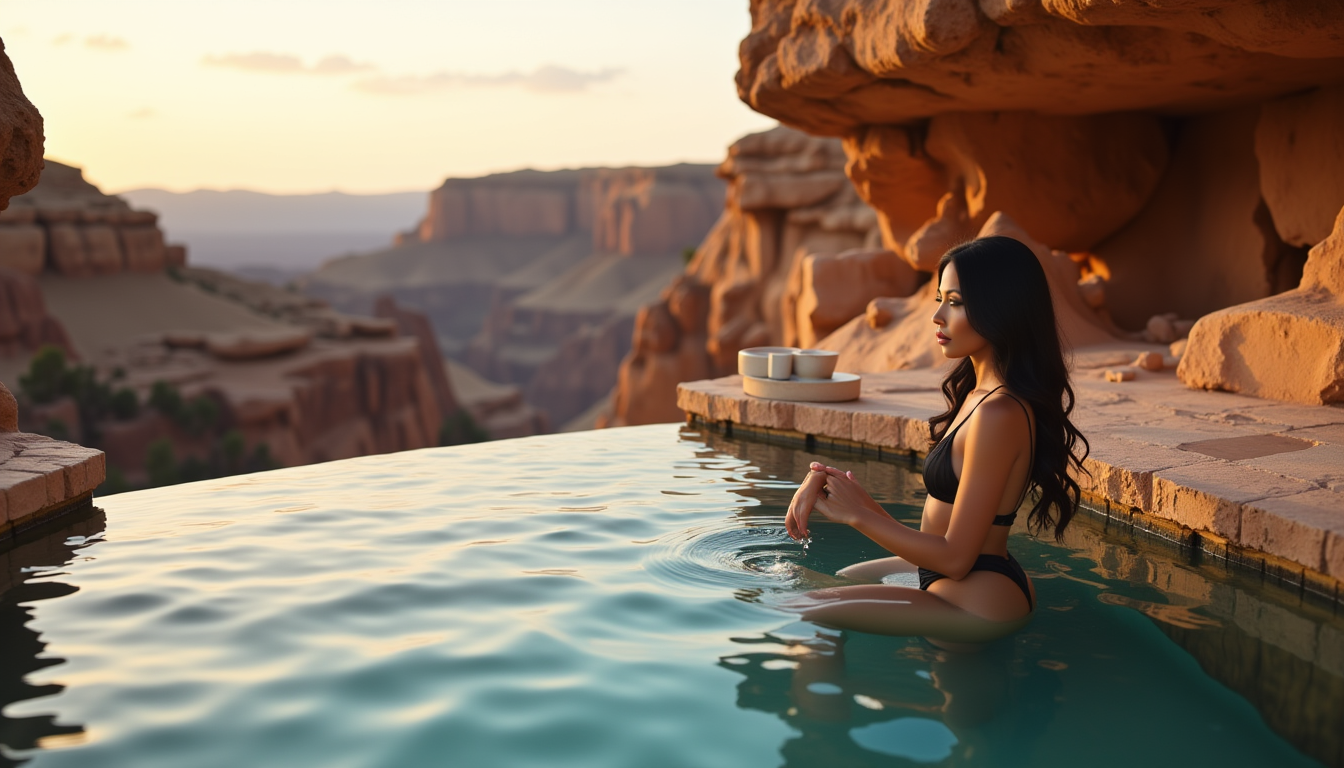
The pool is the first thing you see and the last thing you forget. It wraps around a natural sandstone mesa like liquid concrete, the water so still and the stone so ancient that the boundary between what’s built and what was always here dissolves completely. I’ve seen a thousand photographs of this pool — everyone has, whether they know the name Amangiri or not — and every one of those photographs is accurate. The pool looks exactly like that. The desert silence sounds exactly like that. The sky at ten thousand feet above sea level is exactly that shade of impossible blue.
What none of those photographs show is the couple next to the pool shooting content for forty-five minutes, repositioning a sun hat and a glass of rosé while a friend with a DSLR directs from the shallow end. Or the $4,200 nightly rate that buys you the right to watch them. Or the wine list that marks up a $40 bottle to $200. Or the Via Ferrata experience that costs $900 on top of your room rate. Or the fact that a realistic three-night stay for two people, with activities, runs north of $20,000 before tax.
Amangiri is the most beautiful hotel I’ve ever stayed at. It is also the most expensive, the most overhyped, and the most complicated — a place where genuine architectural genius meets aggressive Instagram marketing, where the silence of the desert is sold at a premium that has tripled in a decade, and where the cultural context of building a luxury resort on Indigenous land is something the $4,000 brochure would rather you didn’t think about.
The Arrival
Getting to Amangiri requires effort, and the resort has made this into a selling point. You can fly into Page, Arizona — a twenty-five-minute drive, with complimentary resort transfer — but Page is a small airport with limited commercial service. Most guests drive four and a half hours from Las Vegas through some of the most spectacular scenery in the American West, which is either a feature or a flaw depending on how you feel about road trips through landscapes that make your rental car feel like a toy.
The drive is genuinely worth it. You pass through the Virgin River Gorge, skirt the edge of Zion, cross the Colorado Plateau, and arrive at a landscape that looks like the surface of another planet — red and orange sandstone carved into shapes that seem to defy erosion and gravity in equal measure. By the time you turn off the highway onto the unmarked road to the resort, you’ve already had a better experience than most hotel arrivals offer.
The entrance is deliberately understated. No gates, no signage worth mentioning, just a road that leads to a parking area where a staff member in earth-toned linen appears as if summoned. The buildings — poured concrete mixed with local desert sand, designed by architects Marwan Al-Sayed, Wendell Burnette, and Rick Joy — don’t rise above the rock formations that surround them. They emerge from the landscape like geological events rather than construction projects. This is not an accident. This is the single best piece of architectural design in American hospitality, and everything that follows — the pool, the suites, the spa — flows from this fundamental decision to build a hotel that belongs to its landscape rather than sitting on top of it.
The Room
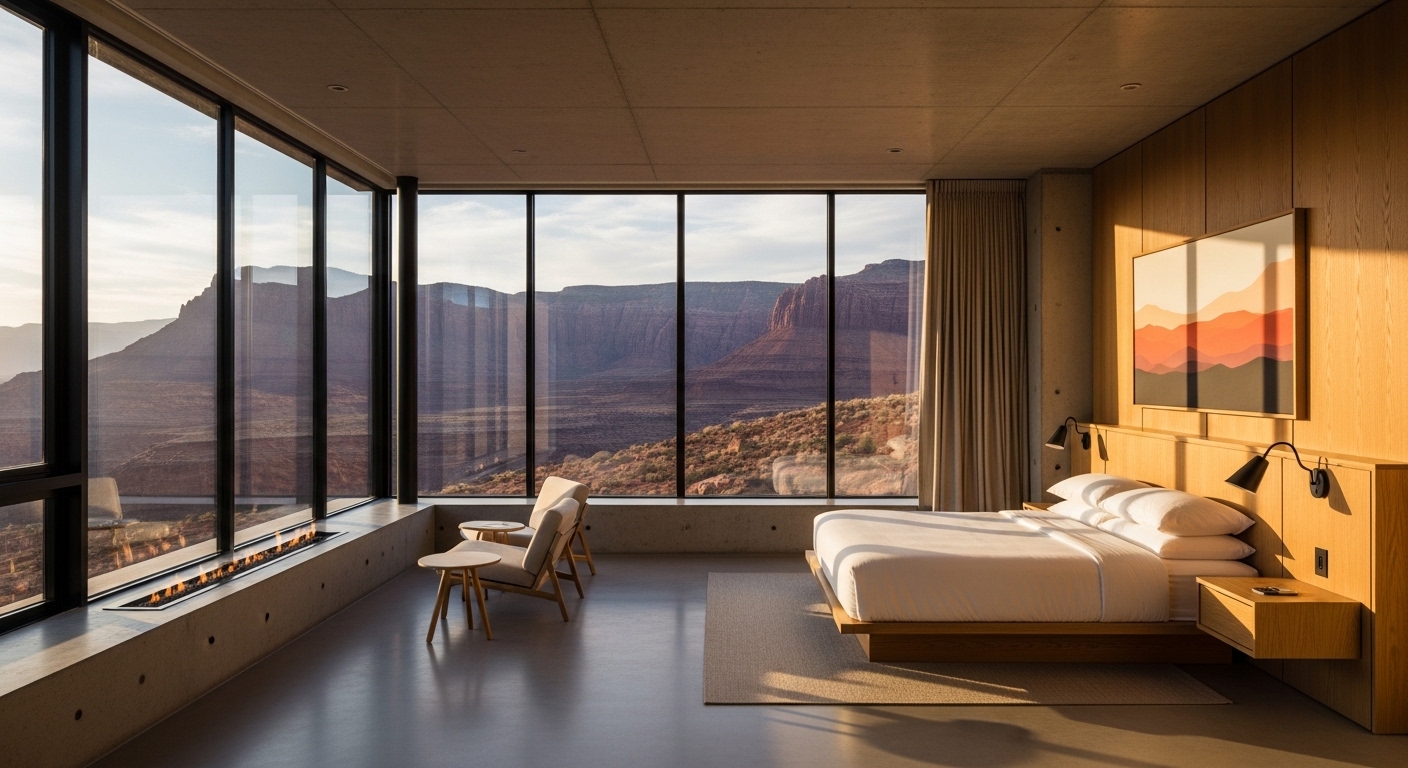
Thirty-four suites occupy two wings that branch from the main pavilion. The entry-level category — Mesa View or Desert View — runs roughly $3,500 per night in shoulder season and $4,500 or more in peak summer, plus approximately twenty percent in taxes and fees. That buys you 1,000 square feet of poured concrete, white stone floors, blackened steel fittings, and a private terrace facing either the mesa formations or the Grand Staircase-Escalante wilderness.
The design is austere in a way that either reads as profound restraint or expensive emptiness. The concrete walls are smooth and warm to the touch — mixed with local sand, they change color throughout the day as the light shifts. The bed faces a wall of glass. The bathroom is an open-plan affair with a soaking tub positioned for views. There is no prominent television. There are no unnecessary objects. The room exists to frame the desert, and in this, it succeeds completely.
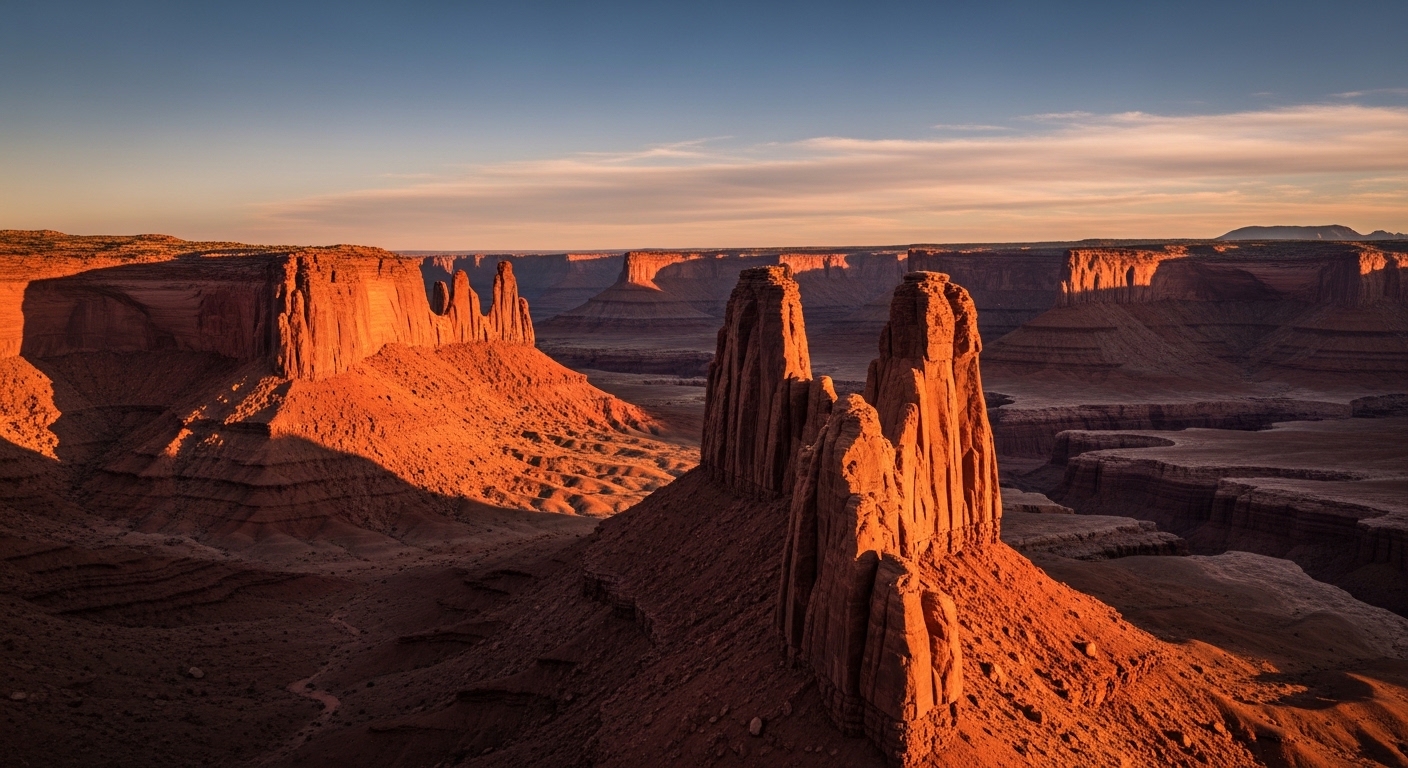
The pool suites — Mesa Pool and Desert Pool, at 1,572 and 1,614 square feet respectively — are where the experience transforms. Your own heated plunge pool on a private terrace, a firepit for stargazing, a sky deck, and the feeling of having a personal compound in the desert rather than a hotel room. The upgrade runs approximately $1,000-1,500 more per night, and it is, in my opinion, the difference between a beautiful hotel stay and an unforgettable one. If you can stretch the budget, stretch it here.
The top-tier suites — the Amangiri at 3,472 square feet and the Girjaala at 3,734 — are private residences with lap pools, multiple outdoor living areas, and prices that start around $6,000 per night and climb. These are for people who don’t check prices, and the people who don’t check prices report that they’re extraordinary.
The honest caveat: the base suites, at 1,000 square feet, are modest for $4,000 a night. The Aman Tokyo entry suite is 764 square feet at $2,000, which makes its space-to-price ratio significantly better. The concrete aesthetic, while beautiful, has aged since the 2009 opening — the same minimalism that once read as revolutionary now reads, in certain lights, as sparse. Several long-time guests on travel forums report that the rooms haven’t changed meaningfully in fifteen years while the prices have tripled. They’re not wrong.
The Dining
Meals are included in the room rate — breakfast, lunch, and dinner for two — which removes the psychological tax of resort dining. The kitchen is now led by Jake Potashnick, who holds a Michelin star at Feld in Chicago, and his influence has elevated Amangiri’s food from “adequate resort dining” to something genuinely interesting. A Rocky Mountain elk tartare was delicate and precise. A Colorado River trout, simply prepared, tasted like the place it came from. The “Spirit of the Journey” tasting menu — twenty-five to thirty bites paying tribute to indigenous cuisines — is ambitious and mostly successful.
Camp Sarika, the resort’s luxury tented camp extension, has its own dedicated restaurant that multiple guests report is superior to the main dining room. If you’re staying at Camp Sarika, the food may be the best argument for the price premium. If you’re in the main resort, the food is good — not revelatory, not destination-worthy, but genuinely good and getting better under Potashnick’s direction.
Now, the alcohol. It is not included. At a hotel charging $4,000 per night. Wine is marked up roughly five times retail — a $40 bottle becomes $200. Cocktails — the signature Prickly Pear Margarita, various sage-infused creations — run $25-30 each. A moderate drinking couple will add $300-500 to their bill over three nights without trying hard.
The veteran move, reported by guests who’ve visited ten or more times on travel forums: bring your own wine. There’s a liquor store in Page, Arizona, twenty-five minutes away. The resort doesn’t advertise this option, but they don’t prohibit it either, and the savings over a multi-night stay are significant enough to justify the detour. That a hotel at this price point creates an incentive for guests to BYOB tells you something about the value proposition that the marketing materials won’t.
The Pool and Spa
The pool deserves its reputation. Built into a natural rock escarpment in a sunken courtyard, it is one of the most remarkable swimming pools on earth — not the largest, not the most elaborate, but the most perfectly integrated with its setting. The water is heated. The stone is warm. The silence, at seven in the morning before other guests arrive, is so complete that you can hear the water settle against rock that has been settling against water for millions of years.
The heated step pool — massive concrete steps banked against towering rock formations, like a desert amphitheater filled with water — is the lesser-known gem. Fewer people photograph it. More people should experience it.
The Aman Spa occupies 25,000 square feet and offers the brand’s signature combination of serious wellness programming and serious pricing. The flotation therapy — a cranial sacral treatment followed by thirty minutes of solo floating in silence — is genuinely unlike anything I’ve experienced at a hotel spa. Butte-top yoga sessions, held on a mesa above the resort at dawn, are spectacular. Each guest receives a one-time $125 spa credit for treatments booked between nine and three, which is a gesture rather than a subsidy.
Expect to pay $300-500 per treatment beyond the credit. For a couple doing two treatments each over three nights, the spa adds $800-1,500 to the bill. At a resort that already charges more than most people’s monthly rent per night, the spa costs feel less like luxury and more like extraction.

The Activities — And What They Really Cost
Amangiri’s Via Ferrata — an assisted climbing route using steel rungs, cables, and harnesses bolted into the canyon walls four hundred feet above the desert floor — is the resort’s signature adventure experience. Six routes at different difficulty levels, including a family-friendly option for children six and older. The experience is genuinely thrilling, genuinely unique, and costs $900 per travel party.
A guided Antelope Canyon tour booked through the resort runs approximately $240 per person. The same tour booked independently costs $60. That’s a four-times markup for the convenience of having the resort handle the logistics, which is either reasonable or outrageous depending on your tolerance for captive-audience pricing.
A day on Lake Powell aboard Amangiri’s Axopar 37-foot boat — with paddleboarding, fishing, and tubing equipment included — costs approximately $1,500. Horseback riding, UTV excursions, private plane tours, and hot air balloon rides are quoted on request, which in luxury-hotel speak means “if you have to ask, you should probably ask.”
What’s free: guided group hikes on the property and surrounding landscape, fitness classes, and pool access. The free hikes are excellent and underrated — the guides know the canyon country intimately, and a morning hike through the slot canyons and mesa formations surrounding the resort is, per dollar, the best experience Amangiri offers. It costs nothing and delivers more than most of the paid activities.
The realistic math: a couple staying three nights in a pool suite during shoulder season, doing the Via Ferrata, one Antelope Canyon tour, a Lake Powell boat day, two spa treatments each, and moderate drinking, will spend approximately $20,000 to $22,000 including tax. That is not a misprint. That is the actual cost of the Amangiri experience as it’s designed to be experienced.
The Cultural Question
Amangiri sits on 600 acres of Canyon Point in what is historically the homeland of the Pueblos and Southern Paiutes. The Navajo Nation border is thirty minutes south. The resort uses this proximity — the landscape, the cultural heritage, the Indigenous aesthetic — as a core part of its identity and marketing. Navajo storytelling sessions, dreamcatcher workshops, sage smudging ceremonies, and Native American hoop dancing performances are offered as guest experiences.
A 2023 Salt Lake Tribune investigation revealed that Amangiri does not have a formal relationship with the leaders of Navajo Nation. The resort’s experiences team supervisor, Marques Johnson — a member of the Navajo Nation — was, according to the investigation, the only Indigenous employee on that team. The same investigation noted that the resort’s cultural programming tends to conflate all Native groups as one, erasing the specific Paiute history of the actual land in favor of the better-known Navajo associations.
I’m not going to tell you how to feel about this. What I can tell you is that Shash Dine Eco-Retreat — a Navajo-owned working sheep ranch near Page, twenty-five minutes from Amangiri — charges $180 to $300 per night, employs a Navajo chef, and offers an encounter with Indigenous culture that is owned and narrated by the people themselves. The juxtaposition between a $4,000-per-night resort selling curated Indigenous experiences and a $200-per-night Indigenous-owned property offering the real thing is something every guest at Amangiri should sit with.
The Instagram Problem
Amangiri was designed as a meditative retreat. It has become a content studio. The pool — that extraordinary, landscape-integrated pool — is now the most photographed hotel feature in America. Influencers book two-night stays, shoot for six hours, and leave. The resulting images, which present Amangiri as a place of solitary desert communion, require careful cropping to exclude the other guests doing the same thing.
During my stay, the pool area between ten AM and two PM had the energy of a photo shoot rather than a resort. Hat repositioning. Drone footage. Ring lights at the pool bar. A woman in the shallow end doing yoga poses while her partner photographed from four angles. This is not the experience the architecture was designed to facilitate, and it’s not the experience the $4,000 price tag implies.

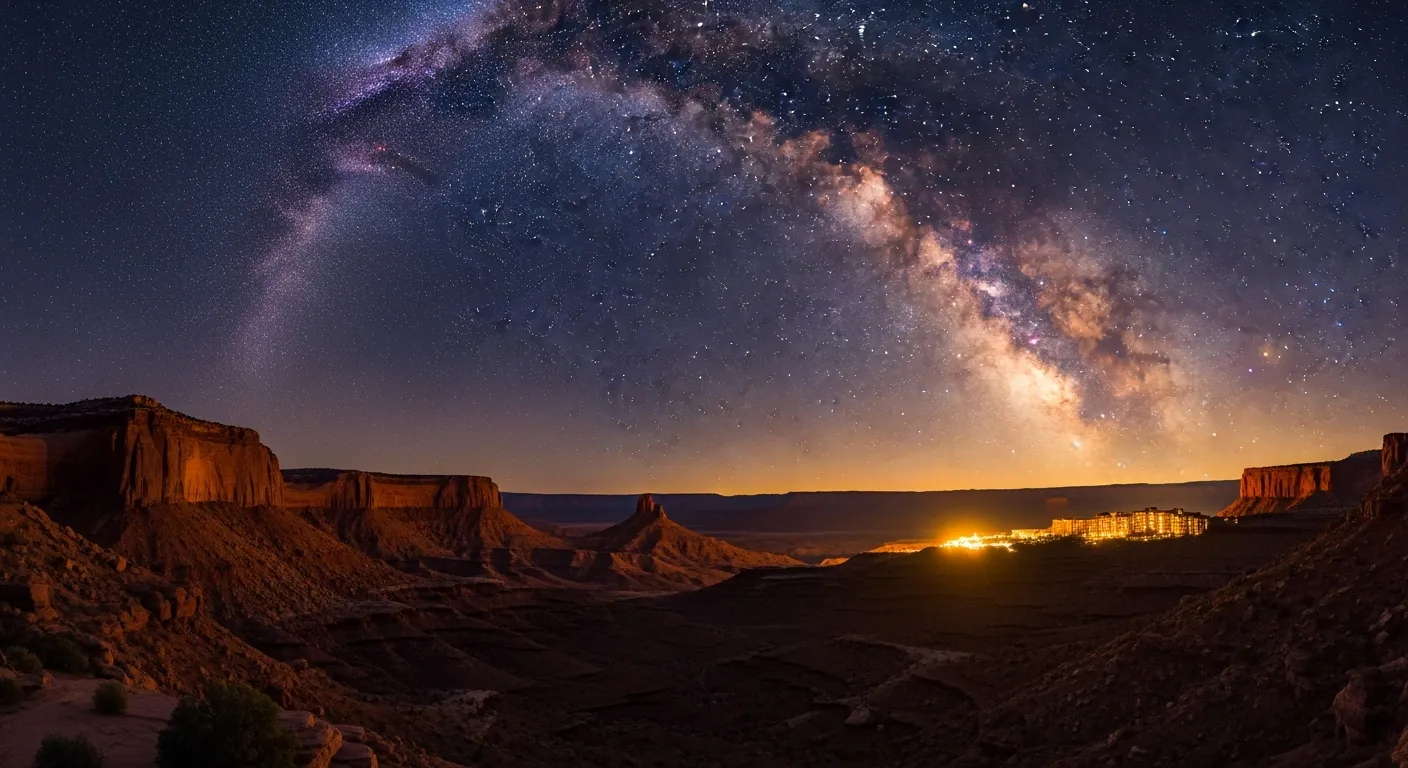
The solution is timing. Seven AM at the pool is transcendent. Sunset on your private terrace is transcendent. The night sky — zero light pollution, the Milky Way so bright it casts shadows — is transcendent. The resort between ten and two, when the content creators are active, is a different place entirely. If you’re spending $4,000 a night for silence and solitude, plan accordingly.
The Competition
Within the Aman portfolio, Amangiri is now the most expensive property in the Americas. Aman Tokyo starts at $2,000 and delivers comparable design ambition in a city with infinite dining and cultural options. Amanyara in Turks and Caicos starts at $2,200 with a Caribbean beach. Amanzoe in Greece starts at $1,800 with the Peloponnese at your feet. Amangiri has the most dramatic landscape of the four, but it also has the highest prices, the most aggressive activity markups, and the most limited dining options.
Under Canvas Zion, a glamping operation about two hours west near Zion National Park, offers safari-style tented accommodation from $400-970 per night — a fraction of Amangiri’s price with proximity to a national park that Amangiri can’t match. It’s a different product entirely — canvas tents, pull showers, communal fire pits — but for guests whose priority is the landscape rather than the luxury, the value equation isn’t close.
The Verdict
Amangiri is a masterpiece of architecture in a setting of geological grandeur. The pool is the finest I’ve seen. The spa is world-class. The silence, when you find it, is genuinely restorative — multiple guests report independently that three nights here feels like three weeks, and they’re right. The desert resets something in your nervous system that cities break, and Amangiri is the most beautiful container ever built for that reset.
But the container now costs $4,000 to $6,000 per night, up from $2,600 five years ago, while the product inside hasn’t changed proportionally. The food is good, not great. The service is technically polished but occasionally mechanical. The activity pricing is aggressive. The alcohol markups are insulting at this tier. And the Instagram crowd, which the resort’s own marketing has cultivated, occasionally undermines the meditative atmosphere that justifies the price.
Is it worth it? At $2,000-2,500 per night — the rate long-time guests remember — Amangiri would be one of the finest hotel experiences in the world, full stop. At $4,000-5,000, you’re paying a premium for scarcity, celebrity association, and the privilege of staying at the place everyone has seen on their phone. The architecture hasn’t improved since 2009. The desert hasn’t become more beautiful. What’s changed is the price, and price changes should reflect value changes, not demand changes.
If you go — and part of me thinks you should, because the pool and the silence and the night sky are real and they’re remarkable — book a pool suite, go in April or October, bring your own wine, hike every morning for free, and understand that the $20,000 weekend the resort is engineered to produce is a choice, not a requirement. The desert will be just as beautiful from the free guided hike as it is from the $1,500 boat.
The bottom line: The most architecturally stunning resort in America, with a pool that justifies its legend — undermined by prices that have tripled while the product hasn’t, activity markups that feel extractive, and an Instagram culture that sometimes overpowers the silence the whole experience is built around.
Book if: You want to see one of the world’s greatest hotel pools in person. You value architecture as experience. You can afford $4,000+ per night without resentment. April or October for weather and relative quiet.
Skip if: You resent paying $200 for $40 wine. You want a living neighborhood outside your hotel. You’re bothered by guests photographing everything. You’d rather spend $20,000 on two weeks in Southeast Asia.
Don’t miss: The pool at 7 AM. The free guided canyon hike. The night sky from your terrace. The heated step pool at sunset.
Skip: The Antelope Canyon tour markup — book directly for a quarter of the price. The midday pool scene. The assumption that “included meals” means “included everything.”
Worth reading next
More stories worth your time.

The Maldives Question: Is $2,000 a Night Worth It? (An Honest Answer)
I've stayed at four Maldivian resorts across three trips and two budgets. Here's the honest answer to whether those overwater villas are worth what they charge — and what nobody tells you about paradise before you book.

The White Lotus Hotels Are Real. The Experience Isn’t What You Think.
The White Lotus hotels are real, but staying at them now is a different experience than the fantasy the show sells.

St. Regis Bora Bora: Waking Up Above Water Is Not a Spiritual Experience
The brochure for the St. Regis Bora Bora promises a “transformative overwater experience.” The website uses words like “transcendent” and “soul-stirring.” Three different people told me, before I went, that waking up in an overwater villa would “change the way I see the world.” It didn’t change the way I see the world. It changed […]
About Kaira
Explore With Kaira is built for readers who want the atmosphere of a luxury travel magazine without the emptiness of sponsored copy.
About Kaira